If you spend your days in front of a monitor, your phone, or both, an eye supplement built for screen time is an easy idea to like. EyePromise Screen Shield Pro and Performance Lab Vision both aim at that same everyday buyer, but they get there in very different ways. One packs a multivitamin-style panel into a softgel. The other keeps the formula focused on eye-specific plant nutrients in a vegan capsule.
Neither is an AREDS2 formula. Both are designed for everyday eye nutrition. Here is how they compare, ingredient by ingredient.
Performance Lab Vision vs EyePromise Screen Shield Pro at a Glance
| Feature | Performance Lab Vision | EyePromise Screen Shield Pro |
|---|---|---|
| Lutein | 10 mg | 7 mg |
| Zeaxanthin | 2 mg | 14 mg |
| Astaxanthin | 4 mg | None |
| Saffron | 10 mg | None |
| Bilberry extract | 25 mg | 15 mg |
| Blackcurrant | 300 mg freeze-dried fruit plus 25 mg extract | None |
| Other extras | None | Fish oil, CoQ10 (15 mg), alpha-lipoic acid (10 mg), berry anthocyanin extract (15 mg) |
| Added vitamins and minerals | None | 10, including vitamins A, C, D, E, B6, B12, folic acid, zinc, selenium, and manganese |
| Capsule type | Vegan pullulan capsule | Gelatin softgel |
| Allergens | Free of soy, fish, and common allergens | Contains soy and fish |
| Capsules per bottle | 30 | 30 |
| One-time price | $49 | $41.95 on EyePromise’s site |
| Money-back guarantee | 30 days | 60 days |
What Is in Performance Lab Vision
Vision delivers six research-backed ingredients in one daily capsule:
- Lutein, 10 mg, and zeaxanthin, 2 mg, from marigold flower extract
- Astaxanthin, 4 mg, from Haematococcus pluvialis algae
- European bilberry extract, 25 mg, standardized to 25% anthocyanosides
- European blackcurrant, 300 mg freeze-dried fruit plus 25 mg extract (25% anthocyanins)
- Saffron, 10 mg, standardized to 0.3% safranal
The capsule is a plant-based pullulan shell, and the only other ingredient is a rice concentrate that acts as a flow agent. Performance Lab lists Vision as non-GMO and free of soy, gluten, and common allergens, and says it is third-party tested for purity and potency.
What Is in EyePromise Screen Shield Pro
Screen Shield Pro is a softgel with roughly twenty line items on its label. At its core are 14 mg of zeaxanthin (from paprika extract) and 7 mg of lutein (from marigold extract). Around them sit 15 mg of bilberry extract, 15 mg of a berry anthocyanin extract, 15 mg of coenzyme Q10, 10 mg of alpha-lipoic acid, fish oil, and a stack of vitamins and minerals. Amounts for vitamins A, D, and E and for fish oil differ between label versions sold by different retailers, so check the bottle you receive.
The softgel is made with gelatin, soy lecithin, beeswax, and a mix of safflower, canola, and corn oils. The label lists fish (pollock) and soy as allergens.
Lutein and Zeaxanthin: Different Ratios, Same Target
Lutein and zeaxanthin are the pigments that collect in the macula, the center of the retina, where they absorb blue light. Researchers call them macular carotenoids, and a six-month trial in adults with heavy screen time linked supplementation to higher macular pigment density and less eye strain, fatigue, and headache frequency, according to a summary from the American Optometric Association. That trial used 24 mg a day, so treat it as support for the nutrient family, not a promise about any one product.
Here the two formulas take different paths. Screen Shield Pro puts most of its carotenoid weight into zeaxanthin, with 14 mg, and totals 21 mg of lutein and zeaxanthin together. Vision uses a lutein-led ratio, 10 mg of lutein and 2 mg of zeaxanthin, for 12 mg combined. Screen Shield Pro has more of these two carotenoids. What Vision does with the rest of its capsule is where it separates itself.
Astaxanthin, Saffron, and Blackcurrant: What Screen Shield Pro Leaves Out
Screen Shield Pro does not list astaxanthin, saffron, or blackcurrant. Vision includes all three: 4 mg of astaxanthin, 10 mg of saffron, and blackcurrant in two forms, whole freeze-dried fruit and a standardized extract. If you want a formula that goes beyond carotenoids into a wider set of eye-focused plant nutrients, that gap is meaningful.
Vision also contains more bilberry, 25 mg compared with 15 mg, and every one of its ingredients is listed with its own dose.
Added Vitamins and Minerals: A Multivitamin Inside Your Eye Supplement
Screen Shield Pro includes vitamins A, C, D, E, B6, and B12, folic acid, zinc (15 mg), selenium, and manganese. It also includes fish oil, CoQ10, and alpha-lipoic acid. That is a broad panel, and it makes the product more of an all-in-one.
It is not an AREDS2 formula, though. According to the National Eye Institute, the AREDS2 research formula uses 500 mg of vitamin C, 400 IU of vitamin E, 80 mg of zinc, and 2 mg of copper, and the trial enrolled only people with intermediate or advanced age-related macular degeneration. Screen Shield Pro’s vitamin and mineral amounts are multivitamin-sized.
The practical question is overlap. If you already take a multivitamin, vitamin D, fish oil, or a zinc supplement, Screen Shield Pro adds to those totals. Vision contains no added vitamins or minerals, so it layers onto your existing routine without stacking duplicates.
Vegan Capsule vs Gelatin Softgel With Soy and Fish
Vision uses NutriCaps, a prebiotic pullulan capsule made from fermented tapioca. It is suitable for vegans, free of soy, fish, gluten, and common allergens, and free of synthetic additives and artificial colors.
Screen Shield Pro uses a gelatin softgel that also contains soy lecithin, beeswax, annatto, maltitol, natural flavors, and safflower, canola, and corn oils. It contains fish and soy, which matters if you avoid either or follow a plant-based diet. For people with allergies or dietary rules, Vision removes the question entirely.
Price Per Day, Guarantees, and Testing
Screen Shield Pro is $41.95 on EyePromise’s site, about $1.40 a day, and some retailers list it near $39. Vision is $49 as a one-time purchase, about $1.63 a day. On Performance Lab’s smart subscription, Vision drops to $36.75 a bottle, about $1.23 a day with free shipping and 25% off every recurring order, which puts it below Screen Shield Pro’s one-time price. EyePromise’s product page does not list a subscription discount.
On guarantees, EyePromise offers 60 days and Performance Lab offers 30 days. On testing, EyePromise’s page lists an NSF Certified for Sport mark, while Vision’s product page lists third-party testing for purity and potency along with Vegan Approved, Clean Label Project Certified, and GMP certification marks.
Who Should Choose Performance Lab Vision
Vision is the stronger fit if you:
- Follow a vegan diet, or avoid gelatin, soy, or fish
- Want astaxanthin, saffron, bilberry, and blackcurrant alongside lutein and zeaxanthin
- Already take a multivitamin or other supplements and do not want added vitamins A, D, E, zinc, or fish oil
- Prefer a short, clean ingredient list with every dose printed on the label
- Want the lowest daily cost on subscription
Screen Shield Pro may suit you if you want more total lutein and zeaxanthin, prefer an all-in-one softgel with vitamins and fish oil built in, and do not mind gelatin, soy, and fish.
Final Verdict on Vision vs Screen Shield Pro
Screen Shield Pro leads on total lutein and zeaxanthin and on guarantee length. Vision leads on formula breadth where it counts for eye nutrition: astaxanthin, saffron, more bilberry, and blackcurrant, all in a vegan, allergen-free capsule with no added vitamins to duplicate what you already take. On subscription, it is also cheaper per day.
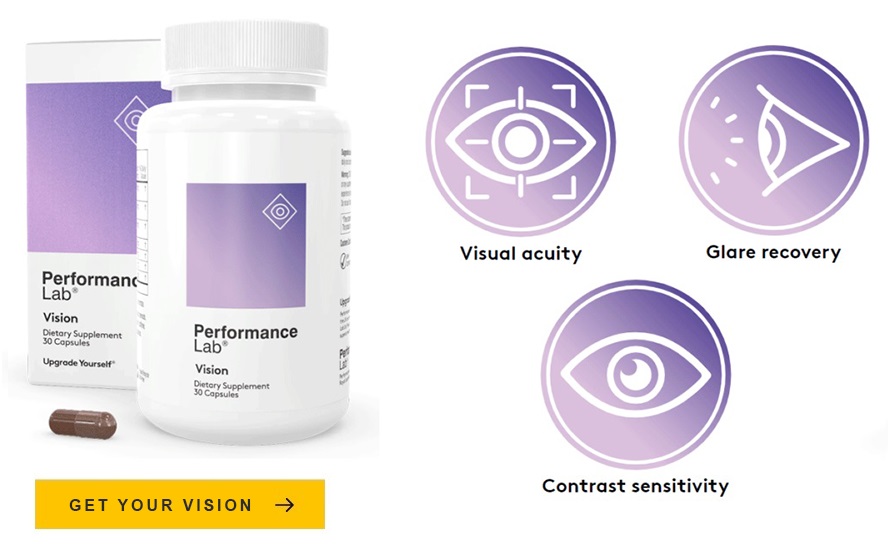
For most people who want a focused, clean, plant-based daily eye formula, Performance Lab Vision is the better fit. You can see the full Performance Lab Vision formula and current pricing here.
Frequently Asked Questions About Vision and Screen Shield Pro
Is EyePromise Screen Shield Pro or Performance Lab Vision an AREDS2 Formula?
No. It contains multivitamin-sized amounts of vitamins and minerals, far below the AREDS2 research formula. Vision is not an AREDS2 formula either. If you have been diagnosed with a macular condition, talk with your eye doctor before choosing an eye supplement.
Which Has More Lutein and Zeaxanthin?
Screen Shield Pro has more of both combined, with 7 mg of lutein and 14 mg of zeaxanthin. Vision has 10 mg of lutein and 2 mg of zeaxanthin, and adds astaxanthin, saffron, bilberry, and blackcurrant.
Does Screen Shield Pro Contain Astaxanthin or Saffron?
No. Neither ingredient appears on its label. Vision contains 4 mg of astaxanthin and 10 mg of saffron.
Is Screen Shield Pro Vegan or Allergen-Free?
No. It uses a gelatin softgel and its label lists soy and fish as allergens. Vision is vegan and free of soy, fish, and common allergens.
Which Costs Less per Day?
Screen Shield Pro costs about $1.40 a day on EyePromise’s site. Vision is about $1.63 a day as a one-time purchase and about $1.23 a day on Performance Lab’s smart subscription.
Can I Take Vision With a Multivitamin?
Many people do. Vision contains no added vitamins or minerals, so it does not duplicate a multivitamin’s nutrients. Check with your doctor or pharmacist first, especially if you take medication, are pregnant, or are nursing.
These statements have not been evaluated by the Food and Drug Administration. Vision and Screen Shield Pro are not intended to diagnose, treat, cure, or prevent any disease. This article is for information only and is not medical advice.