
Mention lutein or zeaxanthin in any eye health conversation and you will get nods of recognition. Mention astaxanthin and you will more often get a blank look or a tentative “I think I have heard of that.” Given what the research shows about this compound, that recognition gap is one of the more notable disconnects in the eye nutrition world.
Astaxanthin is the red-orange carotenoid that makes salmon pink, flamingos pink, and shrimp red. It is produced by microalgae under conditions of environmental stress, which is where its extraordinary antioxidant capacity comes from: the algae synthesize it as a protective pigment, and its protective properties transfer to the animals that consume it. In terms of antioxidant potency by standard laboratory measures, astaxanthin outperforms vitamin E by a factor of roughly 550 and beta-carotene by a factor of roughly 40. That is not a typo.
More relevant to eye health than raw antioxidant potency, however, is what astaxanthin specifically does in ocular tissue and why those effects are particularly well-suited to the demands that screen work and sustained visual activity place on the eye.
What Makes Astaxanthin Uniquely Suited to Eye Health
Several properties distinguish astaxanthin from other antioxidants when it comes to eye health. Understanding what makes it chemically and biologically distinctive explains why it occupies a different position in the eye nutrition picture than lutein and zeaxanthin.
The Ability to Cross the Blood-Retinal Barrier
The eye is protected by the blood-retinal barrier, a selective membrane system that restricts what substances can pass from circulation into the retinal tissue. This barrier protects the retina from many circulating compounds but also means that most antioxidants cannot access the retina directly. Astaxanthin is one of the few antioxidants that can cross the blood-retinal barrier, allowing it to deliver antioxidant protection directly to the retinal cells and their supporting tissues. It also crosses the blood-brain barrier, which is relevant to the neural components of visual processing. This barrier-crossing ability is not common. It is one of the reasons astaxanthin’s clinical activity in eye tissue does not translate straightforwardly from in vitro or animal studies of other antioxidants.
The Unique Molecular Structure That Spans the Cell Membrane
Most antioxidants are either water-soluble, operating in the aqueous compartments of cells, or fat-soluble, operating in the lipid membranes. Astaxanthin has an unusual molecular geometry that allows it to span the entire lipid bilayer of a cell membrane, with its reactive ends extending into the water environment on both sides. This means a single astaxanthin molecule can neutralize free radicals on both the inner and outer surfaces of the cell membrane simultaneously, a capability that most antioxidants simply do not have. In tissue with the metabolic intensity of the retina, this membrane-spanning antioxidant activity is particularly valuable.
Astaxanthin and Eye Fatigue: The Clinical Evidence
The most consistently replicated clinical finding for astaxanthin in eye health is its effect on eye fatigue, particularly the fatigue that results from sustained near-focus work. This is where the evidence for astaxanthin is most directly relevant to screen users and anyone engaged in extended close-work tasks.
Japanese Office Worker Trials
Several well-designed clinical trials, primarily conducted in Japan where astaxanthin research has been particularly active, have tested the effects of astaxanthin supplementation on eye fatigue in office workers and other high-screen-exposure populations. A double-blind, randomized trial published in the journal Biomedical Research found that participants taking 6 mg of astaxanthin daily for four weeks reported significantly lower eye strain scores, including reduced tiredness, soreness, and blurred vision, compared to placebo. The improvement was most pronounced in the ciliary body, the structure containing the ciliary muscles that control accommodation (focus adjustment).
A follow-up study specifically examining accommodation, the eye’s ability to shift focus between distances, found that astaxanthin supplementation improved the amplitude of accommodation in participants compared to placebo after four weeks. This is a functionally meaningful outcome. Reduced accommodative capacity is one of the primary drivers of the blurred vision and focus-shifting difficulty that screen workers experience during and after long sessions. Improving it through nutritional support addresses the problem at a physiological level rather than just managing symptoms. This mechanism connects directly to the discussion in our article on digital eye strain and its causes.
The Proposed Mechanism: Ciliary Body Oxidative Stress
The proposed explanation for astaxanthin’s effect on eye fatigue centers on its ability to reduce oxidative stress in the ciliary body, the ring-shaped structure inside the eye that contains the ciliary muscles. The ciliary body has high metabolic demands due to its role in continuous accommodation, and the oxidative stress generated by this activity is thought to contribute to ciliary muscle fatigue under sustained near-work conditions. Astaxanthin’s ability to penetrate the blood-retinal barrier and deliver antioxidant protection directly to intraocular structures puts it in a position to reduce this oxidative load in a way that most circulating antioxidants cannot.
Astaxanthin’s Role in Retinal Protection
Beyond eye fatigue, astaxanthin has attracted research attention for its protective effects on retinal tissue under conditions of oxidative and ischemic stress. While this evidence base is less directly applicable to healthy eyes in ordinary conditions, it provides context for astaxanthin’s broader role in eye health.
Protection Against Photoreceptor Damage
Multiple animal studies have demonstrated that astaxanthin supplementation reduces retinal cell death under conditions of intense light exposure and oxidative stress. A study published in the journal Molecular Vision found that astaxanthin reduced photoreceptor apoptosis (programmed cell death) in rats exposed to light-induced retinal damage, with the protective effect attributed to its direct antioxidant activity in retinal tissue. Human studies on this specific outcome are limited, partly because the ethical requirements for demonstrating retinal protection in humans are appropriately stringent. The animal evidence is, however, biologically plausible and consistent with astaxanthin’s known ability to access retinal tissue.
Retinal Blood Flow and Vascular Support
Astaxanthin has also been studied for its effects on retinal capillary blood flow. A trial published in the Journal of Clinical Biochemistry and Nutrition found that astaxanthin supplementation improved retinal capillary blood flow in participants with diabetes, suggesting beneficial effects on the microvascular health of the retina. Adequate blood flow to the retina delivers oxygen and nutrients while clearing metabolic waste, both of which are necessary for sustained visual performance. This vascular dimension of astaxanthin’s activity distinguishes it further from lutein and zeaxanthin, which do not have the same retinal blood flow evidence.
Practical Considerations: Dose, Form, and Timing
The clinical trials on astaxanthin for eye fatigue have used doses ranging from 4 mg to 12 mg daily, with the most commonly studied dose being 6 mg. This is considerably lower than the gram-range doses used for some other supplements, which is partly a reflection of astaxanthin’s potency and partly a reflection of the relatively narrow therapeutic window that has been studied. Higher doses up to 40 mg daily have been used in safety studies without significant adverse effects, but there is no clear evidence that doses above 12 mg produce proportionally greater eye-related benefits.
Natural Versus Synthetic Astaxanthin
Astaxanthin is available in both natural and synthetic forms. Natural astaxanthin is derived primarily from the microalgae Haematococcus pluvialis, which produces it in response to environmental stress. Synthetic astaxanthin is manufactured chemically and is widely used in aquaculture to give farmed salmon their pink color. The two forms have different molecular compositions: natural astaxanthin is predominantly in a monoester or diester form, while synthetic astaxanthin is predominantly free (unesterified). Research comparing the two suggests that natural astaxanthin from Haematococcus pluvialis has superior antioxidant activity and bioavailability compared to the synthetic form, and it is the form used in all relevant human clinical trials. Labels should specify the source, and Haematococcus pluvialis is the form to look for.
Absorption and Timing
Like all carotenoids, astaxanthin is fat-soluble and its absorption depends significantly on the presence of dietary fat at the time of consumption. Taking an astaxanthin supplement with a meal that includes healthy fats improves absorption substantially compared to taking it on an empty stomach or with a fat-free meal. This is a practical detail worth attending to for consistency of effect, since the clinical trial doses are calibrated assuming some fat co-ingestion.
The Underrated Eye Nutrient Worth Knowing
Astaxanthin occupies a specific and non-redundant position in a complete eye nutrition approach. Lutein and zeaxanthin build the macular pigment that provides passive blue light filtering. Astaxanthin delivers direct antioxidant protection inside the eye’s tissues, supports the ciliary body function that drives accommodation, and improves retinal blood flow in ways that the macular carotenoids do not. For screen users experiencing the specific pattern of focus-related fatigue and end-of-day blurred vision, it addresses a mechanism that no other commonly discussed eye nutrient reaches.
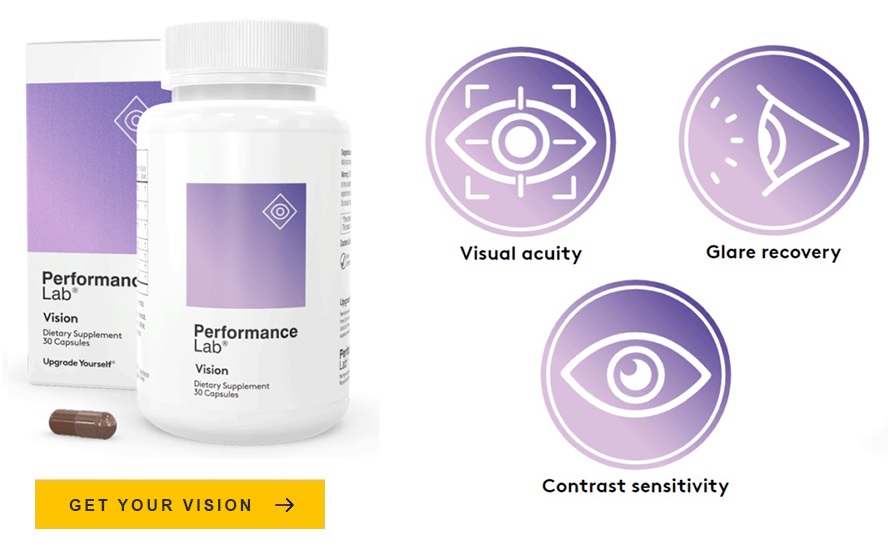
If you want to see how astaxanthin fits alongside the other key eye nutrients in a formula specifically designed around the ingredients with the strongest evidence, our review of Performance Lab Vision covers the full ingredient picture in detail.