
The idea that food can influence night vision has been around for centuries. Sailors ate bilberries to see better in the dark. Military cooks were reportedly told to serve liver to improve pilots’ low-light performance. Traditional cultures across multiple continents connected certain foods to better vision after dark. Whether those traditions reflected genuine biological insight, opportunistic storytelling, or both, the modern research has taken the question seriously enough to generate a meaningful evidence base.
The answer is neither the enthusiastic yes that supplement marketing would suggest nor the dismissive no that blanket skepticism might imply. Nutrition can meaningfully support night vision through specific, well-characterized biological mechanisms. The effects are real for people with suboptimal nutritional status and more modest for those who are already nutritionally replete. And the specific nutrients with the best evidence are not always the ones being most aggressively marketed.
What follows is a clear account of what the research actually supports, organized by the biological mechanisms involved rather than by the commercial landscape around them.
Vitamin A: The Foundation That Cannot Be Ignored
Any honest discussion of nutrition and night vision has to start with vitamin A, because its role in the visual system is not peripheral or speculative but mechanistically essential. Without adequate vitamin A, night vision does not simply decline. It fails.
Why Vitamin A Is Non-Negotiable for Rod Vision
Rhodopsin, the photopigment that makes dim-light rod vision possible, is composed of opsin protein and retinal, a molecule derived directly from vitamin A. The visual cycle that regenerates rhodopsin after it is bleached by light depends on a continuous supply of vitamin A to replenish the retinal pool. When vitamin A is insufficient, rhodopsin regeneration slows and eventually cannot keep pace with normal bleaching, reducing the functional rhodopsin concentration in the rod photoreceptors and directly impairing their sensitivity to dim light.
Night blindness, the clinical term for difficulty seeing in low-light conditions, is the earliest documented and most consistently replicated consequence of vitamin A deficiency in humans. In populations with adequate vitamin A intake, this pathway is not a practical concern. In people with genuinely marginal vitamin A status, which is more common than frank deficiency in developed populations and may be seen in people with restricted diets, malabsorption conditions, or limited access to vitamin-A-rich foods, supporting this substrate can produce real improvements in low-light visual function. The rhodopsin biology underlying this connection is covered in detail in our article on rhodopsin and the visual cycle.
Zinc and Vitamin A Delivery
Zinc does not directly participate in rhodopsin chemistry, but it plays an essential supporting role by enabling the transport of vitamin A from liver stores to target tissues including the retina. Retinol-binding protein, the transport protein that carries vitamin A in the bloodstream, requires zinc for its synthesis. Zinc deficiency therefore impairs vitamin A delivery to the retina even when vitamin A stores are adequate, producing the same functional consequence as vitamin A deficiency through a different mechanism. This interaction means that ensuring adequate zinc status alongside vitamin A is necessary for the rhodopsin substrate delivery chain to function properly.
Bilberry and Blackcurrant Anthocyanins: The Specific Research Picture
The most frequently cited nutritional supports for night vision beyond vitamin A are the anthocyanin-rich berries, primarily bilberry and blackcurrant. The evidence here is more nuanced than the marketing suggests and more substantive than blanket skepticism would allow.
What the Clinical Trials on Bilberry Actually Found
Bilberry (Vaccinium myrtillus) became associated with night vision improvement partly through the World War II RAF pilot legend, which has a more uncertain historical basis than its frequent repetition implies, and partly through a body of clinical research conducted primarily in the 1960s through 1980s. That earlier research was generally positive but methodologically weaker by modern standards. More recent, better-controlled trials have produced mixed results. Some have found improvements in dark adaptation speed, night visual acuity, or glare recovery with bilberry extract supplementation. Others have found no significant effect in participants with already adequate nutritional status and good baseline night vision.
The most defensible interpretation of the bilberry literature is that the anthocyanosides in bilberry, particularly through their interactions with rhodopsin regeneration and retinal blood flow, provide meaningful support for low-light visual function in people who are not at their ceiling. For someone with suboptimal dark adaptation, bilberry supplementation at clinically relevant doses of standardized extract may produce a measurable improvement. For someone already at peak dark adaptation, the marginal effect is smaller. The full details on bilberry’s specific biological mechanisms are covered in our bilberry for vision article.
Blackcurrant C3G and the Rhodopsin Connection
Blackcurrant has a more specific and better-characterized mechanism than bilberry for night vision support. The anthocyanin cyanidin-3-glucoside (C3G), found in high concentrations in blackcurrant, has been shown in laboratory and human research to facilitate rhodopsin regeneration by supporting the recombination of retinal with opsin after light bleaching. A human clinical trial specifically measuring dark adaptation found that blackcurrant anthocyanin supplementation improved dark adaptation speed compared to placebo, with the improvement attributable to faster rhodopsin recovery.
This is a more specific and mechanistically credible finding than the general antioxidant arguments often used to support berry-based eye supplements. C3G is interacting with a defined molecular step in the visual cycle rather than simply providing nonspecific free radical scavenging in the neighborhood of the retina. The specificity of this mechanism, combined with clinical evidence of the functional outcome, places blackcurrant among the more defensible nutritional supports for night vision. Our dedicated article on blackcurrant and C3G covers the research in full.
Lutein, Zeaxanthin, and Low-Light Visual Performance
Lutein and zeaxanthin are primarily discussed in the context of blue light filtering and macular health, but their relevance to low-light vision has a specific dimension worth understanding separately from the daytime vision story.
Macular Pigment and Glare Recovery
One of the functional outcomes most consistently associated with higher macular pigment optical density is improved glare recovery, the speed at which vision returns to normal after exposure to a bright light source. When bright light bleaches rhodopsin and temporarily overwhelms the visual system, the recovery period involves both rhodopsin regeneration and adaptation of the neural processing systems. The macular pigment, by filtering the blue-wavelength light that causes the most rhodopsin bleaching, reduces the degree of bleaching from any given light exposure and thereby reduces the depth of the recovery required.
For night driving in particular, glare recovery from oncoming headlights is one of the most practically significant aspects of low-light visual performance, and the one most directly relevant to safety. Research has found associations between higher macular pigment density and faster glare recovery times, suggesting that building macular pigment through consistent lutein and zeaxanthin intake has specific night vision relevance beyond its better-known daytime protective role. This connection is explored in the context of night driving specifically in our article on supplements and night driving.
Contrast Sensitivity in Low-Light Conditions
Macular pigment density is also associated with better contrast sensitivity, the ability to distinguish objects from similarly luminanced backgrounds. In low-light conditions, contrast sensitivity is the limiting factor for useful vision rather than acuity, because the rod system that dominates dim-light vision does not provide color or fine detail information. Anything that improves contrast sensitivity in the foveal region therefore directly improves the quality of low-light vision in a functional sense. Higher macular pigment density from lutein and zeaxanthin intake appears to support this, through both the optical mechanisms described above and the antioxidant protection of the foveal cone population that contributes to mesopic vision. The science behind contrast sensitivity is covered thoroughly in our contrast sensitivity article.
Nutrients With Limited or Absent Night Vision Evidence
An honest evidence review requires naming the gaps as clearly as the positive findings. Several nutrients are commonly included in night vision supplements on the basis of general eye health evidence that does not specifically translate to night vision improvement.
Beta-Carotene and Lycopene
Beta-carotene is sometimes included in night vision formulas based on its status as a vitamin A precursor. For someone with adequate vitamin A status, additional beta-carotene provides no additional night vision benefit beyond what their existing vitamin A status already supports. The conversion of beta-carotene to retinol is down-regulated when vitamin A status is adequate, meaning that supplemental beta-carotene in a well-nourished individual adds little to the retinal pool. Beta-carotene has its own reasons for caution in smokers, where it has been associated with increased lung cancer risk at supplemental doses. It is not a targeted night vision ingredient.
General Antioxidants at Non-Specific Doses
Vitamins C and E are genuine and important contributors to overall eye health through their antioxidant roles in different compartments of the eye. However, there is no specific clinical evidence that supplemental vitamin C or vitamin E improves night vision outcomes in people with adequate baseline nutritional status. Including them in a formula described specifically for night vision enhancement represents a category error: they are good for eye health generally, but night vision support requires ingredients that address the specific biological systems involved in low-light vision rather than general oxidative protection.
Putting the Evidence Together: A Practical Framework
The evidence on nutrition and night vision organizes into a logical hierarchy based on mechanism and evidence quality. At the foundation is vitamin A adequacy, without which the rhodopsin cycle cannot function properly and night vision fails measurably. Zinc supports vitamin A delivery to the retina. Blackcurrant anthocyanins, particularly C3G, have specific mechanistic and clinical evidence for improving rhodopsin regeneration and dark adaptation speed. Bilberry anthocyanosides have broader but more variable evidence for low-light visual support. Lutein and zeaxanthin contribute through macular pigment-mediated improvements in glare recovery and contrast sensitivity rather than through direct rhodopsin effects.
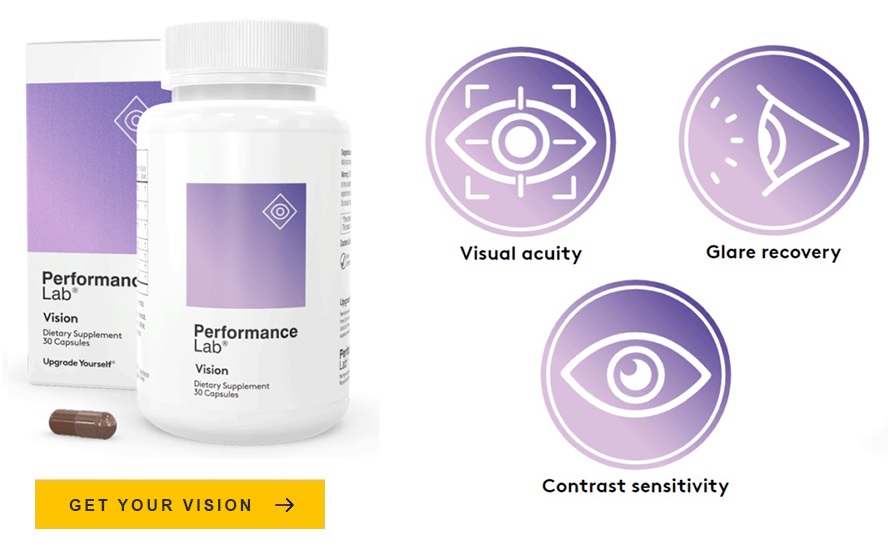
For most people in developed countries, the practical starting point is ensuring that lutein, zeaxanthin, and the berry anthocyanins are consistently provided, since vitamin A and zinc are more commonly adequate from diet. If you want to understand which supplement brings these ingredients together in a formula specifically designed around visual performance including low-light function, our Performance Lab Vision review covers the complete ingredient picture including the bilberry and blackcurrant components.