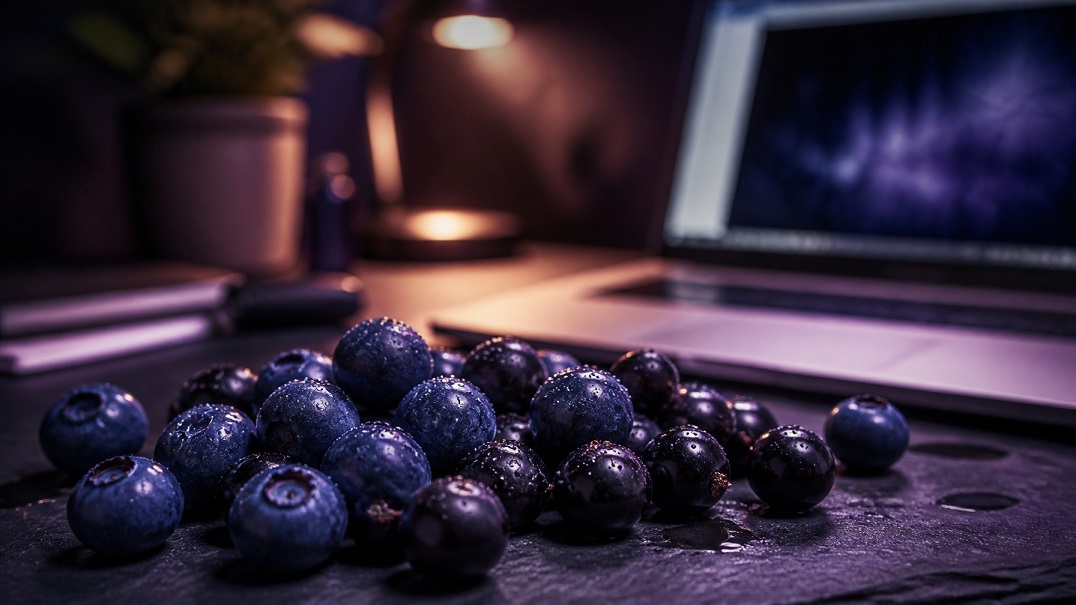
Possibly, yes. Several human trials suggest that anthocyanins, the deep purple pigments found in bilberries and blackcurrants, may reduce the focusing strain behind screen-related eye fatigue. The evidence is encouraging but not conclusive, because most studies are short and fairly small. Anthocyanins appear to work best alongside good screen habits, not in place of them.
What Anthocyanins Are and Where You Find Them
Anthocyanins are natural pigments that give blackcurrants, bilberries, blueberries, red cabbage, and purple grapes their rich color. Plants use them as protection against sunlight and stress, and in the human body they act as antioxidants.
Bilberry and blackcurrant are two of the most concentrated sources. Both are common in eye-focused supplements, and we cover each in depth in our guides to bilberry for vision and blackcurrant and eye health.
Why Your Eyes Get Tired in the First Place
Eye fatigue, which doctors call asthenopia, is often a muscle problem. To focus on something close, a small internal muscle called the ciliary muscle tightens and reshapes the lens. A screen keeps that muscle working at close range for hours, much like gripping a handle all day.
Blinking also drops sharply during screen use, which can add dryness and blur. If you are unsure which problem you have, our article on eye strain versus dry eyes can help you sort it out.
What the Research Shows About Anthocyanins and Eye Fatigue
The most useful studies so far use screen work as the test. In one 12-week trial, researchers gave 109 healthy adults either a standardized bilberry extract or a placebo. They reported that the bilberry group showed improved objective measures of ciliary muscle contraction after screen tasks, according to the published trial in the journal Nutrients. In plain terms, the focusing muscle appeared to tire less.
A second trial followed 44 adults who felt eye fatigue after screen work. They took either a placebo or a capsule combining anthocyanins, astaxanthin, and lutein for six weeks. The supplement group held on to more of its focusing response after screen use than the placebo group did, as described in the study published in the Journal of Clinical Biochemistry and Nutrition.
How Anthocyanins Might Ease Eye Strain
Researchers have proposed a few explanations. One is better circulation, since tired focusing muscles may benefit from steady blood flow. Another is antioxidant protection, because hard-working eye tissues produce reactive molecules that anthocyanins may help neutralize.
A third idea involves rhodopsin, the light-sensing pigment in your retina. Cyanidin-3-glucoside (C3G), a major blackcurrant anthocyanin, has been linked to rhodopsin regeneration in lab work. Whether that process matters for everyday eye fatigue is still an open question.
Setting Realistic Expectations
The trials above lasted six to twelve weeks, so anthocyanins are not a quick fix you feel in an afternoon. Think of them as a gradual, supportive habit. Results also varied between participants.
Additional relief comes from changing how you use your eyes. Try the 20-20-20 rule, improve your lighting, and blink deliberately during long sessions. Eating whole berries is a pleasant way to add anthocyanins, though supplements deliver more concentrated, standardized amounts.
See an eye care professional if your fatigue comes with persistent headaches, double vision, or sudden changes in sight. Those symptoms deserve a proper exam, not a supplement.
Where Performance Lab Vision Fits In
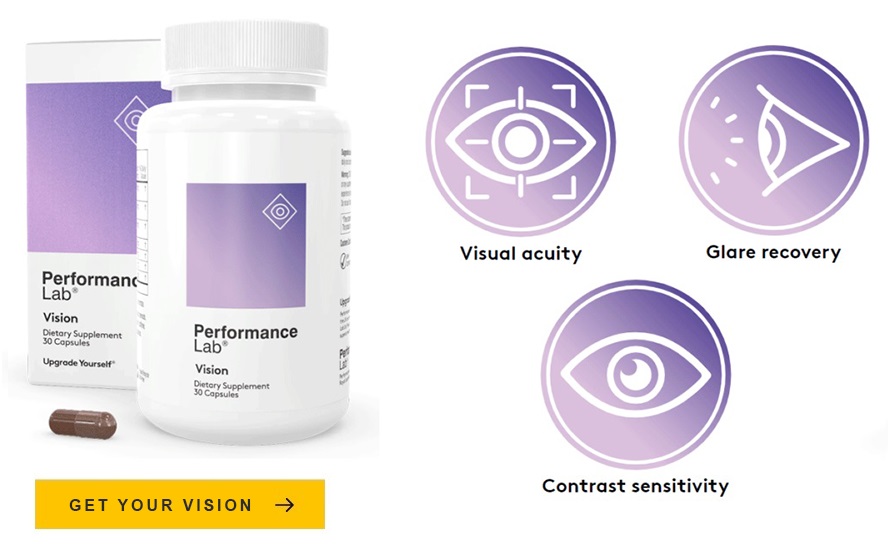
Performance Lab Vision includes three anthocyanin sources: 300 mg of freeze-dried European blackcurrant, 25 mg of blackcurrant extract, and 25 mg of bilberry extract. It pairs them with lutein, zeaxanthin, astaxanthin, and saffron. The formula shares ingredient types with the combined supplement studied above, though it is a different product at different doses, so those results should not be assumed to apply directly.