
Possibly, yes. A few small human trials suggest that astaxanthin, a red pigment from microalgae, may help the eyes hold their focus better after long stretches of screen work. The strongest signals appeared in adults over 40 after about six weeks of daily use. The research is early, the studies are small, and astaxanthin works best as a supplement to good screen habits, not a replacement for them.
What Eye Focusing Fatigue Actually Is
Doctors call your eyes’ ability to shift focus between distances accommodation. It relies on the ciliary muscle, a tiny ring of muscle inside the eye that changes the shape of your lens. Reading a phone or monitor keeps that muscle contracted for hours.
When it tires, you may notice blurry text, difficulty switching from screen to distance, or a heavy, strained feeling around the eyes. Our guide to digital eye strain covers the full symptom picture.
Why Researchers Study Astaxanthin for Accommodation
Astaxanthin is the carotenoid that gives salmon and flamingos their pink color, and the Haematococcus pluvialis microalga is a major commercial source. It is a strong antioxidant, and researchers have proposed that it may support circulation to the tissues around the focusing muscle. We explain the basics in our guide to astaxanthin for eyes.
What Human Trials Show About Astaxanthin and Eye Focus
One randomized, placebo-controlled trial followed 60 healthy adults who did regular screen work. Participants received either 9 mg of astaxanthin daily or a placebo for six weeks. Among those aged 40 and older, corrected visual acuity in the dominant eye held up better after screen work in the astaxanthin group, as reported in the published trial on PubMed Central. The researchers also tracked pupil constriction, which reflects how well the eye responds to near focusing, and the authors interpreted the results as astaxanthin reducing screen-related oxidative stress.
A second trial tested a combination of anthocyanins, astaxanthin, and lutein in 44 adults with screen-related eye fatigue. After six weeks, the supplement group kept more of its focusing response after screen use than the placebo group, and they also reported less trouble focusing on nearby objects, according to the study in the Journal of Clinical Biochemistry and Nutrition.
Why Adults Over 40 May Notice the Difference
The age pattern makes sense. The focusing system gradually stiffens with age, which is why reading glasses become common in midlife, as we explain in presbyopia explained. A muscle that is already working harder may have more room to benefit from extra support.
It also means astaxanthin will not reverse presbyopia. The trials measured how well focus held up under a screen workload, not whether anyone could ditch their glasses.
How to Set Realistic Expectations
Plan on weeks, not days. Both trials ran for six weeks before measuring results, and the effects were modest. Because astaxanthin is fat-soluble, it is generally best taken with a meal that includes some dietary fat.
Habits still do much of the lifting. Breaks from close work, a comfortable screen distance, and good lighting reduce the load on your focusing muscle directly. If you have persistent blur, double vision, or headaches, schedule an eye exam before assuming a supplement is the answer.
Questions Worth Asking Before You Try It
Start with the dose. The 60-person trial used 9 mg daily, and doses across eye studies vary, so check what a product actually delivers per serving. Next, consider your own situation. If you take blood-thinning medication, are pregnant or nursing, or have a medical condition, ask your doctor first.
Finally, rule out other causes. Blurry vision at the end of the day can come from an outdated prescription, dry eyes, or simple overuse. A short exam can separate these, and the 20-20-20 rule is a free way to start easing the load while you find out.
Where Performance Lab Vision Fits In
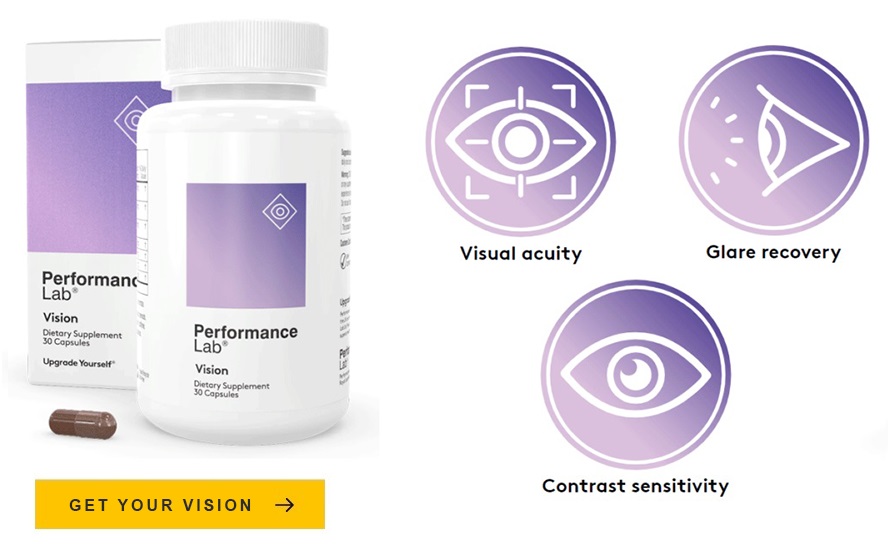
Performance Lab Vision provides 4 mg of astaxanthin from Haematococcus pluvialis algal extract, along with lutein, zeaxanthin, saffron, blackcurrant, and bilberry.