
Blackcurrant is not a berry that gets much attention in mainstream nutrition discussions. It is less visible than blueberry, less glamorous than acai, and less frequently found in the grocery produce section in North America, where it was actually banned from cultivation for most of the twentieth century due to concerns about a tree disease it can carry. In Japan and New Zealand, however, blackcurrant has been studied quite seriously as a functional food ingredient, and the research that has emerged from those investigations has some genuinely interesting things to say about visual performance.
The most studied compound in blackcurrant for eye health purposes is cyanidin-3-glucoside, commonly abbreviated as C3G. This is a specific anthocyanin, one of the dark pigment compounds that give blackcurrants their deep purple-black color, and it has attracted attention because its interactions with the visual system appear more specific and more directly documented than the general antioxidant properties shared by most berry-derived compounds.
Understanding what C3G does and why it is considered relevant to vision requires a brief look at how the eye processes light, and particularly how it regenerates the proteins that make low-light vision possible.
C3G and the Rhodopsin Regeneration Cycle
The connection between blackcurrant and eye health is most specific in the context of rhodopsin, the photopigment in the retina’s rod photoreceptors that initiates vision in low-light conditions. The mechanism here is more specific and better characterized than many ingredient claims in the eye health supplement space.
What Rhodopsin Does and Why Regeneration Matters
Rhodopsin is a protein that sits in the outer segment of rod photoreceptors and changes shape when it absorbs a photon of light. This shape change triggers the electrochemical cascade that ultimately results in a visual signal reaching the brain. After absorbing light, rhodopsin is bleached, meaning it has been altered into an inactive form and must be regenerated before it can participate in further visual signaling. The regeneration process involves the recycling of retinal (a form of vitamin A) through a series of biochemical steps called the visual cycle.
In conditions of changing light, such as walking from a bright room into a dark one, or driving from a lit road into an unlit area, the rate at which rhodopsin is regenerated directly determines how quickly useful vision is restored. People who notice that dark adaptation takes longer than it used to, or who find glare recovery after bright light exposure slow and uncomfortable, are experiencing reduced rhodopsin cycle efficiency. This is one of the more common and more practically disruptive visual changes associated with both aging and nutritional insufficiency.
How C3G Interacts With the Visual Cycle
Research published in the Journal of Nutritional Science and Vitaminology demonstrated that C3G from blackcurrant promotes rhodopsin regeneration through a specific interaction with the opsin protein. In laboratory studies, C3G was found to facilitate the recombination of retinal with opsin, effectively accelerating the regeneration of functional rhodopsin after bleaching. A subsequent human clinical trial found that blackcurrant anthocyanin supplementation improved dark adaptation speed in participants compared to placebo, with the improvement correlated with the C3G content of the supplement used.
This is a reasonably specific and mechanistically grounded finding. C3G is not simply providing nonspecific antioxidant support to the retina. It appears to interact with a specific step in the visual cycle in a way that has measurable functional consequences. The practical implication for night vision and dark adaptation is discussed in depth in our article on rhodopsin and how night vision works.
Blackcurrant and Visual Fatigue: Research From Japan
Much of the clinical research on blackcurrant for visual performance has been conducted in Japan, where blackcurrant (known locally as cassis) has been a popular functional food ingredient for several decades and where researchers have systematically investigated its effects on visual outcomes in office workers and others with high screen exposure.
Eye Fatigue and Accommodative Function
A double-blind, placebo-controlled trial published in the Journal of Ocular Pharmacology and Therapeutics tested the effects of blackcurrant anthocyanin supplementation in participants performing prolonged visual display terminal work. The study found that blackcurrant anthocyanins significantly reduced eye fatigue symptoms and improved accommodative function (the eye’s ability to shift focus) compared to placebo after two weeks of supplementation. The improvement in accommodation is particularly relevant for screen users, since sustained near-focus demand is a primary driver of the focus-shifting difficulty and blurred vision that characterizes end-of-day digital eye fatigue.
A separate study examined the effect of blackcurrant anthocyanins on visual sensitivity thresholds, finding that supplementation improved the sensitivity of the visual system to subtle light changes. This is a functional vision outcome relevant both to night driving performance and to the detection of fast visual cues in gaming and sport contexts. The cross-silo relevance of blackcurrant as an ingredient, touching on screen eye health, night vision, and visual performance for active people, makes it one of the more broadly useful components in any eye-focused nutritional formula.
Retinal Blood Flow Effects
Japanese research has also documented effects of blackcurrant anthocyanins on retinal blood flow. A trial using laser speckle flowgraphy, a non-invasive technique for measuring retinal circulation, found that blackcurrant supplementation increased blood flow velocity in retinal arteries and veins compared to placebo. Adequate retinal blood flow is foundational to visual function, delivering oxygen and glucose to the high-metabolic-demand photoreceptors and supporting the tissue integrity of the retinal vasculature. This vascular effect adds a dimension to blackcurrant’s eye health profile that overlaps with, but is distinct from, the rhodopsin regeneration story.
Blackcurrant Versus Bilberry: Understanding the Differences
Blackcurrant and bilberry are often mentioned in similar contexts in eye health discussions, and they share enough in common, both are anthocyanin-rich dark berries with effects on rhodopsin and retinal vascular health, that the question of whether they are interchangeable is reasonable. The answer is that they complement rather than substitute for each other.
Different Anthocyanin Profiles
While both berries contain C3G and other anthocyanins, their overall anthocyanin profiles differ. Bilberry contains a particularly diverse matrix of at least 15 different anthocyanoside compounds, and its research base is strongest in the areas of retinal capillary stabilization and the longer-term antioxidant protection of retinal tissue. Blackcurrant’s research base is more concentrated on the specific rhodopsin interaction of C3G and on the accommodation and visual fatigue outcomes demonstrated in the Japanese office worker trials.
Using both, as some multi-ingredient eye formulas do, provides a broader coverage of the anthocyanin-mediated mechanisms relevant to eye health rather than simply doubling up on a single effect. The combination of bilberry’s vascular and antioxidant profile with blackcurrant’s specific rhodopsin and accommodation effects addresses more of the relevant biology than either alone. Our article on bilberry for vision covers bilberry’s specific profile in detail for comparison.
What to Look for in Blackcurrant Supplements
As with bilberry, the quality and consistency of blackcurrant in supplements varies considerably. The research on blackcurrant for visual performance has primarily used extracts standardized to defined anthocyanin content, with the C3G fraction being the most relevant active compound to look for on a label.
Standardization and C3G Content
Blackcurrant extract standardized to a defined percentage of anthocyanins, with C3G specified as a component, provides the most meaningful transparency about what is actually in the product. The Japanese trials used doses providing roughly 50 mg of blackcurrant extract calibrated to contain defined anthocyanin fractions including C3G. Whole fruit powder, which some products use alongside extract, provides a broader complement of blackcurrant’s nutritional compounds even if the C3G concentration is lower per gram than in the extract. A well-designed product may include both extract for concentrated anthocyanin activity and whole fruit powder for the additional nutritional matrix.
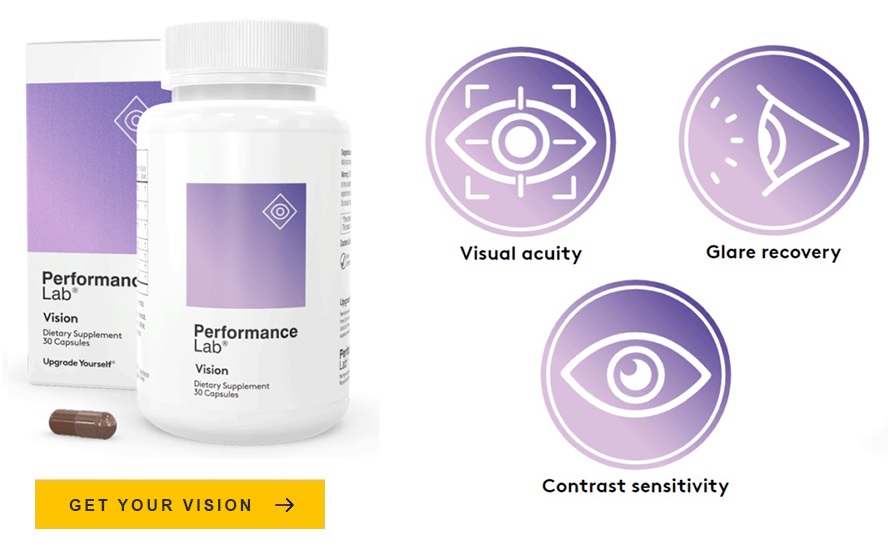
For those evaluating a specific eye supplement and wanting to understand how blackcurrant and the other key ingredients work together in a complete formula, our Performance Lab Vision review covers the ingredient rationale in full, including how the blackcurrant content is structured.
A Berry With a Specific Visual Story
Blackcurrant’s role in eye health is not the broad, nonspecific antioxidant story that gets applied to almost every dark berry on the market. The C3G-rhodopsin interaction is specific, mechanistically characterized, and supported by human clinical trials on visual outcomes. That combination puts blackcurrant in a relatively small category of botanical ingredients with genuine rather than theoretical eye health relevance.
It works best as part of a comprehensive eye nutrition approach that also addresses macular pigment, ciliary body oxidative stress, and the vascular health of the retina. For the broader picture of how these ingredients fit together, our overview of nutrition and screen eye protection brings the full nutritional case into one place.