
Most advice about screen eye health focuses on what you do around the screen: how far away you sit, how bright you keep it, how often you look away. That is sensible as far as it goes. But there is a parallel conversation happening at the cellular level, one about how well your eyes are equipped to handle screen exposure in the first place, and that conversation is almost entirely nutritional.
Your eyes are not passive recipients of whatever light hits them. They have active defenses, built from specific nutrients, that filter incoming light, neutralize oxidative damage, and maintain the function of the muscles that keep your vision in focus. When those defenses are well-stocked, your eyes handle screen time better. When they are running low, the same number of hours in front of a screen produces more fatigue, more strain, and potentially more long-term wear.
The research on eye nutrition has expanded considerably over the past two decades, and while it does not suggest that the right supplements will let you stare at screens indefinitely without consequence, it does suggest that nutrition meaningfully shifts the baseline from which your eyes are operating. Here is what the evidence actually supports.
How Screen Exposure Stresses the Eye at a Cellular Level
Before getting to the nutrients, it helps to understand what screen exposure is actually asking of your eyes, because the nutritional responses are more logical once you understand the demands they are responding to.
Oxidative Stress in the Retina
The retina is one of the most metabolically active tissues in the human body, consuming oxygen at a rate that rivals even the brain. High metabolic activity means high production of reactive oxygen species, the unstable molecules that cause oxidative damage to cells. Light exposure accelerates this process. Short-wavelength blue light, which screens emit in meaningful amounts, generates more oxidative stress per photon than longer-wavelength light, because higher-energy photons carry more potential for photochemical damage. The retina has antioxidant defenses to manage this, but those defenses are nutrient-dependent and can be depleted by sustained exposure over time.
Ciliary Muscle Fatigue and Focus Demand
Every time your eyes shift focus, the ciliary muscles inside the eye contract or relax to change the shape of the lens. During extended screen use, these muscles are held in a sustained near-contracted state for hours. The result is a kind of muscular fatigue that manifests as blurred vision, difficulty shifting focus, and a heavy, tired feeling behind the eyes. Some nutrients appear to support ciliary muscle function directly, which is a less commonly discussed angle in the eye nutrition literature but a practically important one for screen users specifically. This connects to the broader picture of what digital eye strain actually involves mechanically.
Lutein and Zeaxanthin: The Eye’s Built-In Screen Filter
If there are two nutrients that every screen user should know about, these are the ones. Lutein and zeaxanthin are carotenoid pigments that accumulate selectively in the macula, the central region of the retina responsible for sharp, detailed vision. Together they form the macular pigment, a yellow layer that sits in front of the photoreceptors and absorbs blue light before it reaches them.
What Macular Pigment Actually Does
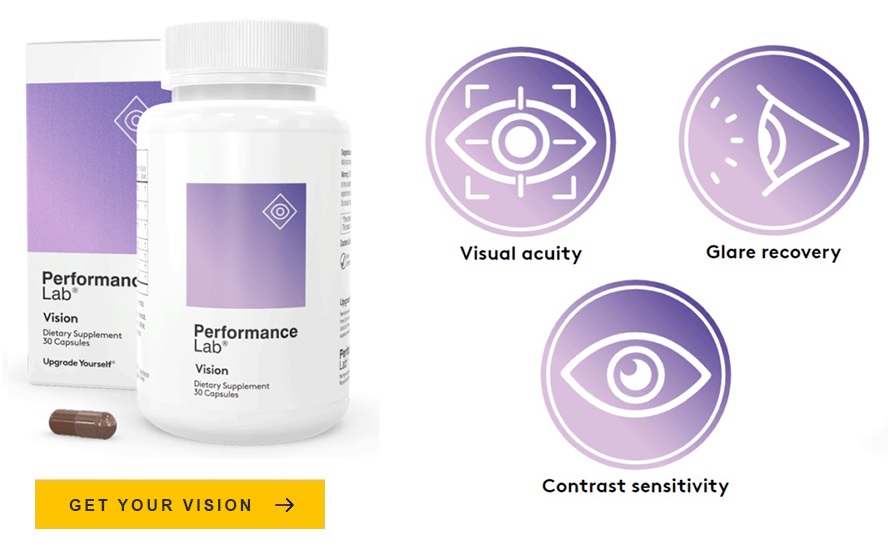
The macular pigment functions as the eye’s own spectral filter. It preferentially absorbs short-wavelength blue light, the same wavelengths that screens emit most relevantly, and dissipates that energy harmlessly before it can generate oxidative stress in the photoreceptors beneath. People with denser macular pigment filter more blue light passively and continuously, with no glasses or software required. Research has linked higher macular pigment optical density to better contrast sensitivity, reduced glare sensitivity, and faster recovery from bright light exposure, all of which translate directly to a more comfortable screen experience.
The critical point is that the body cannot synthesize lutein or zeaxanthin on its own. They must come from food or supplements. Dark leafy greens like kale and spinach are the richest dietary sources, but the amounts required to meaningfully build macular pigment are difficult to achieve through diet alone for most people. Supplementation with clinically relevant doses, typically 10 mg of lutein and 2 mg of zeaxanthin daily, is the approach most supported by the research on macular pigment development. Our detailed guide to lutein for eye health covers the clinical evidence in full.
How Long It Takes to Build Macular Pigment
Building macular pigment is not a fast process. Studies measuring macular pigment optical density typically show meaningful increases after three to six months of consistent supplementation, with continued improvement for up to a year or more. This is not a supplement you take for a week and evaluate. It is more analogous to a long-term investment in the eye’s structural defenses. The practical implication is that starting earlier rather than later makes more sense, particularly for anyone spending significant time on screens daily.
Astaxanthin: The Nutrient for Screen-Induced Eye Fatigue
Astaxanthin occupies a different position in the eye nutrition picture than lutein and zeaxanthin. Rather than building a structural filter in the retina, it appears to address the functional fatigue that comes from sustained near-focus work, which makes it particularly relevant for screen users whose primary complaint is tired, heavy eyes rather than long-term retinal concerns.
Astaxanthin and Ciliary Muscle Recovery
Astaxanthin is a red-orange carotenoid derived from microalgae and is among the most potent antioxidants found in nature, with antioxidant activity significantly higher than either vitamin E or standard carotenoids like beta-carotene. Several Japanese clinical trials, conducted on office workers and others with high screen exposure, found that astaxanthin supplementation reduced subjective eye fatigue scores and improved the eye’s ability to adjust focus (accommodation) compared to placebo. The proposed mechanism involves astaxanthin’s ability to reduce oxidative stress in the ciliary body, the structure containing the ciliary muscles that control focus adjustment.
The doses used in these trials were typically in the range of 6 to 12 mg daily. Astaxanthin is fat-soluble, so taking it with a meal containing some dietary fat improves absorption. For a complete picture of what the research shows on this ingredient, our astaxanthin for eye health article covers the studies and the mechanisms in detail.
Why Astaxanthin Is Different From Other Eye Antioxidants
Most antioxidants are either water-soluble or fat-soluble, which limits where in the body they can travel and act. Astaxanthin is unusual in being able to cross both the blood-brain barrier and the blood-retinal barrier, which restricts what most molecules can reach in the eye. This means it can deliver antioxidant activity directly to retinal tissue and to the neural structures involved in visual processing, rather than acting only at the level of circulating blood. For eye health purposes, this unusual chemical property makes it functionally distinctive compared to most antioxidant supplements.
Supporting Nutrients Worth Knowing About
Lutein, zeaxanthin, and astaxanthin are the three most directly relevant nutrients for screen eye health, but they do not operate in isolation. Several other nutrients contribute to the broader environment of eye health that determines how well those primary defenses function.
Anthocyanins From Bilberry and Blackcurrant
Bilberry and blackcurrant contain anthocyanins, dark-purple plant pigments with antioxidant properties and a specific role in supporting retinal blood flow and the regeneration of rhodopsin, the light-sensitive pigment used in low-light vision. Some research suggests anthocyanins from these sources may also support visual acuity under conditions of eye fatigue. They are worth noting here because their benefits extend beyond night vision, their most commonly cited application, into the general territory of maintaining visual performance under sustained demand.
Saffron and Visual Sensitivity
Saffron, the spice derived from crocus flowers, contains antioxidant compounds called crocin and safranal that have shown interesting effects on retinal function in clinical research. Studies have found improvements in retinal flicker sensitivity (the ability to detect rapid visual changes) and protective effects on photoreceptors in people with early macular changes. For screen users, the relevance is more indirect, but saffron’s antioxidant activity in the retina contributes to the overall protection of the visual system under sustained light exposure. It is a genuinely unusual ingredient, and our dedicated piece on saffron for eye health covers why it deserves more attention than it typically receives.
Nutrition as Foundation, Not Magic
Eye nutrition for screen users is not about finding a supplement that makes screen time consequence-free. It is about building and maintaining the defenses your eyes already have, so that the same hours in front of a screen put less strain on your visual system than they would if those defenses were running low. Macular pigment built from lutein and zeaxanthin filters blue light around the clock. Astaxanthin supports the muscles and tissues involved in sustained focus. Anthocyanins and saffron contribute antioxidant coverage across the retina.
These are not dramatic interventions. They are the kind of quiet, consistent support that produces results over months rather than days, which is precisely why they are easy to overlook. If you want to understand which supplement brings these ingredients together most effectively and what to look for on a label, our guide to reading eye supplement labels is a practical next step.