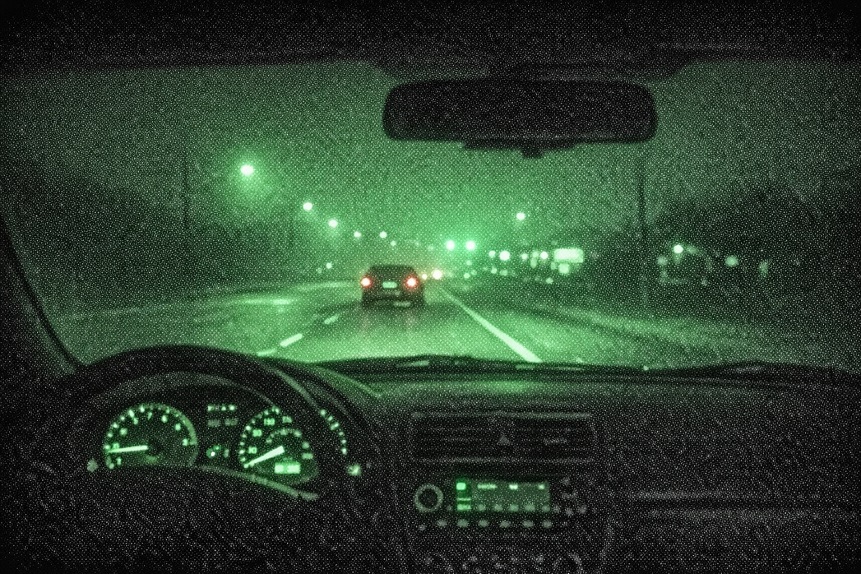
Most people who experience glare and halos at night describe the same progression. It starts as a mild annoyance, oncoming headlights that seem brighter than they used to, streetlights with a soft haze around them. Then it becomes something that requires active management when driving, looking slightly away from bright lights, choosing familiar routes, feeling less confident in conditions that were once routine. For some people, it progresses to the point where night driving becomes genuinely uncomfortable or unsafe.
Glare and halos at night are among the most frequently reported visual complaints by adults over 40, and yet they are also among the least discussed in routine eye care, partly because they rarely show up on the standard measurements taken during an eye exam and partly because many people accept them as an inevitable feature of aging vision rather than as symptoms that deserve investigation and management.
Understanding what causes these phenomena, which causes are benign and which warrant clinical attention, and what can actually help separates the addressable from the truly inevitable in a way that is practically useful.
The Optics of Glare and Halos: What Is Actually Happening
Glare and halos are both produced by the scattering of light inside the eye, but they differ in their specific optical characteristics and underlying causes.
Glare: Veiling Luminance and Disability Glare
Glare occurs when a bright light source in the visual field creates a diffuse wash of light across the retinal image, reducing the contrast of other objects in the scene. This is called veiling luminance, and it is disability glare when it impairs visual function rather than simply being uncomfortable. When an oncoming headlight’s scattered light washes across the retinal image of the dark road ahead, the contrast of that road is reduced and the ability to detect low-contrast objects like pedestrians or road edges is impaired. The brightness of the glare source itself is not the primary problem. The secondary effect of its scattered light on contrast elsewhere in the visual field is.
The scattering responsible for disability glare comes primarily from imperfections in the optical media of the eye. The cornea, aqueous humor, crystalline lens, and vitreous all contribute to intraocular scatter, and this scatter increases with age as the lens in particular accumulates protein aggregates and begins to develop the opacity that ultimately constitutes a cataract. Even before cataract reaches a clinically significant level, the aging lens scatters more light than a young lens, producing progressively more disability glare under the same conditions.
Halos: Diffraction and Irregular Optics
Halos are rings of light seen around bright sources, produced by a different optical mechanism than glare. Diffraction, the bending of light around edges, and irregular refraction through the optical media of the eye produce the spreading of the light source into a halo pattern. The size and appearance of halos depends on the specific optical aberrations present in the eye. People with large pupils in dim conditions experience more halo because the peripheral optical zones of the cornea and lens, which have more aberrations than the central zones, are included in the light-gathering area when the pupil is wide.
Halos are common after refractive surgery and in people with early lens changes, because both conditions alter the regular optical structure of the eye in ways that increase diffraction and aberration. Dry eyes can also produce halo-like symptoms by disrupting the smooth tear film surface that is the first refractive element of the visual system. When the tear film is irregular, the wavefront of incoming light is distorted, producing the visual noise that manifests as halos and starbursts around bright sources.
The Main Causes of Night Glare and Halos: From Benign to Serious
Not all glare and halos have the same cause or the same clinical significance. Knowing the spectrum of causes helps in understanding when a symptom is manageable and when it warrants professional evaluation.
Age-Related Lens Changes and Early Cataract
The most common cause of progressive night glare in adults over 50 is age-related lens changes, ranging from the subtle yellowing and increased scatter of normal lens aging to the more significant opacity of early cataract. The crystalline lens becomes progressively less transparent with age, scattering more light and reducing the quality of the retinal image. Early cataracts often produce more dramatic visual symptoms at night than during the day because the dilated pupil in dim conditions exposes more of the peripheral, more opaque lens to incoming light, while the constricted daytime pupil uses primarily the less opaque central lens zone.
Early cataract-related glare and halos are generally progressive rather than static. If you notice that your night glare symptoms have changed significantly in the past year or two, an eye care professional should assess whether lens changes are a contributing factor. Cataract surgery, when indicated, is highly effective and almost always dramatically reduces the glare and halo symptoms associated with lens opacity. Nutritionally, there is reasonable evidence that long-term antioxidant nutrition, including vitamin C, vitamin E, and lutein, supports lens transparency by protecting the lens protein structure from oxidative damage. This is a preventive rather than a treatment role.
Dry Eye and Tear Film Irregularity
Dry eye is an underappreciated cause of night glare and halos. The tear film covering the corneal surface must be smooth and regular to function as the high-quality first refractive surface the eye needs. When the tear film is unstable or irregular, as in dry eye disease, incoming light is refracted irregularly, producing a diffuse visual noise that is particularly noticeable at night when the visual system is working harder to detect low-contrast objects. Many people with dry eye notice that their glare and halo symptoms fluctuate with blinking, improving momentarily after a full blink that smooths the tear film surface and worsening as the film breaks up again.
Dry eye related glare is treated by addressing the underlying tear film instability: lubricating eye drops, meibomian gland management, and omega-3 fatty acid supplementation for tear film quality. If your glare symptoms fluctuate and respond to blinking or eye drops, tear film irregularity is likely a significant contributor and is worth addressing directly rather than accepting the symptoms as fixed.
Uncorrected Refractive Error
Myopia (nearsightedness), astigmatism, and higher-order aberrations that are not fully corrected by spectacles or contact lenses produce glare and halo symptoms through optical imperfections in the retinal image. Astigmatism in particular creates characteristic starburst or streak patterns around bright light sources that are immediately recognizable once identified. An outdated glasses prescription or poor contact lens fit can significantly worsen night glare. For anyone experiencing worsened night glare who has not had a vision assessment recently, this is one of the first and most easily addressed potential causes.
What Actually Helps: The Evidence-Grounded Options
The approaches with the most useful evidence for reducing night glare and halos address the specific causes identified above rather than attempting a general fix.
Macular Pigment and Glare Sensitivity
Higher macular pigment optical density is associated with reduced glare sensitivity in multiple studies. The mechanism involves the macular pigment’s selective absorption of blue-violet light, which scatters more inside the eye than longer wavelengths and contributes disproportionately to the veiling luminance of glare. By absorbing this light at the macular level before it can contribute to the scattered background luminance, denser macular pigment reduces the contrast-degrading effect of glare. This is one of the functional vision benefits of building macular pigment through consistent lutein and zeaxanthin intake that is most relevant to the specific experience of night glare. As always, macular pigment development requires months of consistent supplementation at evidence-based doses. The complete picture is in our article on macular pigment and why it matters.
Anti-Reflective Coatings on Spectacle Lenses
Anti-reflective coatings on glasses significantly reduce the secondary images and internal reflections within the lens that contribute to glare symptoms for spectacle wearers. Uncoated lenses reflect several percent of incoming light from each surface, creating ghost images that add to the visual noise of night glare. Quality anti-reflective coatings reduce surface reflections to less than half a percent per surface, meaningfully reducing internal lens reflections. If you wear glasses and experience night glare, ensuring your lenses have a quality anti-reflective coating is one of the most cost-effective practical improvements available.
Addressing Dry Eye for Tear Film Stability
For glare and halo symptoms driven by tear film irregularity, consistent use of lubricating eye drops (particularly before night driving), attention to blinking habits, and longer-term management of dry eye through omega-3 supplementation and meibomian gland care address the root cause rather than the symptom. Our overview of eye strain and dry eyes covers the management of dry eye in the context of visual comfort more broadly.
When Glare and Halos Warrant Professional Evaluation
Most night glare is benign and manageable, but certain presentations deserve professional assessment rather than self-management. Glare or halo symptoms that have appeared or worsened suddenly, particularly when accompanied by pain, redness, or changes in daytime vision, require prompt evaluation. Halos with a distinctive colored ring pattern around lights (classically a rainbow halo) can be a symptom of elevated intraocular pressure and should be evaluated promptly. Glare that is significantly asymmetric between the two eyes, or that seems dramatically worse than what peers of the same age describe, is worth having assessed for lens changes, corneal disease, or other causes that are amenable to specific treatment.
Night glare that has been consistent and stable for years, that fluctuates with blinking, or that is clearly worse in one eye and has been assessed before without finding pathology is more likely to be in the manageable territory described throughout this article. For a broader picture of how age-related changes contribute to the experience of night driving specifically, our article on night driving and visual support brings the practical elements together.