
Anyone who has logged a six-hour gaming session and then tried to read a text message knows the feeling. The words blur slightly. Shifting focus to something across the room takes a moment longer than it should. The eyes feel like they have been running a race the rest of the body sat out. Gaming-related eye fatigue is real, it is common, and it is more interesting mechanistically than most people realize, because gaming creates visual demands that are genuinely different from other screen activities in both their intensity and their composition.
The esports world has brought serious attention to visual performance that the broader gaming community has been slower to adopt. Professional esports players increasingly treat their vision as a performance system to be optimized and protected, not just a passive requirement for playing. That mindset is worth bringing to casual and enthusiast gaming as well, because the visual demands are the same regardless of whether your rank is on the line.
Understanding what is happening to your eyes during a long gaming session changes how you approach both the session itself and the recovery from it. There is more going on than simple screen fatigue, and addressing it well requires knowing which mechanisms are most relevant.
Why Gaming Creates Uniquely Demanding Visual Conditions
Gaming is not the same as watching a screen or reading a document. The visual demands are higher, more varied, and more sustained than most other screen activities, which is why gaming-specific eye fatigue has its own character.
High-Intensity Focus and Reduced Blinking
The blink rate during intense gaming can drop to extraordinarily low levels, sometimes to two or three blinks per minute, compared to a normal resting rate of 15 to 20. Competitive gaming demands sustained visual concentration on specific screen areas, rapid detection of visual cues, and minimal distraction, all of which suppress the blink reflex. The result is that the tear film, which requires blinking to be replenished and redistributed, breaks down rapidly and the eye surface begins to dry out. Gaming sessions of two hours or more without deliberate blinking habits almost inevitably produce some degree of dry eye symptoms, ranging from a gritty or burning sensation to the paradoxical reflex tearing that dry eyes sometimes trigger.
This dry eye component of gaming fatigue is separate from, and often more immediately uncomfortable than, the ciliary muscle fatigue that drives the focus-shifting difficulty afterward. Many gamers treat both as a single undifferentiated problem called eye strain and reach for drops, breaks, or caffeine without distinguishing between them. The distinction matters for choosing the right response. Our article on eye strain versus dry eyes covers how to tell them apart and what helps each one.
Rapid Visual Processing and Extraocular Muscle Demand
Gaming, particularly competitive gaming in fast-paced genres like first-person shooters, real-time strategy, or fighting games, demands extremely rapid and precise eye movements. Tracking fast-moving objects, scanning screens for visual information, and making accurate targeting judgments all involve the extraocular muscles, the six muscles that move each eye in its socket. These muscles are small, fast, and highly precise, but they are not immune to fatigue under sustained high-demand conditions. The headaches and orbital aching that heavy gamers sometimes experience after long sessions reflect this extraocular muscle fatigue as much as ciliary muscle strain.
High-resolution gaming at high frame rates amplifies this demand. The visual system has more information to process per second, more subtle movement cues to respond to, and more precision required from the extraocular muscles to track them accurately. This is one of the reasons the improvement in gaming performance from high refresh rate monitors (144Hz and above compared to 60Hz) is perceptible and real: the visual system can resolve and respond to the more fluid motion information more efficiently.
Blue Light, Gaming Environments, and Eye Protection
Gaming environments tend to be darker than typical office setups, with screens set at high brightness and often additional RGB lighting creating a high-contrast visual environment. This specific combination creates distinct blue light and glare challenges.
High-Contrast Gaming Environments and Visual Strain
A bright monitor in a dark gaming room creates one of the worst possible luminance balance conditions for eye health. The eye must continuously adapt between the bright screen and the much darker surroundings, and over a long session this adaptation demand accumulates into significant fatigue. Increasing ambient lighting in the gaming environment, even with a gentle warm-toned LED strip behind the monitor providing what display enthusiasts call bias lighting, reduces the luminance contrast and measurably reduces the fatigue that comes from it.
Many gaming monitors have preset display modes with boosted brightness and vivid color enhancement designed to make games look dramatic. These modes prioritize visual impact over sustained comfort. Switching to a more neutral display profile with reduced brightness for long sessions, and reserving the high-brightness mode for short sessions where visual impact matters more than comfort, is a worthwhile adjustment. The monitor setting principles in our guide to monitor settings for eye health apply directly to gaming displays.
Macular Pigment Protection for High-Screen-Exposure Individuals
Gamers who spend five or more hours daily in front of screens are among the highest-exposure groups for cumulative screen-based blue light and the associated oxidative stress at the retinal level. The macular pigment formed by lutein and zeaxanthin provides the eye’s primary internal defense against this oxidative stress. Research on macular pigment density consistently shows that most people, and younger people in particular whose diets tend to be lower in green vegetables, have suboptimal macular pigment levels. Building and maintaining adequate macular pigment through consistent nutritional intake is one of the most evidence-supported long-term protective measures for anyone with high daily screen exposure, including gamers. The full picture on what macular pigment is and how it is built is covered in our article on macular pigment and why it matters.
Visual Performance as a Gaming Competitive Edge
The conversation about gaming and eye health does not have to be purely defensive. The same visual system that suffers under poor conditions also performs better under good ones, and several aspects of visual performance that matter in competitive gaming respond to both training and nutritional support.
Contrast Sensitivity and Target Detection
Contrast sensitivity, the ability to distinguish objects from backgrounds that are similar in brightness or color, is a visual performance metric that matters enormously in gaming. Detecting an enemy in a complex visual environment, tracking a fast-moving target against a variable background, or reading subtle environmental cues all depend on contrast sensitivity. Research has found associations between higher macular pigment optical density and better contrast sensitivity, which provides an interesting nutritional angle on gaming performance beyond just protecting against fatigue.
Reaction Time and Visual Processing Speed
Visual reaction time, the interval between a visual stimulus appearing and the motor response being initiated, has both perceptual and neural components. The perceptual component includes how quickly the visual system detects and processes the stimulus. Several nutrients, including astaxanthin and the anthocyanins found in bilberry and blackcurrant, have been studied for their effects on retinal signaling speed and visual processing. The evidence is not yet definitive enough to make strong claims, but the biological plausibility is solid, and these same nutrients serve the protective function of reducing eye fatigue during long sessions simultaneously. Our overview of visual reaction time and supplementation covers the performance research in more detail.
Practical Habits for Gamers Who Want to Protect Their Eyes
Several adjustments produce meaningful reductions in gaming-related eye fatigue without requiring significant compromises to the gaming experience itself.
Deliberate Blinking and Session Structure
The most immediately impactful habit for gaming eye health is deliberate blinking during natural pause moments: loading screens, respawn waits, cutscenes, and round transitions. Ten full, slow blinks during each of these pauses redistributes tear film and provides the lubrication reset that the game’s demands prevent during active play. This requires almost no interruption to the session and addresses the primary driver of short-term discomfort during gaming.
Structuring sessions with a genuine break at the two-hour mark, rather than simply pausing, allows both the ciliary muscles and the extraocular muscles to release tension that they have been holding. Getting up, moving, and looking at distant objects for five minutes every two hours is more effective for fatigue management than shorter or more frequent micro-pauses during active play.
Hydration, Environment, and Supplemental Support
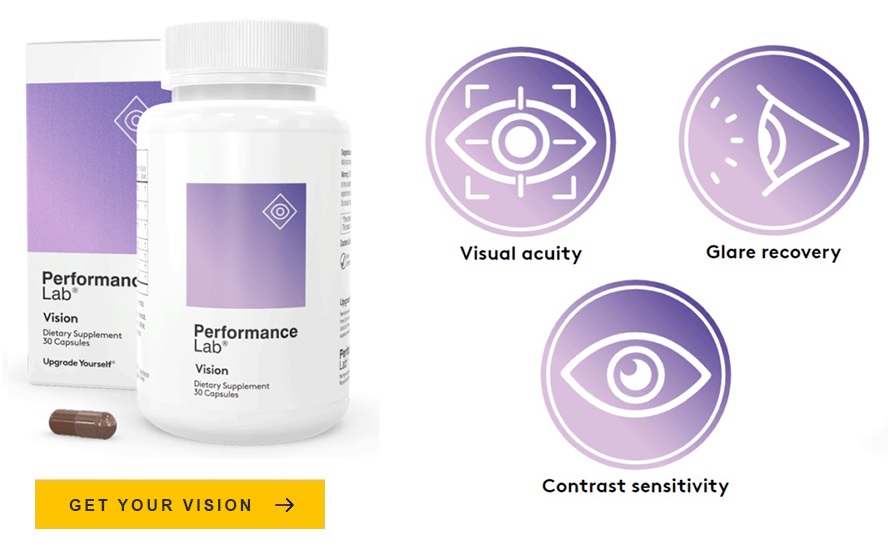
Hydration affects tear film quality and dry eye susceptibility more than most gamers appreciate. Mild dehydration, common during long sessions where drinking is deprioritized, contributes to reduced tear film stability. Keeping water available and drinking regularly during sessions is a simple and underrated eye health habit. Adding lubricating eye drops at the start of a long session, rather than waiting for discomfort to develop, provides a useful buffer against the tear film breakdown that begins within the first hour of high-concentration screen use. For gamers interested in a more comprehensive nutritional approach to both eye protection and visual performance, our review of Performance Lab Vision covers a supplement specifically formulated around the ingredients most relevant to both goals.
Your Eyes Are Part of Your Gaming Setup
The gaming community invests seriously in peripherals, hardware, and technique. The visual system driving all of it deserves the same level of intentional attention. Eye fatigue during long sessions is not an inevitable cost of gaming. It is a signal from a performance system under load, and like any performance system, it responds well to being properly equipped, supported, and managed.
The steps that protect gaming eye health, from optimized display settings to nutritional support for macular pigment and visual performance, are the same steps that allow the visual system to perform at its best. For the competitive gamer, that framing is probably more motivating than the protective one, but the outcome is the same either way.