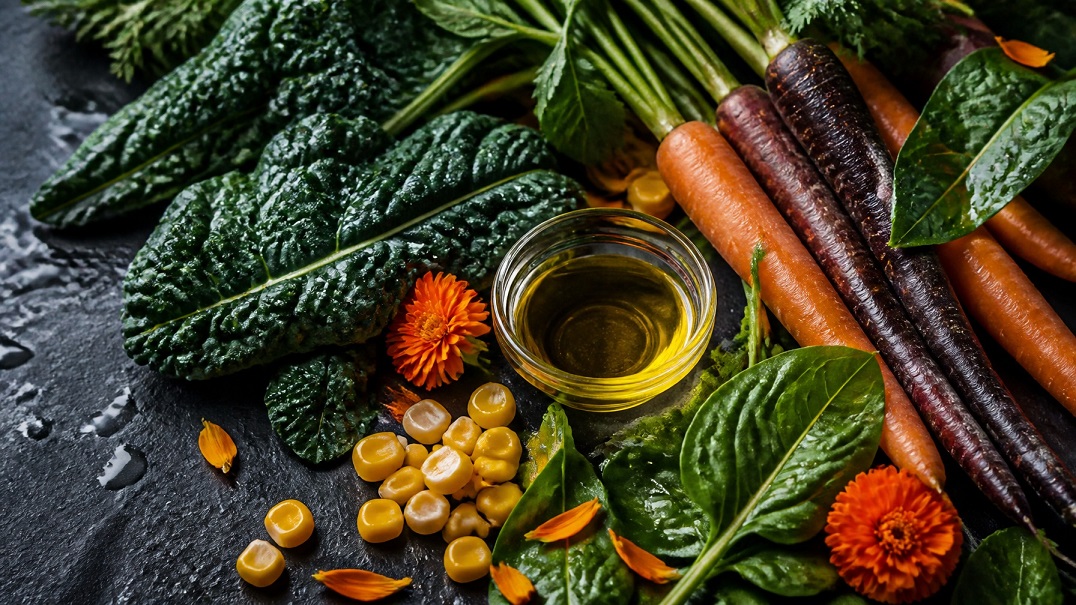
For some nutrients, yes. For others, it takes planning. Plant-based diets can deliver plenty of lutein and zeaxanthin, and these are the pigments most tied to the macula. The harder ones are the omega-3 DHA, which comes mainly from fish and algae, and zinc, which is absorbed less efficiently from plants. A well-planned vegetarian or vegan diet can cover most needs, with a few gaps worth watching.
Lutein and Zeaxanthin Are Plant Pigments
Good news first. Lutein and zeaxanthin are found in most fruits and vegetables, especially leafy greens and yellow or orange varieties, according to Harvard Health. Spinach, kale, corn, peas, and broccoli are all solid choices.
Harvard also notes that egg yolks are an even richer source. Lacto-ovo vegetarians can use eggs, while vegans rely on greens. Our guide to foods highest in lutein and zeaxanthin lists specific amounts.
Cooking and Fat Help You Absorb More
Raw spinach is not always the best route. These pigments are fat-soluble, so pairing greens with olive oil, avocado, or nuts helps you absorb them. Our article on cooking greens and lutein absorption explains why a quick sauté can beat a plain salad.
DHA Is the Tricky Omega-3
The retina is rich in DHA, a long-chain omega-3 that Harvard Health describes as important to retinal health. Fish are the classic source. Plant foods such as flaxseed and walnuts provide a different omega-3 called ALA instead.
That matters because ALA converts to DHA slowly and inefficiently. A review in the Medical Journal of Australia found that intakes of EPA and DHA are low in vegetarians and virtually absent in vegans, and that blood levels run lower. The authors noted that the clinical significance is unknown, and that vegetarians do not show clinical signs of DHA deficiency.
The same review suggested that people with higher needs may benefit from microalgae-derived DHA supplements. Algae are where fish get their DHA in the first place, which makes them a natural vegan option. Our guide to omega-3 fatty acids and eye health goes deeper.
Zinc Needs Extra Attention
Zinc is a core part of the AREDS eye formula, and plants contain it, but absorption is lower. CDC nutrition data note that vegetarians may require as much as 50% more dietary zinc, especially strict vegetarians who rely on grains and legumes, according to the CDC. Natural compounds in grains and legumes called phytates interfere with absorption.
Good plant sources include beans, nuts, and seeds. Soaking, sprouting, and fermenting can improve absorption. Our article on zinc and the retinal pigment epithelium covers why this mineral matters.
What an Eye-Friendly Plant-Based Day Can Look Like
Planning does not have to be complicated. Start the day with oatmeal topped with walnuts and ground flaxseed. At lunch, build a bowl around sautéed spinach or kale, corn, and beans, finished with olive oil. Dinner might be a lentil and vegetable stew with a side of broccoli.
That single day covers leafy greens with fat, a plant omega-3, and zinc-containing legumes and nuts. It will not supply DHA, but it gives your retina a solid base of the nutrients food does deliver well.
Where Supplements Can Help
Some compounds, like astaxanthin, are not part of a typical diet of any kind. Astaxanthin comes from algae and the seafood that eats it, so most vegetarians and omnivores alike get very little from food. A vegan-friendly algal source fills that gap.
A thoughtful plan might include daily greens with healthy fat, an algae-based DHA, attention to zinc, and a supplement for ingredients that food does not easily provide. Check with your doctor or a registered dietitian before adding anything, particularly if you are pregnant or managing a health condition.
Where Performance Lab Vision Fits In
Performance Lab Vision provides lutein and zeaxanthin from marigold flower extract and astaxanthin from algae, along with saffron, bilberry, and blackcurrant. Those are plant and algae sources.