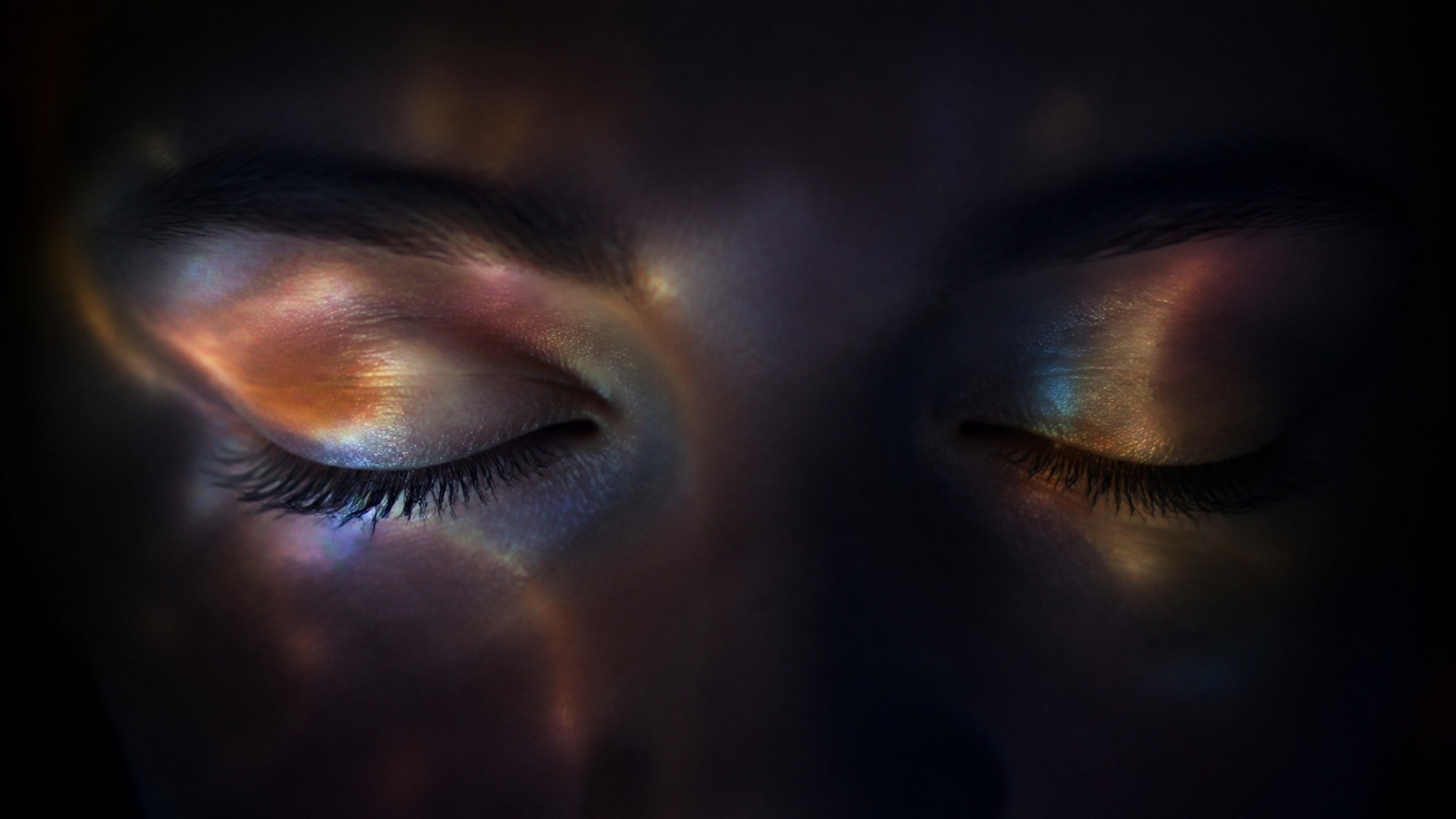
Press your closed eyes gently with your fingertips in a dark room and within a few seconds you’ll likely see something: swirling patches of color, a faint grid of light, maybe a bright ring that seems to hover in front of you. None of it is real in the sense that no actual light is entering your eye. Your eyelids are closed, the room is dark, and yet your visual system insists it’s seeing something anyway. This phenomenon has a name, phosphenes, and it shows up in far more situations than most people realize, from a hard sneeze to a blow to the head to, strangely enough, deep space travel.
What Is Actually Happening Inside Your Eye
A phosphene is any visual sensation of light that occurs without light actually entering the eye and reaching the retina in the normal way. The name comes from the Greek words for light and to show, and it describes a fairly simple underlying idea: the cells and neurons that make up your visual system don’t actually require photons to fire. They just require some kind of stimulation, and your brain interprets any signal coming down the visual pathway as light, regardless of what actually triggered it.
The Retina Doesn’t Care What Triggered It
Under normal conditions, light hits the photoreceptor cells in your retina, those cells convert that light into electrical signals, and those signals travel up the optic nerve to the visual cortex in your brain, which assembles the incoming information into the image you perceive. Mechanical pressure, like the kind you apply when rubbing tired eyes, physically deforms the retina and stimulates those same photoreceptor cells and neurons in a way that mimics the electrical signal light normally produces. The brain, receiving a familiar-looking signal from a familiar pathway, does the only thing it knows how to do with that information: it interprets it as light. The specific patterns people report, rings, grids, drifting colored patches, largely reflect the physical layout of the retina itself rather than anything meaningful about the outside world.
The Scientist Who Put a Needle Next to His Own Eye
Long before anyone understood retinal cells or optic nerves, people noticed that pressing on the eye produced strange visual effects, with descriptions of the phenomenon going back to antiquity. The most famous early investigation, however, came from Isaac Newton, who in 1666 conducted a self-experiment that still makes most people wince. Newton took a bodkin, a long, blunt needle typically used for lacing, and carefully inserted it between his eye and the bone of the eye socket, pressing gently against the back of his eyeball to alter its curvature. By his own account, this produced white, dark, and colored circles in his vision, appearing on the side of his visual field opposite from where he applied pressure.
What Newton’s Experiment Actually Proved
Reckless as it sounds today, Newton’s bodkin experiment served a genuine scientific purpose. For centuries, some philosophers and physicians had entertained the idea that the eye itself generated a kind of internal light necessary for vision. Newton’s careful, repeatable demonstration that pressure alone, applied in a completely dark environment, could reliably produce the sensation of light helped push scientific understanding toward the correct explanation: that these visual effects were the result of mechanical stimulation of the eye’s own structures rather than any physical light being created inside it. It was a dangerous way to test a theory, but it worked.
Why a Hard Sneeze Can Make You See Sparks Too
Rubbing your eyes is an obvious, deliberate way to trigger a phosphene, but plenty of people notice the same brief flashes after sneezing hard, coughing forcefully, blowing their nose, or straining during exercise. The mechanism here is closely related, just less direct. A powerful sneeze or cough briefly and significantly raises pressure inside the chest and head, and some of that pressure change reaches the eye itself, providing enough mechanical stimulation to the retina to produce the same kind of momentary flash. A related but separate cause shows up when you stand up too quickly and briefly see spots or a dimming of vision, which typically comes from a sudden, temporary dip in blood pressure rather than direct mechanical pressure. In that case, the retina and visual cortex are momentarily under-supplied with oxygen and glucose, and the resulting stressed neurons fire somewhat erratically, producing a similar visual effect through a different physiological route entirely.
When Astronauts See Stars for a Completely Different Reason
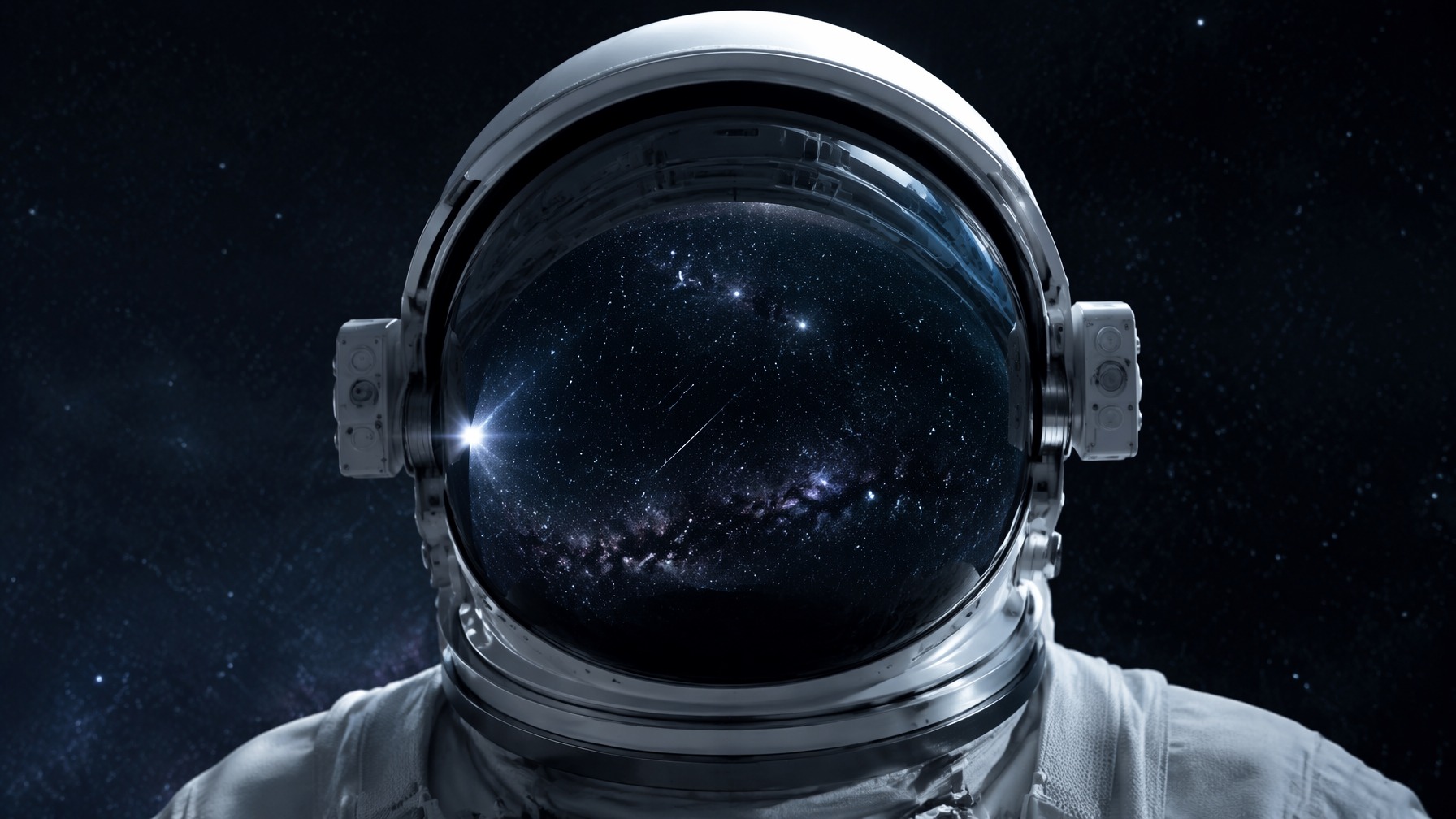
Perhaps the strangest and most striking example of phosphenes has nothing to do with pressure, blood flow, or eye rubbing at all. Starting with the Apollo 11 mission in 1969, astronauts traveling beyond Earth’s protective magnetic field began reporting an odd phenomenon during rest periods in a darkened cabin. With their eyes open or closed, they would see brief flashes, streaks, and occasional larger cloud-like bursts of light, even though there was no light source present. Apollo 15 astronaut James Irwin described one especially memorable flash as a brilliant streak crossing his retina.
How Cosmic Rays Trick the Eye Into Seeing Light
The explanation turned out to be genuinely strange: cosmic rays, high-energy particles originating from deep space, were passing directly through the astronauts’ eyes and, in some cases, their brains. Earth’s atmosphere and magnetic field absorb the vast majority of these particles before they ever reach the surface, which is why this phenomenon is essentially unique to spaceflight. Once outside that protection, a single high-energy particle striking the retina can ionize the photoreceptor cells directly, triggering a flash of perceived light the same way mechanical pressure does. Some researchers have also proposed that a particle moving through the eye’s internal fluid faster than light travels through that particular medium can generate a faint, real burst of light called Cherenkov radiation, though most astronaut accounts describe sharp white streaks rather than the diffuse blue glow that explanation would predict. Whatever the exact mix of causes, dark-adapted Apollo crews reported seeing one of these flashes roughly every three minutes on average, occasionally frequently enough to interfere with sleep. The pattern has continued to show up in astronauts aboard Skylab, Mir, and the International Space Station ever since, meaning that in a very literal sense, some astronauts have watched individual particles of cosmic radiation pass straight through their own eyeballs.
When Seeing Stars Is Worth a Second Look
For the vast majority of people, phosphenes triggered by rubbing your eyes, sneezing, or standing up too fast are completely normal and nothing to worry about. They pass within a few seconds and leave no lasting effect. That said, flashes of light that appear repeatedly without an obvious trigger, that persist for more than a few seconds, or that show up alongside new floaters or a curtain-like shadow at the edge of your vision can sometimes signal a more serious issue, including retinal detachment, and are worth having evaluated by an eye care professional rather than assumed to be an ordinary phosphene.

Frequently Asked Questions
What causes phosphenes when you rub your eyes?
Rubbing your closed eyes applies mechanical pressure that physically stimulates the photoreceptor cells and neurons in the retina, producing electrical signals similar to what light normally triggers. Your brain interprets these signals as light, even though none is actually entering the eye.
Why do I see flashes of light when I sneeze?
A forceful sneeze or cough briefly raises pressure inside the head and chest, and some of that pressure reaches the eye, providing enough mechanical stimulation to the retina to produce a brief flash, similar to what happens when you rub your eyes.
Did astronauts really see cosmic rays with their eyes?
Yes. Starting with Apollo 11, astronauts traveling beyond Earth’s protective magnetic field reported seeing streaks and flashes of light in darkened spacecraft, which researchers attribute to high-energy cosmic ray particles passing directly through the retina and stimulating it in a way similar to mechanical pressure.
When should I be concerned about seeing flashes of light?
Occasional flashes from rubbing your eyes or sneezing are typically harmless. However, flashes that occur repeatedly without an obvious cause, persist for an extended period, or appear alongside new floaters or a shadow in your peripheral vision should be evaluated by an eye care professional, since these can sometimes indicate a retinal issue.