
It depends on what you are hoping to change. Studies on screen-related eye fatigue usually measured results after 6 to 12 weeks of daily use. Building up the protective pigment in the macula can take several months, and some people are still improving after a year. Plan on at least two to three months of consistent use before judging whether a supplement is doing anything for you.
Why Eye Supplements Take Weeks or Months
Eye nutrients are not like caffeine or pain relievers. They work by accumulating in tissues, which is a slow process. Your body absorbs the compounds, carries them in the blood, and gradually deposits them in the retina and surrounding structures.
That is why the timeline you should expect depends on the goal. A nutrient that supports focusing fatigue may act on a different schedule than one that builds up the pigment in your central retina.
How Long Screen-Related Eye Fatigue Trials Ran
For everyday eye strain, the best-known trials ran for about six weeks to three months. In a trial of 44 adults, a capsule combining anthocyanins, astaxanthin, and lutein improved the eyes’ focusing response after screen work at six weeks compared with placebo, according to the study in the Journal of Clinical Biochemistry and Nutrition.
A longer trial gave 109 adults a bilberry extract for 12 weeks. The researchers measured objective signs of ciliary muscle strain, the muscle that handles close focus, as described in the published trial in Nutrients. These were short, specific studies, so they tell you when effects were first measured, not when you will personally notice a change.
How Long Macular Pigment Takes to Build
The timeline stretches out for lutein and zeaxanthin, which form the macular pigment. In the Lutein Antioxidant Supplementation Trial, people with macular degeneration took supplements for 12 months. Among those who responded, pigment density had not stopped rising at the one-year mark, and the biggest gains appeared in people who started with low levels, according to PubMed.
A separate dose-response study followed participants over six months of lutein ester supplementation, reflecting how gradually these measures move, as reported on PubMed Central. Our guide to macular pigment optical density explains how that pigment is measured.
Why Results Vary From Person to Person
The LAST trial points to one big reason: your starting point. Someone with low macular pigment has more room to improve than someone whose levels are already healthy. Diet, body weight, genetics, and how well you absorb fat-soluble nutrients all play a role too.
Most eye nutrients are fat-soluble, so taking them with a meal that contains some fat is a sensible habit. Skipping doses also stretches the timeline, because the benefit depends on steady intake.
What You Will and Will Not Notice
This is the part many people miss. Some changes, such as less end-of-day eye tiredness, may be noticeable within weeks. Others, such as a thicker macular pigment layer, are invisible to you and show up only on specialized testing.
For long-term goals, like protecting the macula as you age, no daily sensation tells you it is working. The benefit is about what happens over years, which is why consistency matters more than any single week.
A Practical Way to Track Your Progress
Pick two or three specific symptoms before you start, such as how your eyes feel at 4 p.m., how often you rub them, or how long you can read comfortably. Rate them from 1 to 10 once a week. After eight to twelve weeks, compare the numbers to your starting point.
Keep your other habits steady during that period, including screen breaks, lighting, and sleep, so you can tell what changed. If nothing improves after three months, a quick eye exam is a better next step than switching products.
Where Performance Lab Vision Fits In
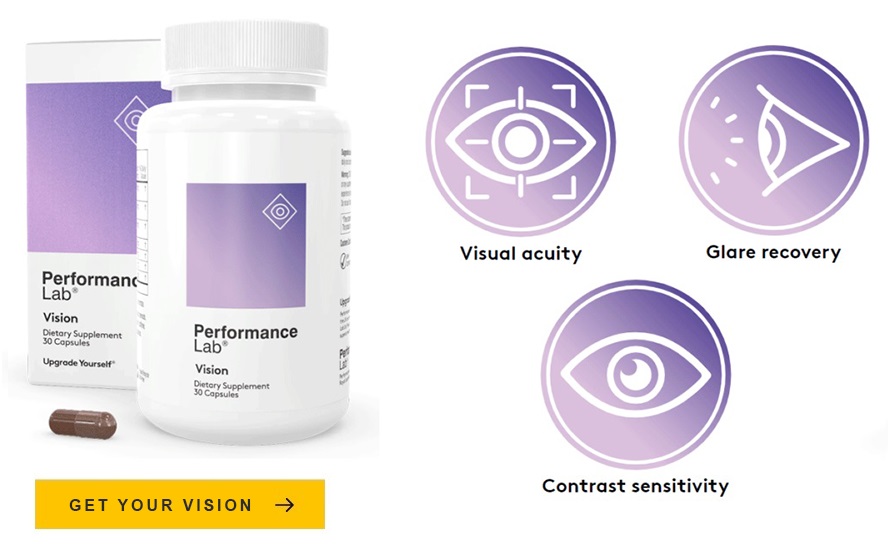
Performance Lab Vision is built around ingredients that appear in this research, including lutein, zeaxanthin, astaxanthin, saffron, bilberry, and blackcurrant. The trials above used their own products and doses, so they show the typical timeline for this ingredient family and not guaranteed results from any single formula. For a fuller discussion of amounts, see our guide to eye supplement dosing.