Many people expect their eyeglass prescription to stabilize once they hit adulthood, with only minor tweaks every few years after that. For a lot of people past 60, the opposite happens. The prescription starts shifting again, sometimes noticeably, sometimes every single year, and it can feel confusing after decades of relative stability. This renewed instability is not usually a sign that something is wrong with the exam or the lab that made your glasses. It typically reflects a specific, well understood process happening inside the lens of the eye.
Nuclear Sclerosis and the Myopic Shift
The most common reason for repeated prescription changes after 60 is a process called nuclear sclerosis, which is the early and often unnoticed stage of a developing cataract. The center, or nucleus, of the eye’s lens gradually becomes denser as proteins within it break down and reorganize over years. This increasing density raises the lens’s refractive index, meaning the lens bends light more strongly than it used to. The practical result is a gradual shift toward nearsightedness, commonly called a myopic shift, even in people who spent their whole lives farsighted or had stable vision at other distances.
Why the Shift Can Feel Sudden Even Though It Is Gradual
Nuclear sclerosis develops slowly, often over several years, but because the visual system adapts continuously to small changes, the shift can seem to appear suddenly at an eye exam even though it has been building the whole time. A person who has worn the same glasses prescription for a decade might find at a single visit that their distance prescription has changed by a full diopter or more, and the explanation is usually not a rapid new development but the crossing of a threshold where the accumulated change finally became large enough to notice.
The Confusing Improvement Some People Notice
One of the more counterintuitive aspects of this process is that some people experience what feels like an improvement before things get more complicated. As the lens’s added refractive power compensates for the separate, unrelated loss of near-focusing ability that comes with presbyopia, some people find they can read fine print without their reading glasses for the first time in years. This phenomenon, sometimes called second sight, feels like a welcome surprise but actually signals the same underlying lens changes responsible for the myopic shift in distance vision. Our article on this exact phenomenon covers the mechanism and its implications in more detail.
Other Age-Related Causes of Prescription Instability
Nuclear sclerosis is the leading cause of repeated prescription changes after 60, but it is not the only one, and a thorough exam considers several possibilities together.
Blood Sugar Fluctuations
Elevated blood glucose causes the lens to absorb extra fluid and swell slightly, which changes its focusing power in ways that can shift a prescription noticeably from one visit to the next. This is particularly relevant for anyone newly diagnosed with diabetes or whose blood sugar control has recently changed, since the lens-related vision changes often resolve once glucose levels stabilize, making this a case where updating glasses immediately may not be the right move until blood sugar is under better control.
Medication Effects
Several medications commonly prescribed later in life can affect vision indirectly. Long-term corticosteroid use can raise pressure inside the eye and accelerate cataract formation. Certain blood pressure medications, antihistamines, and antidepressants can affect tear film quality or the eye’s ability to focus, producing symptoms that feel like a prescription problem even when the underlying refractive error has not meaningfully changed. Reviewing your current medication list with your eye doctor when a prescription seems to be shifting is a reasonable step, since in some cases the more effective fix involves a conversation with the prescribing physician rather than a new set of lenses.
Ordinary Astigmatism Changes
The cornea, the clear front surface of the eye, tends to flatten slightly along one meridian with age, a gradual change that can introduce or increase astigmatism independent of anything happening in the lens. This is generally a minor contributor compared to nuclear sclerosis but adds to the overall picture of why refractive stability tends to loosen up again in this decade of life after being relatively steady through the forties and fifties.
When a Changing Prescription Signals Something Beyond Normal Aging
Most prescription drift after 60 reflects the gradual, expected progression of nuclear sclerosis, but the rate and pattern of change matter. A steady, symmetric myopic shift across both eyes over a period of years fits the typical pattern. A rapid change over weeks, a significant difference between the two eyes, or a shift accompanied by glare, halos, or noticeably hazy vision warrants a more thorough evaluation, since these patterns can indicate the cataract has progressed to a stage where surgery should be discussed rather than simply updating the lens prescription again.
Why Updating Glasses Has Limits
A new prescription can compensate for a myopic shift for a while, and there is nothing wrong with continuing to update glasses as nuclear sclerosis progresses gradually. But there comes a point, different for every person, where the cataract has advanced enough that no lens correction fully restores clear, comfortable vision, particularly in situations involving glare, such as night driving. This is the point at which cataract surgery, which removes the clouded natural lens and replaces it with a clear artificial one, becomes the more appropriate solution rather than another prescription update. Your eye doctor can track this progression over successive visits and advise on timing based on how much the changes are actually affecting daily activities, rather than any fixed age or prescription number.
What to Expect at Your Next Exam
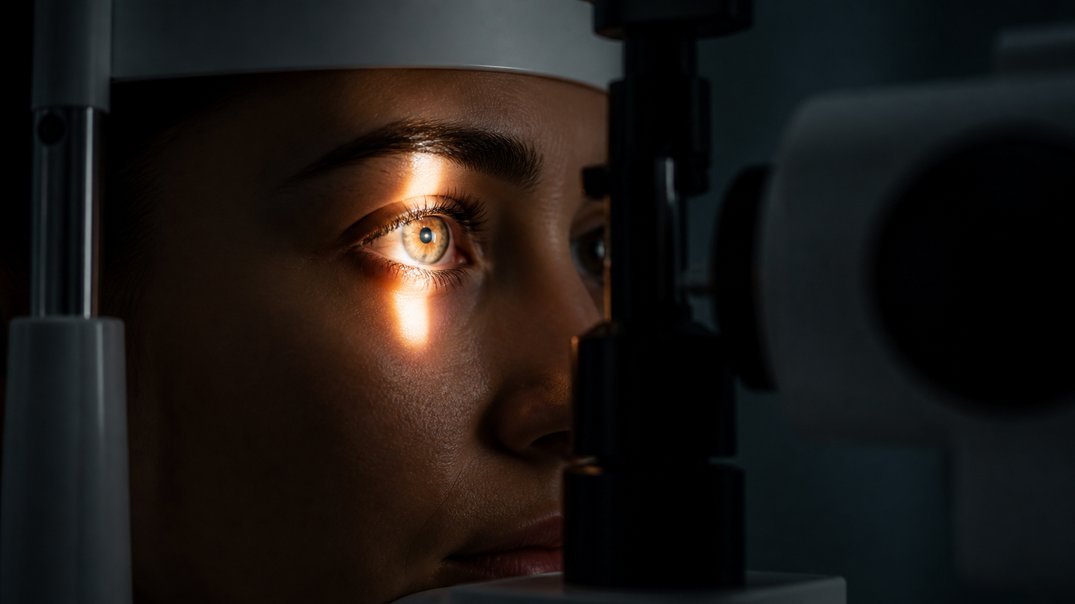
If your prescription has changed at each of your last several visits, it is worth asking your eye doctor directly whether nuclear sclerosis is visible during the exam, since a slit lamp examination can often detect early lens changes well before they become severe enough to significantly affect vision. Understanding that the shift has an identifiable cause, rather than assuming your eyes are simply becoming unpredictable, makes it easier to track the progression sensibly and plan for surgery at the right time rather than being caught off guard by it.
How Often You Should Expect an Updated Prescription
For someone with active nuclear sclerosis, an annual exam is generally the right interval for reassessing both the prescription and the underlying lens changes, even if vision feels stable in between visits. Updating glasses more frequently than that rarely makes sense given how gradually the shift typically progresses, while waiting much longer than a year risks living with an outdated prescription that no longer matches how the eye is actually focusing. If you wear contact lenses, keep in mind that a myopic shift affects contact lens prescriptions the same way it affects glasses, and continuing to wear an outdated contact lens prescription can mask how much the underlying refraction has actually changed, since contacts sit directly on the eye and provide less room for the kind of subjective adjustment people sometimes make unconsciously with glasses.