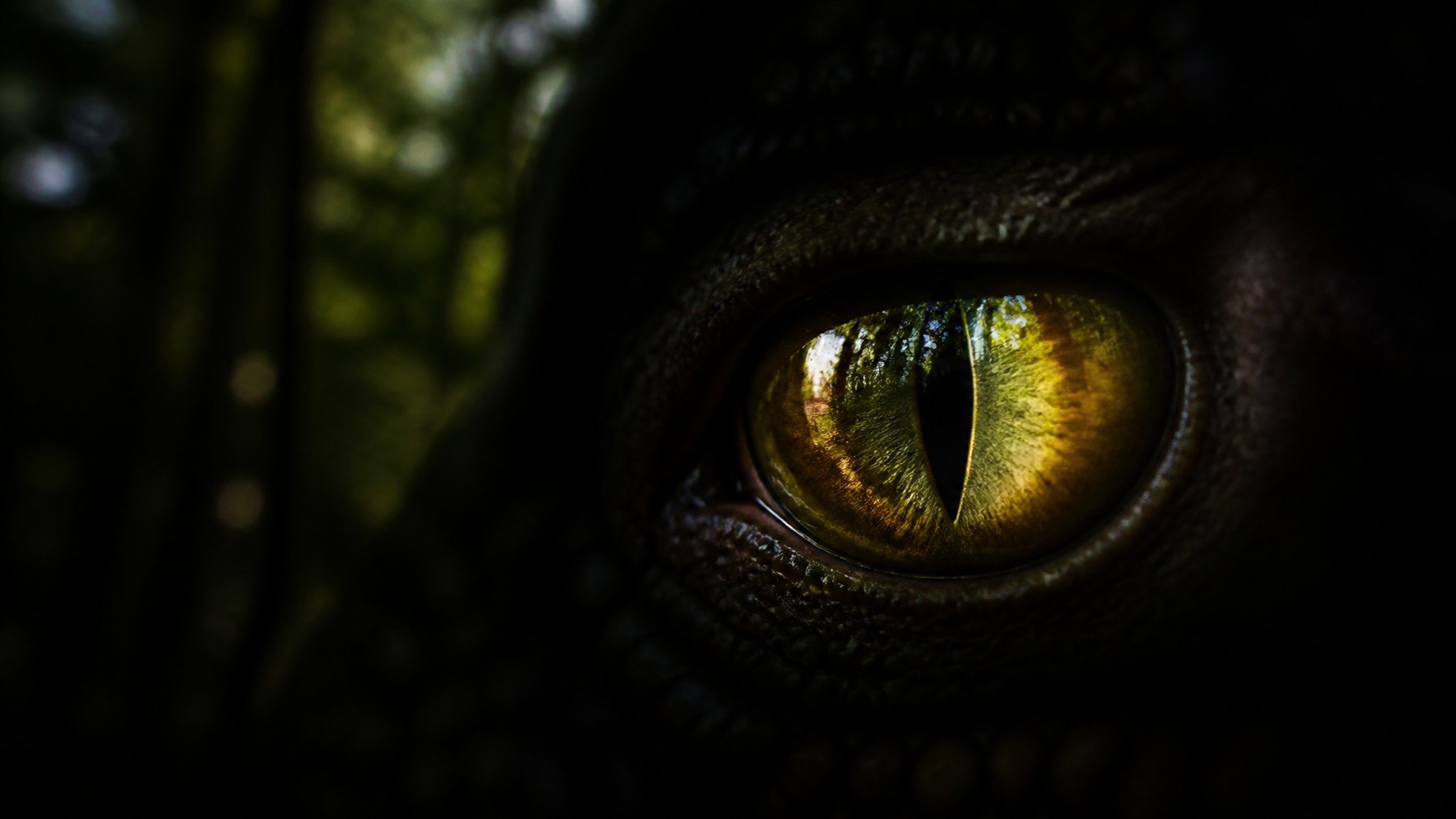
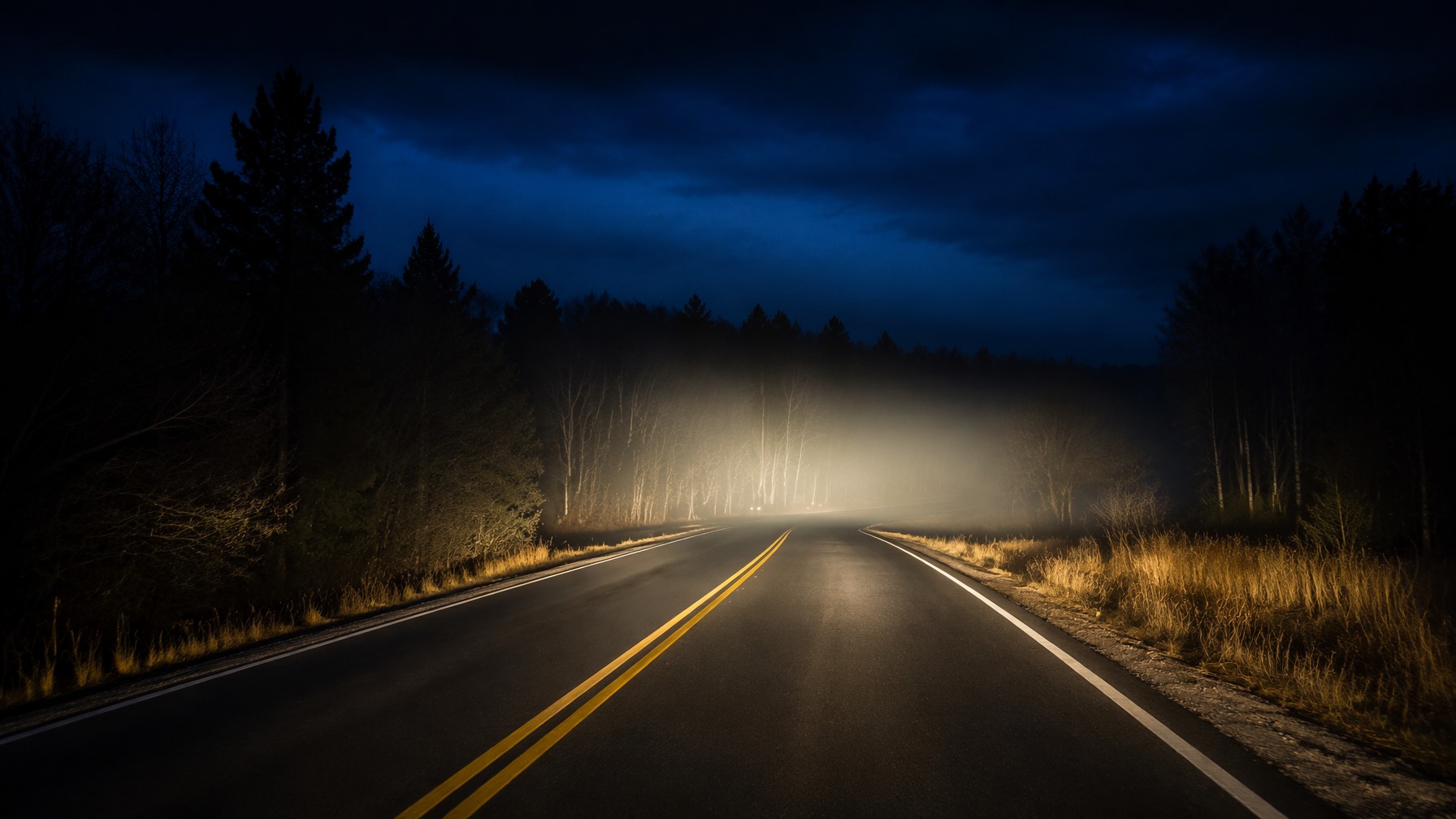
Drive down a rural road after dark and sooner or later a pair of eyes will appear at the edge of your headlights, glowing like small lanterns before the animal turns and vanishes into the tree line. It happens with house cats on a porch, dogs across a backyard, and deer standing at the edge of a field. It never happens when you catch your own reflection in a dark window. Your eyes don’t glow back at you, and there’s a specific, well-understood anatomical reason why.
The glow comes from a structure most people have never heard of, tucked into the back of the eye in a huge range of animals but completely absent in humans. It’s called the tapetum lucidum, and once you understand what it’s doing, a lot of strange nighttime animal behavior, including the reason deer seem to freeze in place instead of bolting, suddenly makes a lot more sense.
The Mirror Hiding Behind Every Glowing Eye
Light enters an eye, passes through the lens, and lands on the retina, where photoreceptor cells convert it into the signals the brain interprets as vision. In a human eye, any light that misses those photoreceptors on the first pass is essentially wasted, absorbed by the dark tissue behind the retina and gone for good. Many nocturnal and low-light animals solve this problem with an elegant bit of biological engineering. Directly behind their retina sits the tapetum lucidum, a layer of reflective tissue that catches light that missed the photoreceptors the first time and bounces it straight back through the retina for a second pass.
This effectively gives the animal’s eye two chances to capture the same photon of light instead of one. In cats, researchers estimate the tapetum boosts light sensitivity by as much as six times compared to an eye without one. That reflected light is also what you’re seeing when an animal’s eyes appear to glow in your headlights or a flashlight beam. You’re not looking at some kind of internal illumination. You’re looking at your own light bouncing straight back at you.
Why Human Eyes Never Developed One
Humans, along with pigs, kangaroos, and most birds, simply never evolved a tapetum lucidum. The leading explanation is that our evolutionary lineage leaned heavily toward daytime activity, where extra light amplification isn’t particularly useful and can even work against sharp, detailed vision by scattering some of that reflected light rather than keeping images crisp. What you might catch in a flash photograph instead is the well-known red-eye effect, which is a completely different phenomenon. That red glow comes from light bouncing off the blood vessels in the back of the eye, not from any dedicated reflective structure, which is why it shows up as a flat red rather than the varied colors seen in true eyeshine.
Why Eyeshine Comes in So Many Different Colors
If you’ve spent time comparing notes with other drivers or hunters about glowing eyes spotted at night, you may have noticed the color varies quite a bit from one animal to the next. That variation comes down to differences in the tapetum’s structure and the specific reflective crystals or fibers it contains, which are tuned somewhat differently across species depending on their visual needs. The color can also shift slightly depending on the angle of the light and the light source itself, so it’s more of a helpful clue than an exact identifier.
A Rough Guide to Whose Eyes Are Looking Back at You
| Animal | Typical Eyeshine Color | Tapetum Notes |
|---|---|---|
| Domestic cats | Green, sometimes orange to red | Color varies with zinc and riboflavin content; blue-eyed breeds often lack a tapetum entirely |
| Dogs | Green or blue | Can vary noticeably by breed and even between individuals |
| Deer and elk | White | Among the brightest and most easily spotted eyeshine on rural roads |
| Raccoons and foxes | Green to yellow | Common in backyard and trail camera sightings |
| Horses | Blue | One of the more distinctly colored tapetums among common mammals |
None of these colors are absolute rules. Eyeshine is a form of iridescence, so lighting conditions and viewing angle both play a role in what you actually perceive. But paired with other clues, like eye height off the ground and pupil shape, the general color range can genuinely help identify what’s staring back at you from the dark.
The Cat With No Glow: When the Tapetum Goes Missing
Not every animal that should have a tapetum actually has one working at full strength. Blue-eyed cat breeds, Siamese cats being the classic example, frequently lack a tapetum lucidum altogether, a trait linked to the same genetics responsible for their eye color. Instead of the typical green or gold glow, these cats often show the same flat red reflection in photographs that humans do, since the light is bouncing off blood vessels rather than a dedicated reflective layer. Cats and dogs with heterochromia, meaning two different colored eyes, sometimes display an even stranger pattern: one eye glows with the typical colored eyeshine while the other flashes red, a visible split between an eye with a functioning tapetum and one without.
The Deer That Changes Eye Color With the Seasons
Among the more genuinely strange facts about the tapetum lucidum involves reindeer, which appear to be the only known mammal that changes eye color with the seasons. During the brighter days of summer, a reindeer’s tapetum reflects light in a golden yellow. Once the long, dark Arctic winter sets in, the same structure shifts toward a deep blue. Researchers believe this happens because the collagen fibers that make up the tapetum become more tightly packed during winter, likely in response to prolonged exposure to low light and constantly dilated pupils. That tighter packing changes how the tissue reflects light, altering both the eyeshine color and, more importantly, boosting how much light gets captured during months when daylight is scarce. It’s a rare example of an animal’s eye anatomy physically reconfiguring itself to match the season.
Why “Like a Deer in Headlights” Is Real Biology, Not Just an Expression
The common phrase gets used casually to describe anyone caught off guard and momentarily unable to react, but in actual deer, the freezing response has a very specific physiological explanation, and the tapetum lucidum is a central part of it.
What Happens Inside a Deer’s Eye the Moment Headlights Hit
Deer are most active at dawn, dusk, and throughout the night, and their eyes are built accordingly. They have far more rod cells than humans, packed with a light-sensitive pigment called rhodopsin that takes real time to regenerate after being exposed to bright light. Their pupils also dilate wider than a human’s in low light, letting in more light overall, and their tapetum lucidum amplifies whatever light does get in even further. All of that adds up to excellent night vision under normal conditions, but it becomes a serious liability the instant a car’s headlights sweep across the road. The sudden, intense light overwhelms a visual system that was fully optimized for near darkness, triggering a temporary flash blindness far more severe than what a human would experience in the same situation. Layered on top of that is an ancient survival instinct: many prey animals freeze rather than flee when they sense a sudden, unfamiliar threat, since remaining still and unseen has historically been a better survival strategy than immediately bolting toward the unknown.
Why This Matters for Anyone Driving at Night
Put those two things together, temporary blindness plus an instinctual freeze response, and you get an animal standing motionless in the middle of a road directly in the path of an oncoming vehicle, not because it’s confused about what a car is, but because its own extremely capable night vision system has been briefly and completely overloaded. Understanding this is more than trivia for anyone who drives rural roads regularly. Slowing down in known deer corridors, dimming high beams when animals are spotted at a distance, and expecting a frozen animal rather than one that will dart away are all more realistic expectations once you understand what’s actually happening behind those glowing eyes.

Frequently Asked Questions
What causes animal eyes to glow in headlights?
The glow comes from a reflective layer behind the retina called the tapetum lucidum, found in many nocturnal and low-light animals. It reflects light that passed through the retina back through it a second time, improving night vision and creating the visible glow known as eyeshine.
Why don’t human eyes glow like animal eyes do?
Humans do not have a tapetum lucidum. What can appear as a glow in flash photographs is actually the red-eye effect, caused by light reflecting off blood vessels at the back of the eye rather than a dedicated reflective structure.
Why do different animals have different colored eyeshine?
Eyeshine color depends on the specific structure and reflective material of the tapetum lucidum, which varies by species. Viewing angle and the type of light source used also affect the color that appears.
Why do deer freeze instead of running from headlights?
Deer have highly light-sensitive eyes adapted for darkness, including a strong tapetum lucidum. Sudden bright headlights overwhelm this system, causing temporary flash blindness, which combines with an instinctual freeze response to leave the deer motionless in place.