
Here is something worth knowing before you compare these two bottles: Performance Lab Vision and mindbodygreen eye health+ contain exactly the same amount of lutein and zeaxanthin, 10 mg and 2 mg. That makes the comparison interesting, because everything that separates them lives in what each company built around that shared foundation.
Both are everyday eye health formulas, and neither one is a full AREDS2 formula. This guide covers what is inside each capsule, where the formulas split, and what each costs per day.
Performance Lab Vision vs mindbodygreen Eye Health+ at a Glance
| Feature | Performance Lab Vision | mindbodygreen eye health+ |
|---|---|---|
| Lutein | 10 mg | 10 mg |
| Zeaxanthin | 2 mg | 2 mg |
| Astaxanthin | 4 mg | 6 mg |
| Berry ingredients | Bilberry extract 25 mg, blackcurrant 300 mg plus 25 mg extract | Maqui berry extract 60 mg |
| Saffron | 10 mg | Not listed on the supplement facts panel |
| Added vitamins and minerals | None | Vitamin C 100 mg, vitamin E 15 mg, zinc 11 mg, copper 2 mg |
| Vegan | Yes | Yes |
| Capsules per bottle | 30 | 30 |
| One-time price | $49 | $70 plus shipping |
| Money-back guarantee | 30 days | Not described on the product page |
What Is in Performance Lab Vision
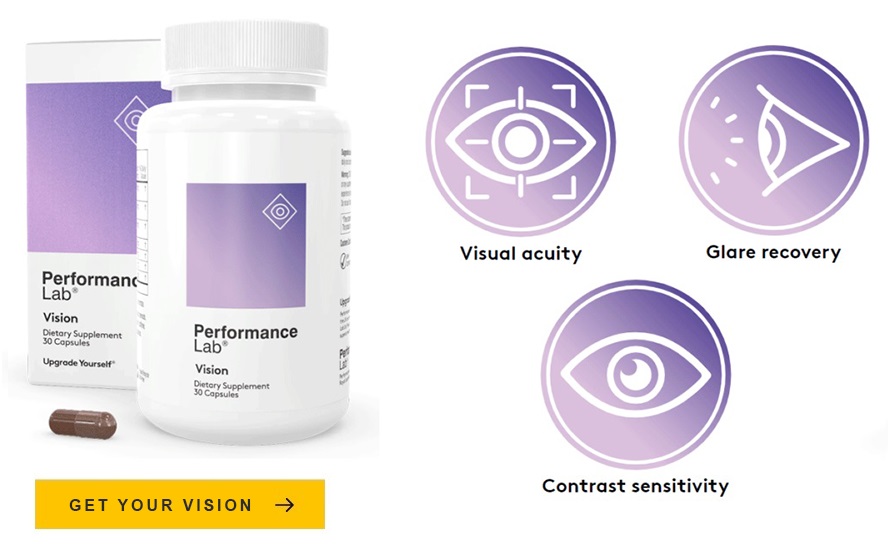
Vision delivers six research-backed ingredients in one daily capsule:
- Lutein, 10 mg, and zeaxanthin, 2 mg, from marigold flower extract
- Astaxanthin, 4 mg, from Haematococcus pluvialis algae
- European bilberry extract, 25 mg, standardized to 25% anthocyanosides
- European blackcurrant, 300 mg freeze-dried fruit plus 25 mg extract (25% anthocyanins)
- Saffron, 10 mg, standardized to 0.3% safranal
It comes in a plant-based pullulan capsule, and the only other ingredient is a rice concentrate used as a flow agent. Performance Lab lists Vision as non-GMO, free of soy, gluten, and common allergens, and third-party tested for purity and potency.
What Is in mindbodygreen Eye Health+
Each capsule of eye health+ contains 10 mg of lutein and 2 mg of zeaxanthin (both from marigold extract), 6 mg of astaxanthin, and 60 mg of Patagonian maqui berry extract. It also adds four vitamins and minerals: 100 mg of vitamin C, 15 mg of vitamin E, 11 mg of zinc, and 2 mg of copper.
The other ingredients are hypromellose, microcrystalline cellulose, L-leucine, and silicon dioxide. The product is vegan.
Lutein and zeaxanthin are the pigments that gather in the macula, the central part of the retina, where they absorb blue light. Researchers call them macular carotenoids, and a six-month trial in adults with heavy screen time linked supplementation with higher macular pigment density and less eye strain, fatigue, and headache frequency, according to a summary from the American Optometric Association. That trial used 24 mg a day, so treat it as support for the nutrient family rather than a promise about any one bottle.
Because Vision and eye health+ match on this front, neither has an edge here. The decision comes down to everything else in the capsule.
Bilberry, Blackcurrant, and Saffron vs Maqui Berry
Vision gives you three additional plant ingredients: bilberry extract, whole freeze-dried blackcurrant plus a blackcurrant extract, and saffron. That is a broad botanical lineup, and every ingredient has its own listed dose.
eye health+ relies on one berry, maqui, at 60 mg. It does not list bilberry or blackcurrant. Saffron is a more specific point: parts of mindbodygreen’s marketing refer to saffron, but the supplement facts panel on the product page does not list it. If saffron matters to you, check the label on the bottle you receive. With Vision, there is nothing to verify, because 10 mg of saffron is printed right on the facts panel.
Astaxanthin Dose Compared
eye health+ contains 6 mg of astaxanthin and Vision contains 4 mg. On that single number, mindbodygreen is higher. Vision’s approach is to spread its formula across more categories of eye nutrition, with carotenoids, berry anthocyanins, saffron, and astaxanthin all working in the same capsule, rather than concentrating on a few.
Added Vitamins and Minerals: Do You Need Them in an Eye Supplement?
This is the biggest structural difference. eye health+ builds in vitamins C and E, zinc, and copper, the same nutrients used in the famous AREDS2 research formula. Those doses are much lower than AREDS2, though. According to the National Eye Institute, the AREDS2 formula contains 500 mg of vitamin C, 400 IU of vitamin E, 80 mg of zinc, and 2 mg of copper, and the trial enrolled only people with intermediate or advanced age-related macular degeneration. So eye health+ is not an AREDS2 formula, but it borrows part of its nutrient list.
Here is why that matters for you. If you already take a multivitamin, a vitamin C supplement, or a zinc product, eye health+ adds to your daily totals. Vision keeps its formula focused on carotenoids and plant extracts with no added vitamins or minerals, so it layers onto whatever else you take without overlap. If you do not take any other supplements, a capsule with a few extra vitamins may appeal to you. If you do, Vision keeps things simple.
Price Per Day: Vision vs mindbodygreen Eye Health+
The one-time prices show a clear gap. Vision is $49 for 30 capsules, about $1.63 a day. eye health+ is $70 plus shipping, about $2.33 a day. That is $21 less per bottle for Vision.
Subscriptions narrow the gap but do not close it. Performance Lab’s smart subscription brings Vision to $36.75 a bottle, about $1.23 a day, with free shipping, and the 25% discount applies to all recurring orders. mindbodygreen’s subscriptions run $59 a month (about $1.97 a day), $129 every 90 days (about $1.43 a day), or $240 every 180 days (about $1.33 a day). Its product page says subscription discounts apply to the first order only, so confirm what your recurring price will be before you commit.
On guarantees, Performance Lab advertises a 30-day money-back guarantee. The mindbodygreen product page links to a return policy but does not describe a guarantee itself.
Who Should Choose Performance Lab Vision
Vision is the stronger fit if you:
- Want an eye-focused formula with bilberry, blackcurrant, saffron, astaxanthin, lutein, and zeaxanthin together
- Already take a multivitamin or other supplements and prefer not to add more vitamin C, vitamin E, zinc, or copper
- Want the lower price, both as a one-time purchase and on subscription
- Like having a 30-day money-back guarantee
- Want every ingredient and its dose printed on the label, saffron included
mindbodygreen eye health+ may suit you if you want a higher astaxanthin dose, prefer maqui berry, and like having a few vitamins and minerals in the same capsule.
Final Verdict on Vision vs mindbodygreen Eye Health+
The lutein and zeaxanthin match, so the real choice is about what surrounds them. Vision delivers a wider range of eye-focused plant ingredients, keeps the formula free of added vitamins and minerals, and costs noticeably less whether you buy once or subscribe. eye health+ offers more astaxanthin and a few extra nutrients at a higher price.
For most people looking for a focused, everyday eye formula at a fair price, Performance Lab Vision is the better pick. You can see the full Performance Lab Vision formula and current pricing here.
Frequently Asked Questions About Vision and mindbodygreen Eye Health+
Is mindbodygreen Eye Health+ or Performance Lab Vision an AREDS2 Formula?
No. It includes vitamins C and E, zinc, and copper, but at doses well below the AREDS2 amounts. Vision is not an AREDS2 formula either. If you have been diagnosed with a macular condition, talk with your eye doctor before choosing an eye supplement.
Do Vision and Eye Health+ Have the Same Lutein and Zeaxanthin?
Yes. Both provide 10 mg of lutein and 2 mg of zeaxanthin per capsule.
Which Has More Astaxanthin?
mindbodygreen eye health+ has 6 mg of astaxanthin and Performance Lab Vision has 4 mg. Vision adds bilberry, blackcurrant, and saffron.
Does mindbodygreen Eye Health+ Contain Saffron?
Its supplement facts panel does not list saffron, although some of mindbodygreen’s marketing mentions it. Vision lists 10 mg of saffron on its facts panel.
Are Both Supplements Vegan?
Yes. Both are vegan. Vision uses a plant-based pullulan capsule with a rice concentrate as its only other ingredient.
Which Costs Less per Day?
Vision. It runs about $1.63 a day as a one-time purchase and about $1.23 a day on the smart subscription. eye health+ is about $2.33 a day one time, and its subscription options range from roughly $1.33 to $1.97 a day.
Can I Take Vision With a Multivitamin?
Many people do. Vision contains no added vitamins or minerals, so it does not duplicate a multivitamin’s nutrients. Check with your doctor or pharmacist first, especially if you take medication, are pregnant, or are nursing.
These statements have not been evaluated by the Food and Drug Administration. Vision and eye health+ are not intended to diagnose, treat, cure, or prevent any disease. This article is for information only and is not medical advice.