Editorial note: We only cite studies published in peer-reviewed journals. We summarize findings without overstating conclusions.
Published in the peer-reviewed journal Life in April 2023, this review by researchers affiliated with the University of Benin (Nigeria), the University Hospital of Udine (Italy), the Centre for Sight Africa, Bayero University Kano, and the University of Ilorin surveyed the current scientific literature on nutrients, antioxidants, vitamins, and organic compounds proposed as beneficial for glaucoma and other eye diseases. Using a systematic PubMed search covering publications from 2012 to 2023, the authors identified 374 relevant references and examined the molecular mechanisms, neuroprotective properties, and available clinical evidence for each substance reviewed. The full study is available at: https://pmc.ncbi.nlm.nih.gov/articles/PMC10222847/
The Central Question: Can Nutrition Help Beyond Lowering Eye Pressure?
Glaucoma is a progressive disease of the optic nerve that is the leading cause of irreversible blindness worldwide. It is defined by the gradual loss of retinal ganglion cells — the neurons whose axons form the optic nerve — and the resulting deterioration of the visual field. The only currently recognized modifiable risk factor treated in clinical practice is elevated intraocular pressure (IOP). Drops, laser procedures, and surgery all work by reducing eye pressure, and they remain the standard of care.
However, the review’s central argument is that glaucoma is not simply a disease of elevated pressure. Oxidative stress, inflammation, mitochondrial dysfunction, and vascular insufficiency all contribute to retinal ganglion cell death — sometimes even in patients whose IOP is well controlled. A significant proportion of glaucoma patients continue to lose vision despite achieving target pressures. This has driven growing scientific interest in what the authors term “IOP-independent” strategies: approaches that address the underlying cellular damage directly, rather than focusing exclusively on pressure.
Nutritional supplementation is one such strategy. The review does not argue that supplements can replace drops or surgery. It argues, more modestly, that certain nutrients have demonstrated biological properties — neuroprotection, antioxidant activity, anti-inflammatory effects — that are relevant to glaucoma pathophysiology and may provide meaningful adjunctive benefit. The review also covers applications of many of these nutrients in other eye diseases, including AMD, diabetic retinopathy, cataracts, and dry eye disease.
Why Oxidative Stress Is the Common Thread
A recurring theme across nearly every nutrient reviewed is its capacity to combat oxidative stress — the accumulation of reactive oxygen species (free radicals) that damage cellular structures. The retina operates under unusually high metabolic demands, consumes oxygen at an exceptional rate, and is exposed to light continuously. These conditions make it one of the body’s most oxidatively stressed tissues. The trabecular meshwork, the tissue responsible for draining aqueous humor from the eye, is similarly vulnerable: oxidative damage to these cells leads to their death and to impaired fluid drainage, which raises IOP.
The body’s natural antioxidant defense systems — particularly glutathione — become compromised with age, and their depletion has been directly documented in glaucoma patients. Understanding why so many nutrients show promise in eye disease requires keeping this oxidative backdrop in mind.
The Nutrients Reviewed — What the Evidence Shows
Glutathione
Glutathione is the body’s most abundant and potent endogenous antioxidant — a small protein-like molecule produced within cells that neutralizes free radicals and regenerates other antioxidants including vitamins C and E. Its concentration in resting cells is comparable to that of glucose. Under oxidative stress, the ratio of active (reduced) to inactive (oxidized) glutathione shifts dramatically, dropping tenfold — a measurable sign of cellular distress known as the redox index.
Multiple clinical studies cited in the review found significantly lower glutathione levels in glaucoma patients compared to healthy controls. One case-control study of 113 participants found that both primary open-angle glaucoma (POAG) and normal tension glaucoma (NTG) patients had significantly reduced glutathione levels. A separate study showed that the lower the redox index in glaucoma patients, the greater the evidence of mitochondrial defects — suggesting that glutathione depletion and mitochondrial dysfunction are linked components of glaucomatous damage. Another study of 77 participants found that open-angle glaucoma patients had a significantly lower redox index than non-glaucomatous controls. These consistent findings across multiple studies establish glutathione depletion as a biologically relevant feature of glaucoma, and support the rationale for strategies aimed at restoring glutathione levels.
Omega-3 Fatty Acids
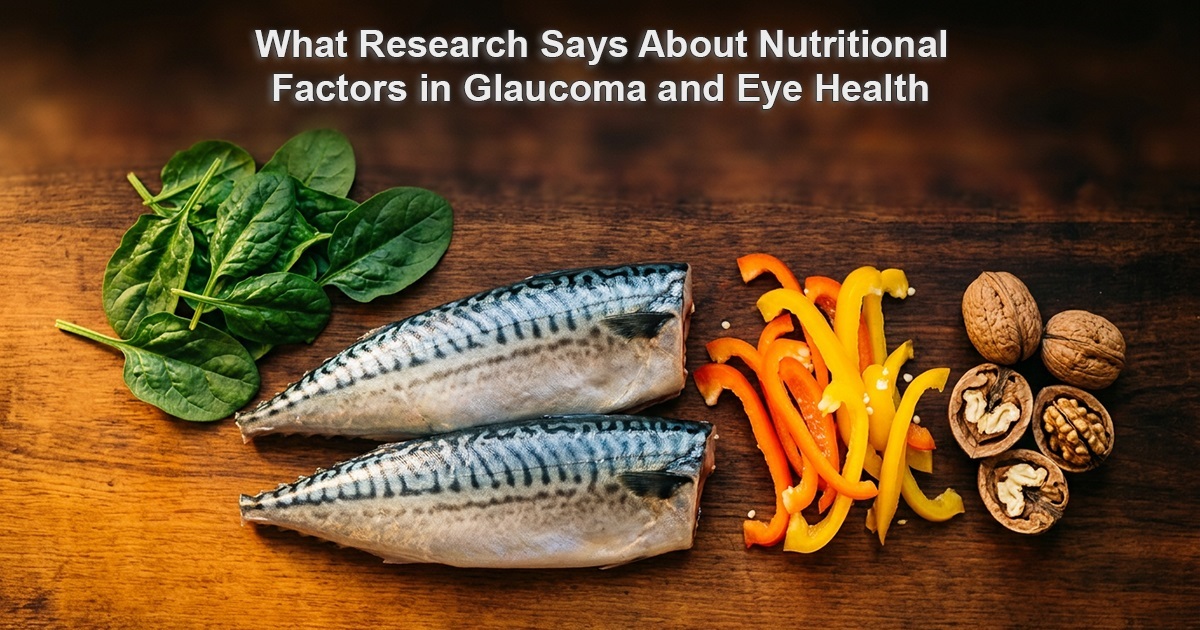
Omega-3 polyunsaturated fatty acids — particularly DHA (docosahexaenoic acid) and EPA (eicosapentaenoic acid) — are the most extensively studied nutritional compounds in ophthalmology. Fatty fish (salmon, mackerel, sardines, anchovies), fish oil supplements, and algae-derived products are the primary sources.
Their anti-inflammatory mechanism works primarily by competing with omega-6 arachidonic acid in the production of eicosanoids — signaling molecules that regulate inflammation. Omega-3s shift this balance toward less inflammatory signaling, reducing the production of prostaglandins, cytokines, and leukotrienes that promote tissue damage.
In glaucoma, omega-3s have shown multiple relevant effects. DHA and EPA together with the glaucoma drop timolol demonstrated neuroprotective effects on retinal ganglion cells in murine hereditary glaucoma models. A randomized controlled trial of 105 adults without glaucoma found that three months of oral omega-3 supplementation reduced IOP in normotensive patients — suggesting a genuine, if modest, pressure-lowering effect even in people with normal baseline pressures. Topical DHA reduced bleb fibrosis after glaucoma filtration surgery to a degree comparable to mitomycin C, a standard anti-fibrotic agent used in that procedure. Omega-3s also appear to protect trabecular meshwork cells from oxidative degeneration, which is a central contributor to elevated IOP in POAG.
Beyond glaucoma, the review notes that omega-3 supplementation is effective for dry eye disease (particularly that caused by meibomian gland dysfunction or chronic use of antiglaucoma drops), and that DHA and EPA supplementation reduces the severity and progression of diabetic retinopathy. As an adjunct to the AREDS formula for AMD, omega-3s have also shown benefit in reducing progression from early to late macular degeneration.
Lutein and Zeaxanthin
Lutein and zeaxanthin are the two dietary carotenoids that selectively accumulate in the human retina, where they form the macular pigment. Their role in AMD — particularly as blue light filters and antioxidants — is well established and has been covered separately on this site. The review extends their relevance to glaucoma.
In a murine study, zeaxanthin supplementation protected retinal pigment epithelium cells from mitochondrial oxidative stress. A clinical study of 99 volunteers found that lutein supplementation produced a statistically significant improvement in macular pigment optical density — the measurable thickness of the protective carotenoid layer in the macula. A clinical trial found that supplementation with lutein and zeaxanthin reduced the risk of progression to advanced AMD by 25 percent in people with early-stage disease, while another study found improvement in visual function in early AMD patients. A study evaluating foveal pigment response in glaucoma patients found significant improvement after supplementation with zeaxanthin and related nutrients, with findings consistent across multiple research groups. Zeaxanthin has also been associated with slowed cataract development in experimental studies. Lutein has shown neuroprotective effects in retinal ganglion cells and, in a rat model of diabetic retinopathy, attenuated the apoptosis and autophagic damage induced by hypoxic stress in retinal Müller cells.
Resveratrol
Resveratrol is a polyphenol found naturally in red grapes, wine, berries, and peanuts, and has been intensively studied for its broad biological effects. Its most biologically active form is the trans isomer, which is most stable and most capable of interacting with cellular receptors and intracellular signaling pathways.
In the context of glaucoma, resveratrol has demonstrated several relevant properties. A study examining the effect of a dietary supplement containing resveratrol on trabecular meshwork tissue found decreased oxidative stress markers and reduced inflammatory signals including interleukins and endothelial-leukocyte adhesion molecule-1. A rat glaucoma model study found that resveratrol provided neuroprotection for retinal ganglion cells at both early and late stages of induced glaucoma, with specific protective effects on RGC populations. Resveratrol has also been shown to protect retinal pigment epithelium cells from oxidative stress and sodium iodate-induced apoptosis in laboratory studies, suggesting potential relevance to AMD. Multiple studies have documented resveratrol’s protective effects across various ocular tissues, and it has shown beneficial effects in diabetic retinopathy models as well.
Resveratrol’s mechanisms include potent antioxidant activity, inhibition of NF-κB (a master regulator of inflammatory gene expression), anti-angiogenic properties (relevant to wet AMD and diabetic retinopathy), and neuroprotective effects against ischemic retinal damage.
Vitamin C (Ascorbic Acid)
Vitamin C is a water-soluble vitamin and powerful antioxidant. The eye maintains unusually high concentrations of vitamin C in the aqueous humor — far higher than in blood plasma — suggesting a specialized protective role in ocular tissues. Multiple studies cited in the review found reduced vitamin C levels in glaucoma patients: one found lower serum ascorbic acid in normal tension glaucoma patients, and another case-control study of 774 participants found that higher plasma vitamin C levels correlated with reduced POAG risk. An observational study found that the combination of vitamins A, C, and E together was associated with a reduced risk of glaucoma in a large population (18,669 participants in the SUN project). An observational study of 138 participants found that vitamin C deficiency was associated with measurably reduced retinal and choroidal thickness compared to normal controls. Vitamin C also has a documented role in slowing cataract development and in regulating VEGF formation, which is relevant to wet AMD and diabetic retinopathy. The review notes, however, that one systematic review found inconclusive evidence for a direct association between vitamin C and reduced glaucoma prevalence, indicating the picture is not fully settled.
Vitamin D
Vitamin D, produced in the skin through sun exposure and obtained from dietary sources including fatty fish and fortified foods, functions as a hormone with effects extending far beyond bone metabolism. Vitamin D receptors are found throughout the nervous system, including in retinal tissue.
The review documents emerging evidence linking vitamin D deficiency to multiple eye conditions: myopia, glaucoma, AMD, diabetic retinopathy, and dry eye syndrome. Studies have shown that vitamin D has regulatory effects on neurons that can influence contrast sensitivity and general visual quality. A study on keratoconus (a progressive corneal disease) found that affected patients had significantly lower vitamin D serum levels than age- and sex-matched controls. These relationships suggest vitamin D deficiency may be a modifiable risk factor across multiple ocular conditions, though the review appropriately notes that the evidence is still developing and does not yet rise to confirmed causation.
Vitamin E (Tocopherols)
Vitamin E is a fat-soluble antioxidant and immunomodulator. In eye health, its evidence base is more limited than some other nutrients reviewed. In murine glaucoma models, vitamin E-enriched diets reduced retinal ganglion cell death compared to animals on a standard diet. Vitamin E-impregnated contact lenses have been used experimentally as a drug delivery platform, both for anti-inflammatory agents and for extending the action of standard glaucoma drops including timolol and dorzolamide. Vitamin E has also shown promise as an adjunct therapy for dry eye disease. The review acknowledges that large-scale clinical evidence for vitamin E in glaucoma specifically remains limited and inconclusive, and that further well-designed trials are needed.
B Vitamins
Several B vitamins show specific ocular relevance.
Vitamin B1 (Thiamine) acts as a coenzyme in cellular energy production and is linked to neuroprotection. A study found a connection between thiamine intake and reduced disease progression in normal tension glaucoma patients. Thiamine supplementation has also been shown to reduce oxidative stress markers in the retina and may improve visual function in early AMD, as well as reducing the risk of diabetic retinopathy and cataracts.
Vitamin B2 (Riboflavin) is essential for cellular energy metabolism and is actively involved in the synthesis of rhodopsin — the visual pigment used for low-light vision. It has been proposed to have protective effects against AMD and glaucoma through antioxidative properties. Riboflavin is also widely used clinically in corneal cross-linking therapy to strengthen the collagen structure of the cornea in keratoconus.
Vitamin B3 (Niacin) is a cofactor in over 400 biochemical reactions and a precursor to NAD+, which is essential for cellular energy production and DNA repair. A clinical study found that niacin supplementation in patients with central retinal vein occlusion may produce functional and anatomical improvements. Notably, a phase II clinical trial using nicotinamide (a form of niacin) and pyruvate in glaucoma patients found significant temporary improvement in visual function, providing early human evidence for niacin’s neuroprotective potential in glaucoma. The review notes that small doses of niacin can paradoxically trigger cystoid macular edema symptoms in some patients, warranting clinical awareness.
Vitamin B9 (Folate) is crucial for DNA synthesis and methylation processes. Deficiency has been identified as a modifiable risk factor for certain retinal vascular diseases. Associations have been found between elevated homocysteine (which rises when folate is deficient), lower folate levels, and pseudoexfoliation glaucoma. Folate supplementation is broadly supported for retinal vein occlusions, ischemic optic neuropathies, and diabetic retinal ischemia.
Vitamin B12 (Cobalamin) deficiency has been associated with multiple optic nerve conditions, including nutritional optic neuropathy, optic neuritis in young patients, and a rare syndrome involving unilateral optic atrophy with disc edema. Reduced B12 levels and elevated homocysteine have been linked to pseudoexfoliation glaucoma and other open-angle glaucoma forms. High rates of B12 deficiency have also been reported among carriers of Leber’s hereditary optic neuropathy.
Citicoline
Citicoline is a naturally occurring compound and an intermediate in the synthesis of phospholipids — the structural fats that make up cell membranes. It crosses the blood-brain barrier efficiently and has well-established neuroprotective properties in ischemic brain disease. In the retina, citicoline supports phospholipid synthesis in neuronal cell membranes and stimulates the dopaminergic system, which mediates neural signal transmission throughout the retina and precortical visual pathway.
The review notes that citicoline is currently used in glaucoma management, and multiple studies have reported associated improvements in visual function in glaucoma patients supplemented with this compound. It is sometimes combined with other neuroprotective nutrients — one clinical study of 109 subjects found that a combination of citicoline, homotaurine, and vitamin E improved contrast sensitivity scores and quality-of-life indices in glaucoma patients.
Fisetin
Fisetin is a flavonoid found in common foods including apples, strawberries, onions, and cucumbers. It has attracted scientific interest for its anti-inflammatory, neuroprotective, and anti-aging properties. In ophthalmology, fisetin has shown protection of retinal function in glaucomatous murine models through its anti-inflammatory activity. It has also demonstrated anti-angiogenic effects relevant to diabetic retinopathy by suppressing VEGF production. In laboratory studies, fisetin and the related flavonoid luteolin protected human RPE cells from oxidative stress-induced cell death. In a diabetic cataract model, fisetin-treated animals had significantly lower rates of cataract development compared to control groups.
Quercetin
Quercetin is one of the most abundant flavonoids in the human diet, found in onions, apples, berries, capers, and many other plant foods. It is a potent antioxidant, anti-inflammatory compound, and immunomodulator. In rat glaucoma models, quercetin induced neuroprotection in retinal ganglion cells subjected to excitotoxic damage. It has also been shown to reduce apoptotic cell death and protect RGCs in additional rodent models, and demonstrated a photopic negative response in murine glaucoma models — suggesting a meaningful electrophysiological effect relevant to ganglion cell function. Quercetin has also been studied for its capacity to improve optic nerve head perfusion and to directly reduce IOP in some experimental contexts.
Spermidine
Spermidine is a naturally occurring polyamine found in high concentrations in soy, legumes, and grains. It mediates multiple anti-aging pathways including autophagy (the cellular self-cleaning process) and mitochondrial preservation. Its role in glaucoma is at an early stage of investigation. Reduced spermidine levels have been reported in glaucomatous eyes in several studies, and mitochondrial dysfunction — one of the pathways influenced by spermidine — is a recognized component of glaucoma pathophysiology. One study found elevated spermidine levels in the aqueous humor of open-angle glaucoma patients, a finding that could reflect compensatory upregulation or different disease dynamics. The picture is not yet fully resolved.
Pyruvate
Pyruvate is a fundamental metabolic molecule — the end product of cellular glucose breakdown and a key substrate for mitochondrial energy production. In a large-scale murine glaucoma study using RNA-sequencing metabolomics, oral pyruvate supplementation provided neuroprotection to retinal ganglion cells. Translating this finding to humans, a phase II clinical trial using nicotinamide and pyruvate in glaucoma patients yielded significant short-term improvement in visual function — one of the few nutrients reviewed with preliminary human clinical trial evidence specific to glaucoma. The authors note that lasting studies are still needed to establish longitudinal effects.
An Important Note on Evidence Levels
The review is careful to place much of this evidence in its proper context. Many of the studies cited involve animal models (primarily rodents) or in vitro laboratory experiments. These are important for establishing biological plausibility and understanding mechanisms, but they do not automatically translate to demonstrated efficacy in human patients. Clinical human studies for these nutrients in ophthalmology are present but often small, short in duration, or observational rather than randomized and controlled.
The authors explicitly call for large, multicenter randomized clinical trials with long follow-up periods to properly establish the roles of these nutrients in glaucoma and other ocular diseases. They are direct that supplements cannot replace first-line treatments — which remain prostaglandin analogs, beta blockers, and other IOP-lowering agents — but argue that the existing evidence is sufficient to support their use as adjunctive strategies in appropriate patients.
An additional practical point the review makes: many of these nutrients have favorable safety profiles and are inexpensive relative to pharmaceutical interventions. For patients who are already receiving adequate IOP control but continuing to progress, or who are at high risk due to family history or other factors, the case for adjunctive nutritional supplementation is particularly worth discussing with an eye care professional.
Summary of Key Takeaways
- Glaucoma involves more than elevated eye pressure — oxidative stress, inflammation, mitochondrial dysfunction, and vascular insufficiency all contribute to retinal ganglion cell death, providing multiple potential targets for nutritional intervention.
- Glutathione, the body’s primary endogenous antioxidant, is consistently depleted in glaucoma patients across multiple clinical studies, establishing oxidative imbalance as a measurable feature of the disease.
- Omega-3 fatty acids (DHA and EPA) have the most broadly supported evidence base in ophthalmology — demonstrating neuroprotective effects in glaucoma models, modest IOP-lowering effects in clinical trials, anti-fibrotic effects in glaucoma surgery, and documented benefits in diabetic retinopathy, dry eye disease, and AMD progression.
- Lutein and zeaxanthin accumulate selectively in the retina, protect against oxidative damage and blue light, show benefits in AMD and glaucoma studies, and are the only carotenoids with established clinical trial evidence (AREDS2) for slowing AMD progression.
- Resveratrol, fisetin, and quercetin are plant polyphenols and flavonoids with consistent neuroprotective and anti-inflammatory effects in glaucoma and AMD animal and laboratory models, though large human trials are still lacking.
- B vitamins — particularly B1, B3, B9, and B12 — play distinct roles in retinal and optic nerve health, with deficiencies linked to specific optic nerve conditions; a phase II trial combining niacin (B3) and pyruvate showed preliminary visual function improvement in glaucoma patients.
- Citicoline has both laboratory and clinical evidence supporting neuroprotection of retinal ganglion cells in glaucoma and is already used in some clinical settings as an adjunctive supplement.
- The evidence base is strongest in animal models and early human studies. The authors call for large, long-term multicenter clinical trials to properly establish efficacy. Nutritional supplementation should be considered adjunctive to, not a replacement for, established glaucoma treatments.
Source: Musa M, Zeppieri M, Atuanya GN, Enaholo ES, Topah EK, Ojo OM, Salati C. Nutritional Factors: Benefits in Glaucoma and Ophthalmologic Pathologies. Life (Basel). 2023 Apr 30;13(5):1120. doi: 10.3390/life13051120. Full text available at: https://pmc.ncbi.nlm.nih.gov/articles/PMC10222847/