Possibly on both counts, with an important caveat. Clinical trials suggest saffron may ease symptoms of low mood and anxiety, and stress is linked to certain eye problems. However, no one has shown that saffron’s mood effects protect your eyes. Saffron’s separate research on retinal function is a more direct reason it appears in eye supplements.
What Saffron Is and What It Contains
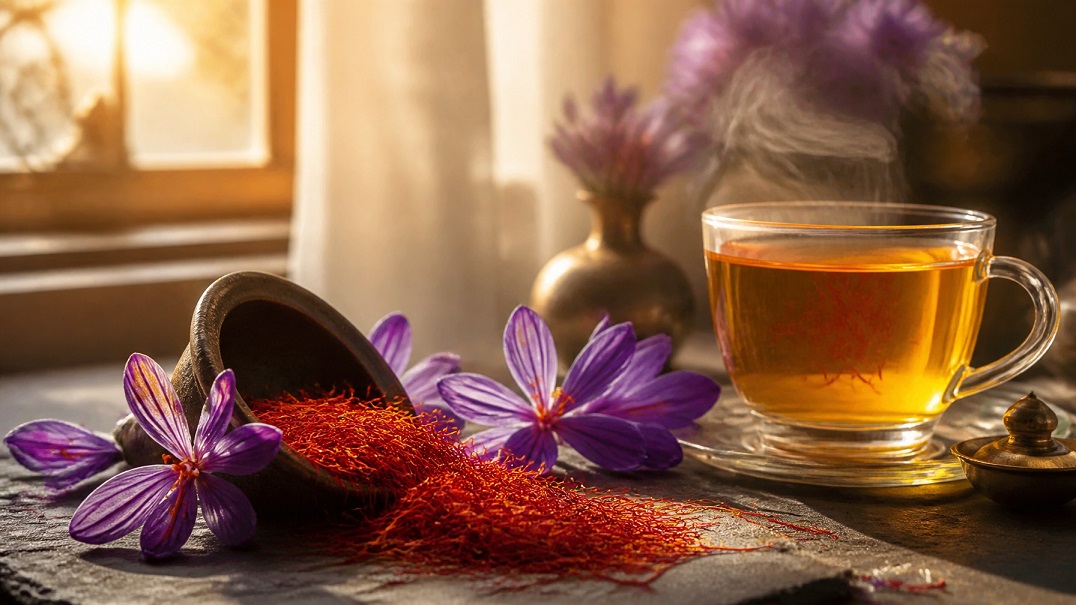
Saffron comes from the dried stigmas of the Crocus sativus flower, each harvested by hand, which explains its price. Its active compounds include crocin, crocetin, and safranal, the last of which gives saffron its aroma. We cover its role in eye nutrition in saffron for eyes.
What Research Shows About Saffron, Mood, and Stress
The mood research is surprisingly extensive. A systematic review and meta-analysis pooled 23 randomized trials and found that saffron had a large positive effect compared with placebo for depressive symptoms and for anxiety symptoms, according to the analysis in Nutrition Reviews.
The authors also flagged limits. They found evidence of publication bias, meaning positive results may be overrepresented, and noted that the trials lacked regional diversity. Two things follow from that. The findings are promising but not final, and most studies measured depression and anxiety scores rather than “stress” itself.
How Stress Can Affect Your Eyes
The eye connection is real. Central serous chorioretinopathy is a condition in which fluid builds up under the retina and blurs central vision, and it has been linked to elevated stress hormones. A study in the British Journal of Ophthalmology found higher endogenous cortisol levels in patients with the condition.
Stress may also make everyday eye discomfort feel worse for some people. Our article on stress and your eyes explores that mind-body link in more detail.
Saffron’s Direct Research on Retinal Function
This is the stronger case for saffron in an eye formula. In a randomized trial of 25 people with early age-related macular degeneration, those taking 20 mg of saffron daily showed improved retinal flicker sensitivity compared with placebo over three months, as published in Investigative Ophthalmology and Visual Science.
That is a small study, and flicker sensitivity is a laboratory measure of retinal function, not proof that anyone saw better in daily life. Our summary of saffron and retinal neuroprotection research covers the wider evidence.
What Longer Follow-Up Suggests
A follow-up study tracked 29 people with early macular degeneration who took 20 mg of saffron daily for an average of about 14 months. The authors reported that improvements in macular function were maintained over the longer period, according to the published follow-up on PubMed Central. That study had no placebo group, so it supports the earlier trial without confirming it.
Could the Mood Connection Matter for Your Eyes?
It is a reasonable idea, but an unproven one. If saffron helps you feel calmer and sleep better, you may experience fewer stress-driven eye symptoms. That chain of reasoning has not been tested in a trial, so it should be treated as a hypothesis, not a benefit.
Direct stress management is a safer bet. Regular exercise, consistent sleep, and screen breaks all help, and they work whether or not you take saffron.
Safety and Common Sense
If you live with depression or anxiety, saffron should not replace professional care. Tell your doctor about any supplement you take, particularly if you use antidepressants or other mood medications. Saffron as a spice in food is a separate matter from concentrated extract.
Keep in mind, too, that the mood trials used a range of saffron extracts and doses. Results from one product do not automatically carry over to another, which is one more reason to treat saffron as a supportive ingredient and not a standalone solution.
Where Performance Lab Vision Fits In
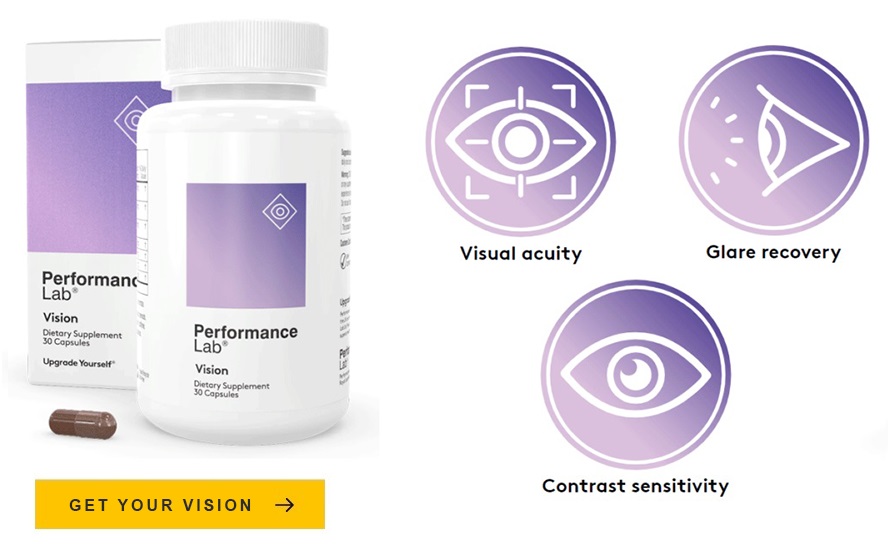
Performance Lab Vision contains 10 mg of saffron stigma extract standardized to 0.3% safranal, alongside carotenoids and anthocyanin sources. The formula is positioned for eye nutrition, not for treating mood or any condition.