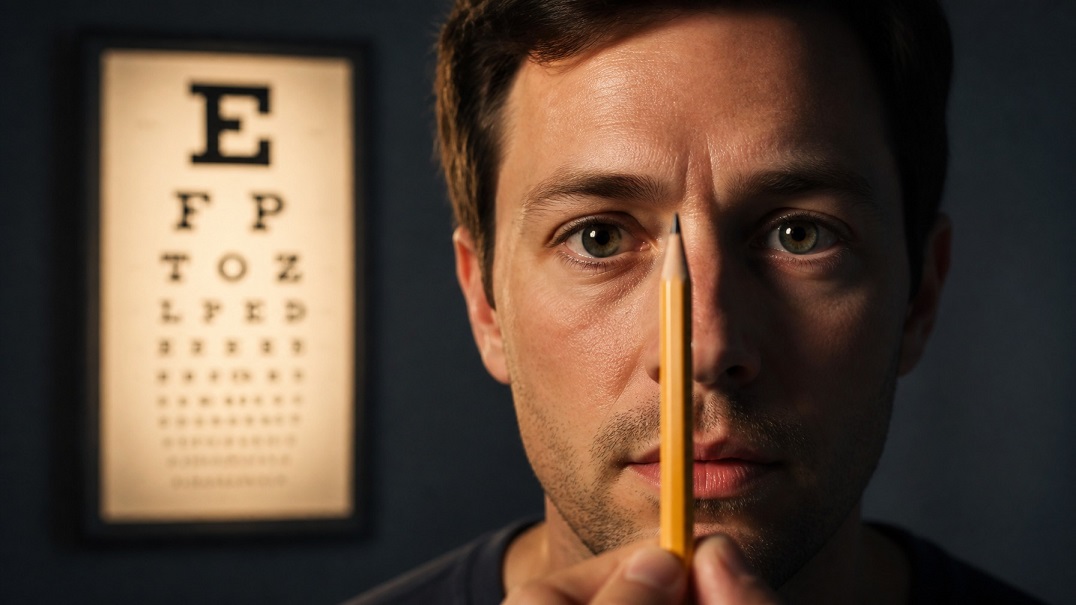
Not for the common problems like nearsightedness, farsightedness, or astigmatism. Eye exercises will not improve your sharpness or cut the need for glasses. The main exception is a condition called convergence insufficiency, where the eyes struggle to work together up close, and supervised vision therapy has strong evidence behind it.
What Eye Exercises Cannot Do
Plenty of books, apps, and videos promise sharper vision through eye workouts. The American Academy of Ophthalmology is blunt about this. According to the American Academy of Ophthalmology, eye exercises will not improve or preserve vision or reduce the need for glasses, because your vision depends on many factors, none of which can be significantly changed by exercise.
Those factors include the shape of the eye and the clarity of its lens. You can strengthen a muscle by working it, but blur from an eye that is slightly too long or too short does not come from weak muscles. It comes from structure.
The Exception: Convergence Insufficiency
The same Academy guidance adds an important exception. Eye exercises may help with convergence insufficiency, a condition in which the eyes do not work together to focus on a nearby object, making reading difficult.
People with convergence insufficiency may notice double vision, headaches, or tired eyes during close work, and words may seem to move on the page. The problem lies in teamwork between the eyes, which is something training can change.
What the Clinical Trials Found
This is one of the better-studied areas in vision care. The Convergence Insufficiency Treatment Trial, funded by the National Eye Institute, found that office-based vision therapy was the most effective treatment for improving convergence and easing symptoms, and that the benefits were long-lasting, according to the National Eye Institute.
The follow-up trial added a useful reality check. Therapy successfully treated convergence insufficiency in children, but it did not improve their reading test scores. So the exercises fix the eye-teaming problem, but they are not a shortcut to better grades.
Why This Is Not Do-It-Yourself Territory
The therapy that worked in these trials was supervised, structured, and delivered in an office, not a random set of exercises from the internet. Diagnosis comes first. Double vision and headaches can have several causes, and only an eye exam can sort them out.
If you suspect convergence insufficiency, ask an eye care provider whether vision therapy is appropriate and who should provide it.
Exercises That Ease Strain
Some habits that look like exercises really help comfort, even though they do not change your prescription. The Academy advises resting your eyes about every 20 minutes during screen work by looking up or across the room, and blinking regularly to keep the eyes lubricated.
That is the idea behind the 20-20-20 rule. It will not sharpen your vision, but it can make a long day at a screen feel much easier. If dryness is part of your discomfort, our article on eye strain versus dry eyes helps you tell the two apart.
How to Spot Overblown Claims
Be skeptical of any program that promises to reverse nearsightedness or free you from glasses. Ask what evidence supports it and whether the claim has been tested against a placebo. The convergence insufficiency trials set the standard here, because they compared real therapy against placebo therapy before reaching a conclusion.
Why the Myth Keeps Going
Several things keep the idea alive. Relaxing your eyes after a long stretch of close work genuinely feels good, so it is easy to credit the exercise with a change in vision. Marketing helps, too, because a simple routine that promises freedom from glasses is appealing.
There is also a grain of truth, since vision therapy does work for specific conditions. The leap is assuming the same approach cures everything.
What Actually Protects and Corrects Vision
Glasses or contacts correct blur. Regular exams catch problems early. The Academy also notes that many vision problems that develop with age can be treated, and that yearly exams help catch both reversible and permanent threats.
Our guide to eye exams as you age explains what to ask for. Healthy habits and good nutrition support the eye over time, as covered in our diet for eye health guide.
Bottom Line
Skip the promise of throwing away your glasses. Use simple strain-relief habits, and see a professional if close work causes double vision, headaches, or trouble reading.