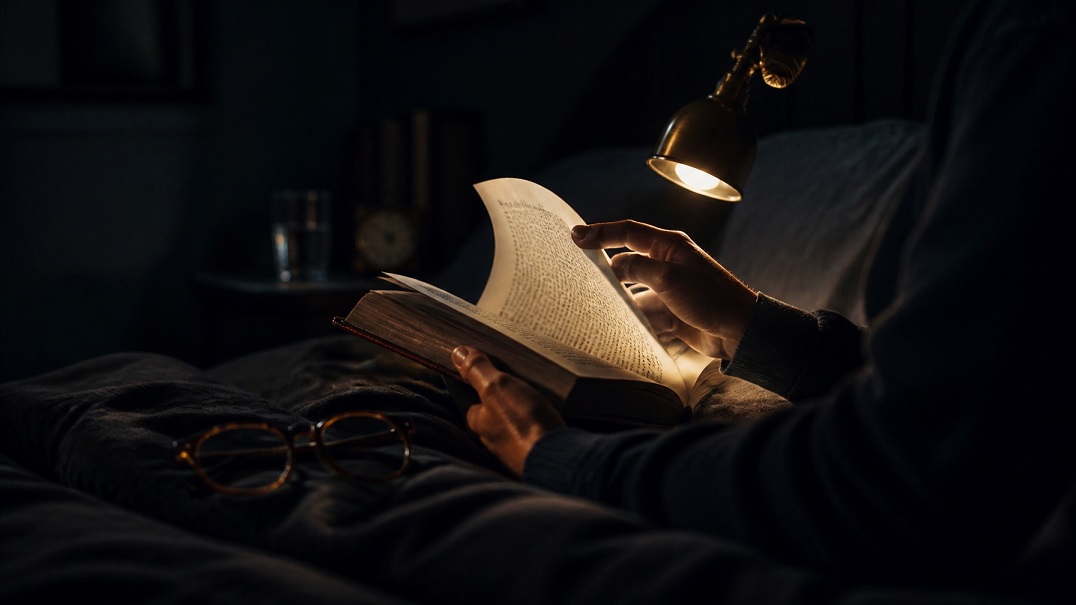
No. Reading in dim light does not cause lasting damage to your eyes. It can make them tired, give you a headache, and make the page harder to read, but those effects fade once you rest or turn on a lamp. Good lighting makes reading more comfortable, though it is not protecting your eyes from harm.
Where the Warning Came From
Almost everyone has heard some version of it: turn on a light or you will ruin your eyes. The warning likely survives because the discomfort is real. Squinting at a page in a dim room does feel unpleasant, and a tired, achy feeling the next morning is easy to blame on the night before.
The leap from feeling strained to being damaged is where the myth takes hold. Those are two very different things, and the first does not lead to the second.
What the Experts Say
The American Academy of Ophthalmology addresses this directly. According to the American Academy of Ophthalmology, it does not harm your eyes to read in dim light, but good lighting can make it easier to see what you are reading and keep your eyes from tiring out as quickly.
That is a clear and reassuring statement. You can finish a chapter by the glow of a nightlight without worrying that you have done something permanent.
Why Dim Light Makes Your Eyes Feel Tired
In low light, details are harder to pick out. You tend to hold the page closer, squint, and concentrate harder, which keeps the focusing muscle inside your eye working for longer. Think of it like carrying a heavy bag for an hour. Your arm gets tired and sore, but it is not injured.
The same pattern shows up in other situations. Our article on digital eye strain describes how long stretches of close work lead to the same blurry, heavy-eyed feeling, whether the light is dim or bright.
Symptoms You May Notice
After a long session in poor light, you might notice sore or burning eyes, a mild headache around the brow, or blurry text that clears after a break. Neck and shoulder tension often joins in, because people tend to hunch toward the page.
These are signs of strain, and they typically ease with rest. If headaches become frequent, our guide to eye strain headaches offers practical fixes.
Books, Phones, and Screens in the Dark
What about reading from a phone in a dark bedroom? The Academy makes a parallel point about screens. Looking at a computer screen will not harm your eyes, but doing so without breaks can contribute to eye strain, tired eyes, or dry eyes, per the same American Academy of Ophthalmology myth guide.
The Academy suggests resting your eyes about every 20 minutes by looking up or across the room, and blinking regularly to keep them lubricated. Our article on the 20-20-20 rule turns that advice into an easy habit.
How to Make Reading More Comfortable
You do not need a perfect setup. A reading lamp that lights the page without shining into your eyes helps most. Placing the light behind or beside you keeps it from glaring off the paper or into your eyes. Our guide to the best lighting conditions for computer work applies equally well to a book.
Other small changes help too. Keep a comfortable reading distance, take short breaks, and blink fully. If you read often before bed, pick a warm, steady light you can leave on.
Is It Different for Children?
Parents often worry most about kids reading under the covers. The same reasoning applies, because the Academy’s statement is not limited to adults. Still, a child who constantly holds books very close or complains of headaches may need an eye exam. Poor reading comfort can sometimes point to a vision problem worth checking.
Why Good Light Still Matters
If dim light is harmless, why bother with a lamp? Comfort and efficiency. Reading is easier and less tiring when the page is well lit, so you can read longer without the heavy-eyed feeling. Good light is a kindness to yourself, not a safeguard against damage.
When to See an Eye Doctor
Ordinary strain goes away. Blurry vision that lingers, frequent headaches, double vision, or eyes that stay sore after rest are worth an exam. Those symptoms can come from needing new glasses or from other issues unrelated to lighting.
Our guide to eye exams as you age explains how often to get checked.