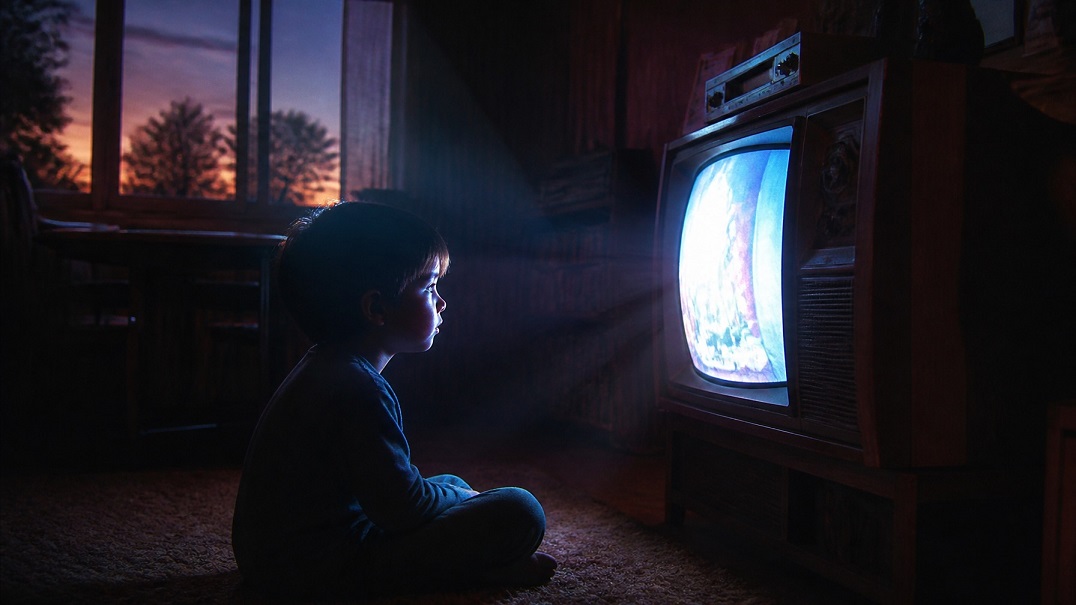
No, not in a way that harms your vision. Sitting close to the TV may cause eye strain or a headache, but it does not damage the eyes of children or adults. The more useful question is why someone sits so close. A habit of sitting near the screen can be a sign of nearsightedness that needs glasses.
Why the Worry Is So Common
Generations of parents have told kids to back away from the television. The advice sounds sensible, and sitting nose to the screen certainly looks uncomfortable. Because many nearsighted children do sit close, the habit and the glasses often appear together, which makes it easy to assume one caused the other.
What the Evidence Says
The American Academy of Ophthalmology lists this as a myth. According to the American Academy of Ophthalmology, sitting very close to the television may cause eye strain or a headache, but it will not damage vision in children or adults.
In the Academy’s view, the effect is discomfort, not damage. The tiredness you feel is similar to squinting in bright sun, and it eases when you move back or take a break.
Why Children Sit So Close
Kids are not being difficult. The Academy points out that children have a heightened ability to focus on nearby objects, so they may find it more comfortable to sit close to the TV. Their eyes can handle near distances with less effort than an adult’s.
That ability gradually fades with age. Our article on presbyopia explains how the focusing system changes in adulthood, which is why a grandparent may hold the remote at arm’s length while a child lies on the carpet inches from the screen.
When Sitting Close Is a Clue
Here is the part worth paying attention to. The Academy notes that habitually sitting close to the television may signal that the person is nearsighted and needs glasses. A child who always moves forward to see the screen, the board at school, or a distant sign may be telling you something without saying it.
Look for other signs too, such as squinting, frequent headaches, rubbing the eyes, or holding books very close. Children rarely complain about blurry distance vision, because they assume everyone sees the way they do.
What to Do if Your Child Sits Too Close
Start with an eye exam, not a lecture. An eye care professional can check whether distance vision is the issue and prescribe glasses if needed. If the exam is normal, you have also ruled out a vision problem and can relax about the habit.
Glasses do not make eyes worse, a point the Academy makes plainly, so there is no reason to delay if a child needs them. Our guide to eye exams covers how often to schedule checkups across life stages.
A Note for Adults
The clue works for grown-ups too. If you find yourself creeping closer to the screen than you used to, or squinting at subtitles from the couch, treat that the same way. It is a good reason to book an exam, because a small prescription change is easy to fix once you know about it.
Comfortable Viewing Habits for Everyone
You do not need a measuring tape. Sit far enough away that the whole screen is comfortable to take in without moving your eyes constantly, in a room that is not completely dark. Many people also find a completely dark room with a bright screen more tiring than some soft background light.
Break up long viewing sessions. The Academy recommends resting your eyes every 20 minutes by looking up or across the room, and blinking regularly. Our article on the 20-20-20 rule shows how to make that automatic.
Phones, Tablets, and Close Screens
Today the bigger question is often not the TV but the phone or tablet held close to the face. The same Academy guidance applies: screens do not harm the eyes, but long stretches without breaks can strain them. For families, our guide to screen time in children offers practical limits and habits.
What About Blue Light and Brightness?
Viewing distance is only one piece of screen comfort. If you are curious about blue light, our article on what the science actually says about blue light sorts the facts from the hype.
The Takeaway
Let go of the guilt over a kid sprawled in front of the TV. The distance is not hurting their eyes. Use it as a prompt to check how well they see, and enjoy the show.