Step out of a brightly lit room into the dark, and for the first few moments you are effectively blind. The world is reduced to indistinct shapes and shadows. Within a minute, you can begin to make out outlines. After five minutes, you can navigate reasonably well. After twenty to thirty minutes, assuming no further bright light exposure, your eyes have reached something close to their full sensitivity in those conditions. This process is dark adaptation, and while it is so familiar that most people never give it a second thought, the biology underneath it is a layered and genuinely elegant piece of visual system engineering.
Understanding dark adaptation matters for several practical reasons beyond satisfying curiosity. The speed and completeness of dark adaptation declines measurably with age, affects driving safety at night, influences performance in any low-light activity from sport to photography, and is directly connected to the nutritional status of the visual system. All of those practical implications become clearer once you understand what is actually happening during those minutes of adjustment.
Dark adaptation is not a single process. It is the sequential activation of two distinct photoreceptor systems, each with its own kinetics and sensitivity range, that work in relay to progressively recover visual function in the dark.
The Two Phases of Dark Adaptation: Cones First, Then Rods
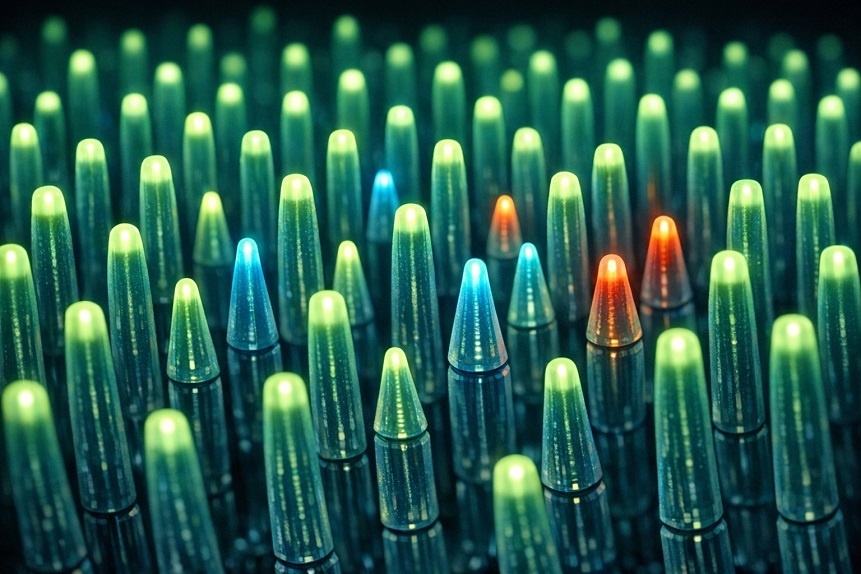
The retina contains two types of photoreceptors: cones, which handle color vision and fine detail in well-lit conditions, and rods, which handle low-light vision and are exquisitely sensitive but do not distinguish color. Dark adaptation involves both, but they adapt at different speeds and to different final sensitivity levels, producing a characteristic two-phase curve when sensitivity is plotted against time in the dark.
The First Phase: Cone Dark Adaptation
When you first enter a dark environment, the cones adapt first. Cone adaptation is relatively fast, reaching most of its final sensitivity within five to ten minutes. The mechanism involves the regeneration of the cone photopigments, which are bleached by the preceding bright light exposure in a similar way to rhodopsin in rods, but cone pigments regenerate faster than rhodopsin. After cone adaptation, you can see modestly better than immediately after entering the dark, but the level of sensitivity achieved is still far above the threshold for detecting the dim stimuli that a fully dark-adapted visual system can handle.
Cones adapt faster but do not ultimately reach the same sensitivity level as rods. They set the initial recovery curve and determine how quickly you can begin to function in dim conditions after bright light exposure. In practical terms, the first few minutes of adaptation, when cone recovery is the primary process, determine how quickly you can begin to navigate a dim environment or adjust to driving at night after coming from a brightly lit area.
The Second Phase: Rod Dark Adaptation
After the initial cone adaptation phase, a second deeper phase begins as rods progressively recover their sensitivity. Rod dark adaptation is considerably slower than cone adaptation, continuing for 20 to 30 minutes or more, and it reaches a final sensitivity level roughly 10,000 times greater than cones can achieve. This extraordinary final sensitivity is what allows you to see by starlight or to detect a candle flame at a distance of several kilometers, the kinds of feats that require the fully dark-adapted rod system operating at peak efficiency.
The rate-limiting step in rod dark adaptation is the regeneration of rhodopsin, as covered in our article on rhodopsin and the visual cycle. Rhodopsin must be rebuilt from its bleached components through the retinal pigment epithelium before rod sensitivity can be restored. The slower this process, the longer the second phase of adaptation takes and the lower the final sensitivity achieved. This is why factors that affect RPE function and rhodopsin regeneration efficiency, including age, vitamin A status, and anthocyanin nutrition, directly influence dark adaptation performance.
What Affects Dark Adaptation Speed and Completeness
Dark adaptation speed and the final sensitivity level achieved are not fixed characteristics. They vary between individuals and within the same individual depending on several modifiable and non-modifiable factors.
The Effect of Prior Light Exposure
The most immediate determinant of how long dark adaptation takes is the intensity and duration of the preceding light exposure. Moving from dim indoor lighting to a dark room produces a much faster adaptation than moving from bright outdoor sunlight or from staring at a very bright screen. The more rhodopsin that has been bleached, the more needs to be regenerated, and the longer the rod phase of adaptation takes. This is a practical point for anyone who depends on good night vision shortly after being in a bright environment: spending even a few minutes in moderate lighting before transitioning to the dark, allowing some pre-adaptation, meaningfully reduces the subsequent adaptation time.
Wearing red-tinted glasses or goggles in a bright environment before entering a dark one is a technique used by professionals, including military personnel and astronomers, who need dark-adapted vision immediately upon entering a dim environment. Red light does not bleach rhodopsin efficiently because rhodopsin’s peak absorption is in the blue-green range, so exposure to red light while waiting to enter the dark environment allows rods to begin adapting without the bleaching that white or blue light would cause. It is a niche application but an interesting demonstration of rhodopsin’s spectral sensitivity.
Age and the Slowing of Rod Adaptation
Dark adaptation slows measurably with age, primarily through the rod phase, for reasons detailed in our article on why night vision declines with age. The RPE becomes less efficient at processing the visual cycle intermediates required for rhodopsin regeneration. Rod photoreceptor density in the peripheral retina decreases. Maximum pupil dilation in dim conditions reduces, limiting the light available to drive whatever adaptation capacity remains. The combined effect is that a 60-year-old in complete darkness may achieve only 60 to 70 percent of the peak rod sensitivity that the same person had at 25, and may take nearly twice as long to approach that reduced maximum.
Nutritional Factors That Influence Adaptation
Vitamin A deficiency, even at the marginal insufficiency level that falls short of clinical deficiency but represents suboptimal status, slows dark adaptation by reducing the availability of the retinal substrate required for rhodopsin regeneration. This was one of the earliest documented nutrient-vision relationships. Maintaining adequate vitamin A from dietary sources, including liver, dairy, eggs, and beta-carotene-rich vegetables, keeps this substrate adequately available.
Zinc deficiency impairs the transport of vitamin A to the retina through its role in retinol-binding protein synthesis, which means that zinc inadequacy can produce the same functional impairment as vitamin A deficiency even when vitamin A intake is adequate. Anthocyanins from blackcurrant and bilberry have clinical research support for improving dark adaptation speed through mechanisms involving rhodopsin regeneration kinetics, as covered in the dedicated ingredient articles. These nutritional connections give dark adaptation a modifiable dimension that makes it worth addressing rather than accepting as purely an aging inevitability.
Dark Adaptation in Practical Contexts
Understanding dark adaptation is useful beyond biology class when applied to the practical situations where low-light vision matters most.
Night Driving and Glare Recovery
Night driving involves repeated disruptions to dark adaptation. Every time an oncoming vehicle’s headlights bleach the driver’s rhodopsin, a miniature re-adaptation process must occur before full sensitivity in the dark portions of the road is restored. For young drivers with fast rhodopsin regeneration, this recovery takes a second or two and is largely imperceptible. For older drivers with slower regeneration, the recovery period is longer and the portion of the road visible during that recovery window is reduced. The practical safety implication is that increasing following distance at night and consciously avoiding direct gaze at oncoming headlights, which reduces the degree of bleaching, are meaningful precautions rather than timid driving habits.
Sports and Outdoor Activities in Low Light
Athletes competing in low-light conditions, military personnel, pilots, and astronomers all depend on maximized dark adaptation for their performance or safety. In these contexts, even modest improvements in adaptation speed from nutritional support or environmental management strategies can have meaningful practical consequences. The performance dimension of dark adaptation is covered in more detail in our section on vision and athletic performance.
Entering Cinemas, Theaters, and Other Dark Environments
The familiar difficulty of finding a seat in a darkened cinema after walking in from a lit lobby is pure dark adaptation in action. The discomfort passes faster for younger eyes and slower for older ones, which is a direct and relatable experience of the age-related changes in rhodopsin regeneration described above. Waiting briefly in a moderately lit corridor or foyer before entering the dark auditorium allows partial pre-adaptation and reduces the duration of the most disorienting transition period. It is a small practical application of understanding the two-phase adaptation process.
Supporting the Adaptive System
Dark adaptation is the visual system’s recovery mechanism, the process that allows it to transition from high-light to low-light operation by rebuilding its most sensitive detection capability from scratch. Keeping this mechanism well-supported through nutrition means ensuring vitamin A adequacy, maintaining adequate zinc for transport, and considering the specific rhodopsin-cycle support that anthocyanins from blackcurrant and bilberry provide.
For a comprehensive look at the nutritional evidence supporting night vision and dark adaptation, our article on nutrition for night vision brings together the full picture. And if you want to understand the specific ingredients in a supplement designed around these mechanisms, our Performance Lab Vision review covers how bilberry and blackcurrant are included in that formula and why.