
The forties occupy an unusual position in eye health. Enough has changed visually to get your attention — reading glasses, night driving that requires more focus, the occasional floater drifting through your field of view. But the serious age-related conditions that cause irreversible vision loss are still mostly in the future, still in their silent early stages, still genuinely responsive to the right interventions.
That window — where the stakes are real enough to motivate action but the situation isn’t yet urgent — is the best possible time to be proactive about your vision. The decisions made in your forties have compounding returns. The person who builds good visual health habits at 42 arrives at 62 with meaningfully better visual reserves, lower disease risk, and a more solid diagnostic baseline than the person who waited for symptoms to appear.
This is what a serious, evidence-grounded proactive strategy actually looks like.
Get a Baseline Comprehensive Eye Exam
If you haven’t had a comprehensive eye exam since your thirties, your first move is scheduling one. Not a vision screening at a pharmacy kiosk, and not a prescription update at a retail optical chain. A comprehensive dilated exam with an optometrist or ophthalmologist that evaluates intraocular pressure, optic nerve appearance, retinal health, and lens clarity in addition to your refractive correction.
The forties are when primary open-angle glaucoma and early macular degeneration can first make their appearance — and both are essentially asymptomatic in early stages. Glaucoma, in particular, earns its reputation as the silent thief of sight: by the time peripheral visual field loss is noticeable, significant and irreversible optic nerve damage has already occurred. The only way to catch it early is through examination, and examination is only useful if it happens before the damage accumulates.
This baseline exam also gives you something no amount of self-assessment can provide: a documented starting point. A 2025 optic nerve photograph creates a reference that the exam in 2028 can compare against. Early change is detectable only against a baseline. Without that reference, small progressive changes can go unnoticed for years.
Annual exams are appropriate for anyone with risk factors for glaucoma (elevated intraocular pressure, family history, African American heritage, high myopia) or macular degeneration (family history, fair complexion, light iris color, heavy UV exposure history, smoking history). Every one to two years is a reasonable minimum for lower-risk individuals.
Build Your Macular Pigment Now
Macular pigment — the layer of lutein, zeaxanthin, and meso-zeaxanthin concentrated at the center of the retina — is one of the most important biological factors protecting long-term visual function. It filters high-energy light, provides antioxidant defense at the most metabolically active part of the retina, and supports contrast sensitivity and visual sharpness. Higher macular pigment optical density is consistently associated with reduced AMD risk and better visual performance under challenging conditions.
Here’s the practical reality: macular pigment takes months to build to meaningful levels and years to reach optimal density. It responds to dietary and supplemental lutein and zeaxanthin, but not quickly. Starting in your forties means you can reach and maintain genuinely protective levels well before the age window when AMD risk rises sharply. Starting in your late fifties, or after an early AMD diagnosis, means playing catch-up during the period when protection matters most.
The dietary math is worth facing honestly. Reaching the 10 to 20 mg daily lutein intake associated with protective macular pigment density requires genuinely consistent dark leafy green consumption — half a cup of cooked spinach or kale daily is roughly in that range. Most people eating a typical Western diet are getting one to two milligrams per day. The gap is real, and bridging it through diet alone requires a commitment that supplementation can help sustain.
The full picture of how macular pigment density is measured and tracked is covered in the article on macular pigment optical density and what the scores mean.
Protect Your Lenses From UV
The crystalline lenses in your eyes have been accumulating UV damage since childhood, and they will continue to do so until you consistently protect them. UV radiation — particularly UVB — damages lens proteins and depletes the antioxidant defenses that maintain lens transparency. The cumulative effect, over decades, is cataract formation that may arrive five or ten or fifteen years earlier than it would have with consistent protection.
Quality sunglasses that block 100% of UVA and UVB are the intervention here. This doesn’t require expensive lenses — UV blocking in modern ophthalmic lenses is a property of the coating, not the price tag. What matters is that the lenses actually block UV (look for “UV400” or “100% UV protection” on the label) and that you wear them consistently during outdoor activity, not just on beach days or ski trips.
Wraparound or larger frames provide meaningfully better protection than small fashion frames that allow peripheral UV exposure. UV exposure from the sky — including on overcast days, where up to 80% of UV radiation penetrates cloud cover — is present year-round and requires year-round habits.
Photochromic lenses that darken in sunlight and lighten indoors are an excellent practical solution for people who resist switching between glasses. They maintain UV protection in all outdoor conditions without requiring a separate pair of sunglasses.
Address Screen Work Intelligently
The forties are typically a peak career decade, which often means significant screen hours. Digital eye strain accumulated over long workdays compounds other age-related changes: the already-stiffening lens is working harder to maintain close focus, the macular photoreceptors are being exposed to blue-spectrum light throughout the day, and blink rate during screen use drops enough to accelerate dry eye development.
The 20-20-20 rule — every twenty minutes, look at something twenty feet away for twenty seconds — is the most widely recommended and genuinely useful behavioral intervention for screen-related eye fatigue. It’s easy to forget in practice and easier to maintain as a calendar reminder or built-in software notification. Monitor brightness calibrated to the ambient room light level, appropriate text sizing that doesn’t require squinting, and blue light filter settings during evening hours all reduce the cumulative visual stress of heavy screen work.
The article on best monitor settings for eye health covers these adjustments in practical detail.
Take Cardiovascular Health Seriously as an Eye Health Issue
The retina is fed by a dense network of microvasculature, and it’s the first place in the body where the effects of hypertension, high cholesterol, and diabetes become visible — literally, under an ophthalmoscope. Retinal arteriovenous nicking, flame hemorrhages, and cotton-wool spots all tell a story about systemic vascular health that an eye exam can reveal before other symptoms appear.
Managing blood pressure, maintaining healthy lipid levels, and controlling blood glucose are AMD risk factors as much as they are cardiovascular risk factors. The choroid — the vascular layer behind the retina that supplies the macula — is subject to the same atherosclerotic processes that affect coronary arteries. A 44-year-old who lets systemic inflammation and vascular damage accumulate through their forties does not arrive at 64 with a retina that was spared from the consequences.
Aerobic fitness also matters directly. Regular physical activity is associated with lower AMD risk, lower intraocular pressure, and better ocular blood flow in multiple observational studies. The mechanisms are plausible and the effect sizes are meaningful. If you’re exercising for your cardiovascular system in your forties, your eyes are benefiting along the way.
Nutrition as a Long-Term Investment
Putting together an effective nutritional foundation for long-term eye health in the forties means covering the main bases with consistency. Lutein and zeaxanthin for macular pigment. Omega-3 fatty acids (from oily fish or supplementation) for retinal structure and ocular surface health. Vitamin C from whole food sources for lens antioxidant protection. Zinc and vitamin E at dietary sufficiency levels. A low-to-moderate glycemic diet that reduces advanced glycation end-product accumulation in lens and retinal tissue.
None of these are dramatic or unusual interventions. All of them require consistency rather than intensity. The protective effects of macular carotenoids and dietary antioxidants are not acute — they build over months and years and reflect in tissue composition changes that manifest as lower disease risk and better function decades later.
Note: The proactive measures in this article are appropriate for generally healthy adults. If you have existing eye conditions, systemic health conditions affecting the eye such as diabetes, or a strong family history of eye disease, work with an eye care professional to develop a monitoring and management strategy appropriate to your specific situation.
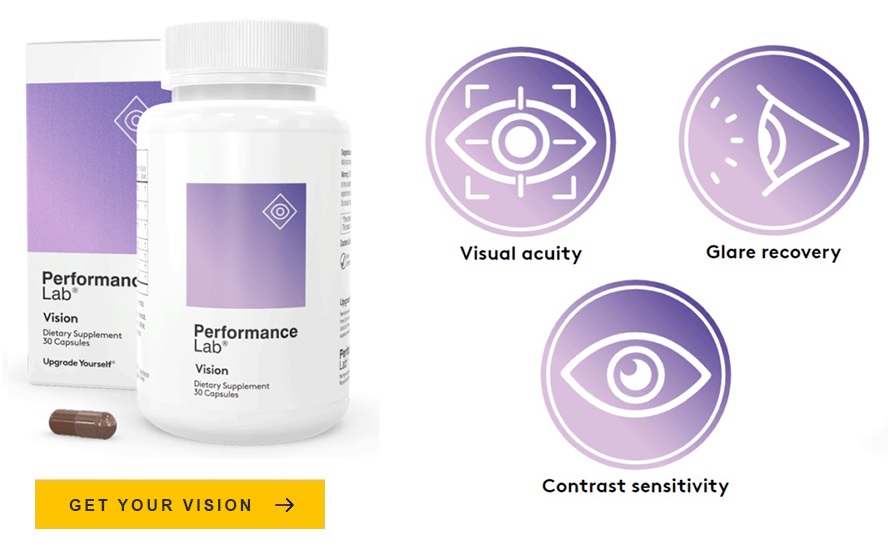
For those looking at how a well-formulated supplement fits into this nutritional framework, the Performance Lab Vision review examines the key ingredients and their supporting evidence. The decade-by-decade guide in eyes and aging across the decades shows where the proactive work you do in your forties pays off in the decades that follow.