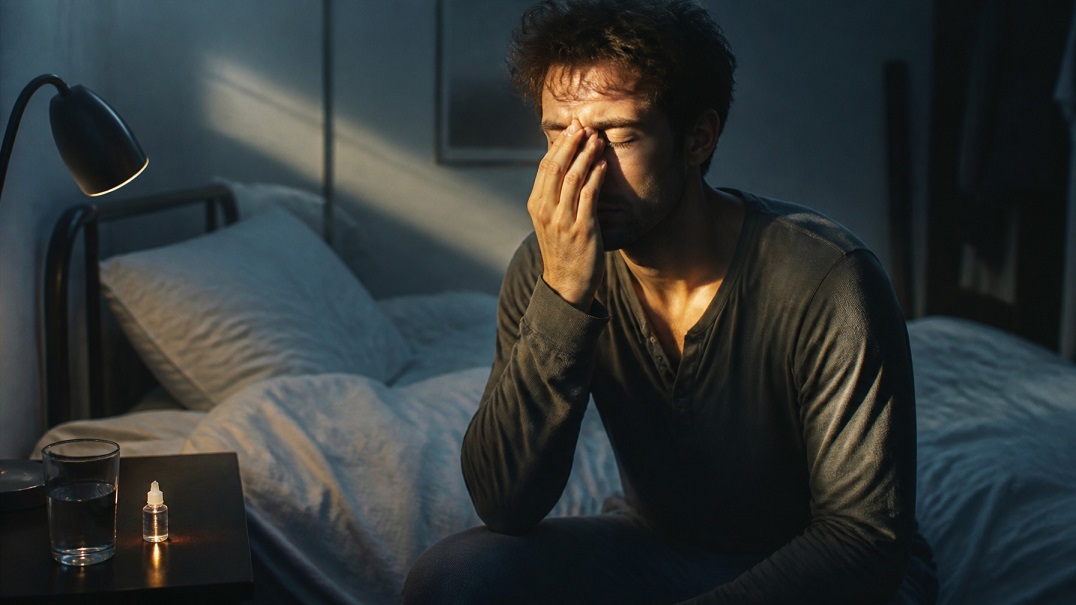
Most often, your eyes are dry. Your eyes stop making lubricating tears while you sleep, so the surface can feel gritty and tired by morning, especially if your eyelids do not seal fully or your tear quality is poor. Short sleep, contact lenses, and allergies add to it. Occasional morning tiredness is common, but a pattern deserves a closer look.
What Your Eyes Do While You Sleep
Your eyes are not working overnight, but they are not fully idle either. According to the American Academy of Ophthalmology, your eyes stop making lubricating tears during sleep. That is normal, and a healthy eye copes with it without trouble.
Problems begin when the eye surface is already vulnerable. The Academy notes that people with dry eye (low tear levels) or blepharitis (clogged oil glands in the eyelids) may feel dryness when they wake up. Our article on sleep and eye health walks through the overnight process in more detail.
Eyelids That Do Not Fully Close
One cause surprises many people. The same Academy guidance points out that eyelids that do not completely close during sleep can promote dryness and inflammation, which can lead to redness. The medical term is nocturnal lagophthalmos, and Healthline lists it among the most common reasons for waking up with dry eyes.
You usually cannot tell it is happening, because you are asleep. A clue may be that one eye feels worse than the other each morning. Our guide to hydration and your eyes covers one simple supporting habit.
Sleep Apnea and Floppy Eyelids
Some eyelids are loose enough to flip or gape during sleep, a condition called floppy eyelid syndrome. A meta-analysis of six studies with 767 participants found that it was more common in people with obstructive sleep apnea than in people without it, with higher odds as the apnea became more severe, as reported on PubMed. The authors cautioned that the estimates were unadjusted and that better studies are needed.
So morning eye irritation can occasionally be a clue to a sleep problem. If you also snore loudly, wake unrefreshed, or feel sleepy during the day, mention it to your doctor.
Contact Lenses and Poor Tear Quality
Healthline notes that wearing contact lenses can make your eyes feel drier. If you wear contacts, check with your eye doctor about wearing schedules and which lenses suit your eyes.
Tear quality matters because tears have layers. Healthline notes that blocked meibomian glands, which produce the oil in your tears, can cause dry eyes, a pattern covered in our article on eye strain versus dry eyes.
Dry Air, Screens, and Late Nights
Your sleep environment plays a role too. A bedroom with a fan blowing toward your face, a heating vent, or very dry air pulls moisture from the eye surface. Our guide to indoor air quality and tear film stability explains why.
Evening habits matter, too. Long hours on a screen before bed reduce blinking and leave eyes tired before you ever lie down. If you work late or on shifts, see why night shift workers have higher rates of dry eye.
Why Short Sleep Makes It Worse
Sometimes the explanation is plain tiredness. After a short night, your eyes and the muscles around them simply feel heavy, and any dryness you already have is harder to ignore. Fixing the dryness helps, but getting enough sleep matters too.
If you suspect habits are part of the picture, our article on stress and your eyes looks at how tension and poor sleep can affect how your eyes feel.
Simple Ways to Wake Up With Happier Eyes
Start with the environment. Keep fans and vents from blowing on your face, and consider a humidifier if your air is very dry. Take a break from screens an hour or so before bed, and blink fully and often while you use them.
A warm compress over closed eyes in the morning is an easy habit. Healthline suggests soaking a clean washcloth in warm water and gently pressing it against closed eyelids. Lubricating drops or a bedtime ointment can help some people, but ask your eye doctor which kind suits you.
When Morning Eye Tiredness Needs a Checkup
An occasional rough morning is normal. A daily pattern is worth an exam, especially if you also have redness, crusting on the lashes, blurry vision that lingers, or pain. Treatable conditions such as blepharitis and lagophthalmos are easy to miss without a proper look.
Our guide to eye exams as you age explains what a thorough exam includes.