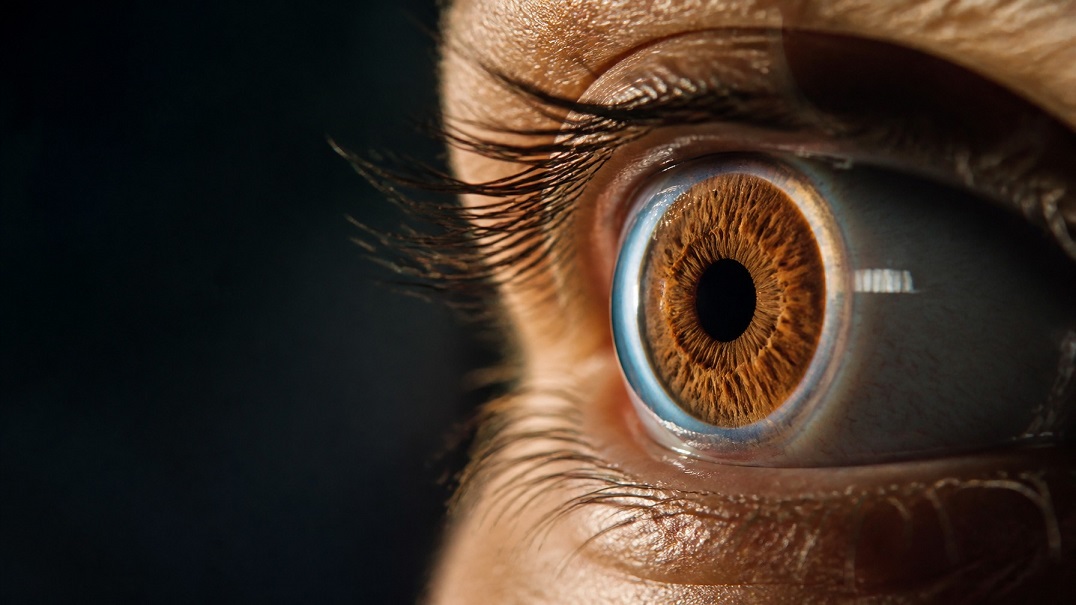
Yes, in several ways. High cholesterol can leave visible signs on your eyelids and cornea, and it is associated with a higher risk of retinal vein blockage, a cause of sudden vision loss. Researchers are also studying its role in macular degeneration. Often, the eyes are a window onto your blood vessel health, so a cholesterol check is a smart companion to an eye exam.
Visible Signs on and Around the Eye
Two signs are easy to see. Xanthelasma is a yellowish fatty deposit on the eyelids. All About Vision explains that it is typically benign but can be a sign of high cholesterol, though it is not always one.
The second is corneal arcus, a gray or white ring around the edge of the cornea. All About Vision explains that in younger people, or when arcus appears in only one eye, an eye exam and blood work are especially important, because it is more likely to reflect an underlying lipid disorder or another serious condition. In older adults, a ring in both eyes is common. Arcus alone does not usually affect vision.
Retinal Vein Blockage and Vision Loss
The more serious link involves the retina’s blood supply. Retinal vein occlusion happens when a vein in the retina becomes blocked, and it can cause blurred or lost vision. A meta-analysis of 21 studies, covering 2,916 people with retinal vein occlusion and 28,646 without it, found that high cholesterol was more than twice as common in the occlusion group (35.1% versus 16.7%). People with high cholesterol had about 2.5 times the risk, according to the report on ScienceDaily of the Archives of Ophthalmology paper.
The authors noted that if the relationship is causal, treating these conditions might help prevent retinal vein occlusion. High blood pressure showed an even stronger association. Our guide to blood pressure and eye health explains why.
What About HDL, the “Good” Cholesterol?
The picture is not only about LDL. A large Korean study of more than 23 million adults found that people in the lowest quartile of HDL cholesterol had a modestly higher risk of retinal vein occlusion than those in the highest quartile, with a hazard ratio of 1.12, according to the published cohort study. The association was stronger in younger people, men, smokers, and people with diabetes or high cholesterol, and low HDL combined with obesity or hypertension had a synergistic effect.
Cholesterol Plaques in Eye Vessels
All About Vision also describes the Hollenhorst plaque, a sign that embolic material is traveling through the eye’s circulation. It explains that a person can have a visible plaque without a blockage, and that high cholesterol can contribute to this type of plaque buildup. Doctors can sometimes spot these during an eye exam, which is one reason exams offer more than a prescription.
Cholesterol and Macular Degeneration
Researchers also suspect a role in age-related macular degeneration. A meta-analysis of studies on blood lipids and AMD notes that lipid metabolism may be involved in the disease process, per the paper on PubMed Central. That wording is deliberately cautious, because the relationship is complex and the research has not produced simple rules.
The takeaway is not that lowering cholesterol will prevent AMD. Our guide to glaucoma versus cataracts versus AMD explains what AMD is and how it differs from other conditions.
Why the Eyes Reflect Vascular Health
The retina is one of the few places where doctors can see small blood vessels directly. Problems that affect vessels elsewhere, from high blood pressure to diabetes to cholesterol buildup, can show up there. That is why an eye exam can sometimes hint at problems elsewhere in the body.
What You Can Do
Know your numbers. A simple lipid blood test shows your LDL, HDL, and triglycerides, and your doctor can interpret them for your situation. Eating well, staying active, and not smoking all support healthy blood vessels. See our guides to diet for eye health, omega-3 fatty acids and eye health, and smoking and eye health.
Take any new yellow bumps on your eyelids, or a ring appearing early in life, as a prompt to see your doctor. Sudden vision loss in one eye needs urgent care, so do not wait to see whether it passes. For routine screening, see eye exams as you age.